10 minAugust 24, 2026

Our spy tools monitor millions of native ads from over 60+ countries and thousands of publishers.
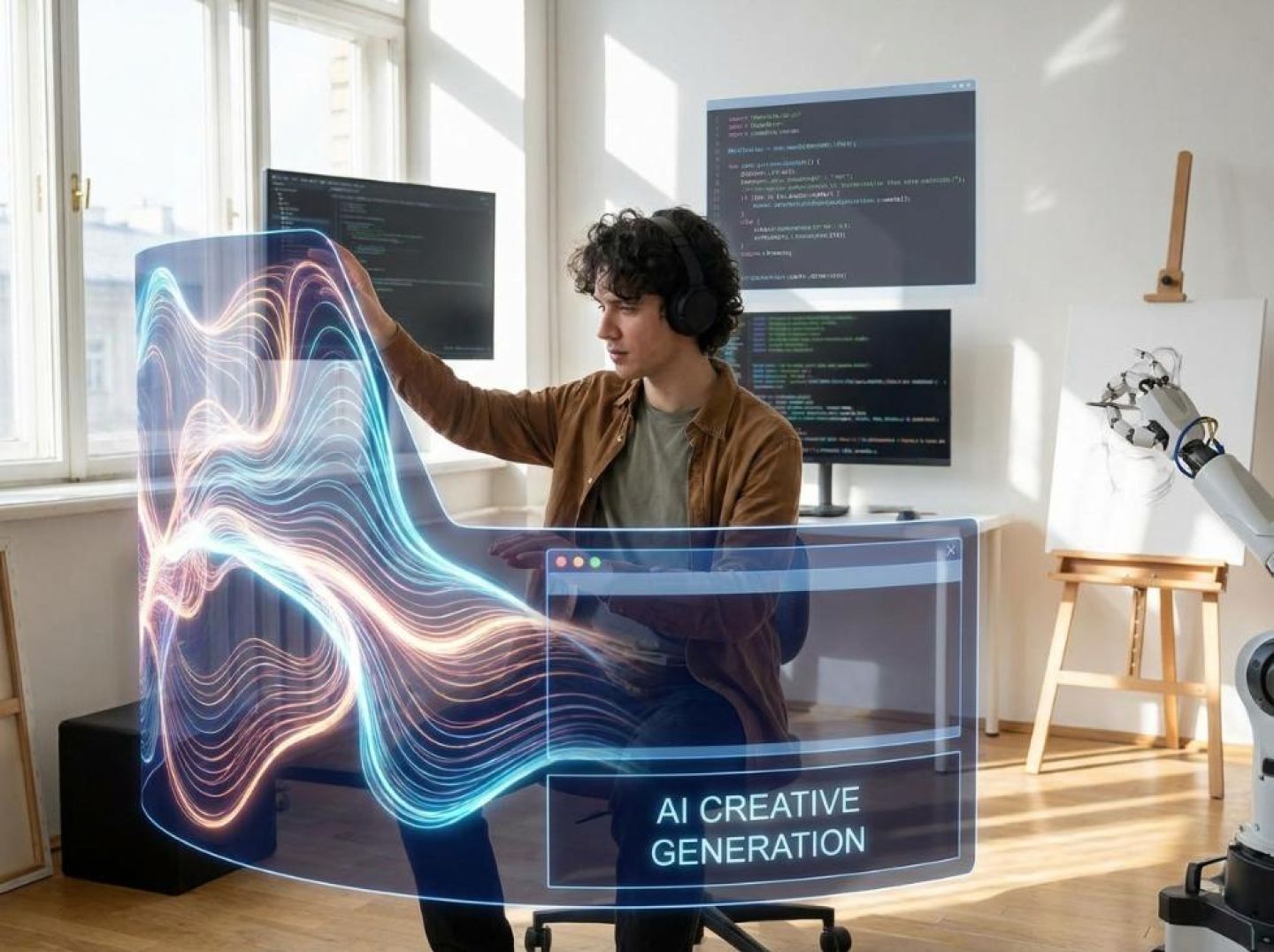
Get StartedEvery conference keynote, LinkedIn thought piece, and vendor pitch deck in 2026 seems to agree on one thing: generative AI has democratized ad creative, and the playing field has never been more level. The narrative is seductive — plug in a prompt, generate hundreds of variations, deploy at scale, and watch performance climb. It's also dangerously incomplete.
The numbers behind the hype are real enough. U.S. businesses are expected to spend $57 billion on AI-powered advertising this year, accounting for roughly 12% of total ad spending. Generative tools have collapsed production timelines from weeks to minutes. Product images that once required studio shoots and four-figure budgets can now be rendered for pennies. As one agency CEO put it when discussing AI ad creative on Social Media Examiner, the technology "levels the playing field" for e-commerce brands that previously couldn't afford professional-grade visuals. All of that is true — and none of it constitutes a competitive advantage anymore.
Here's the problem nobody on the keynote stage wants to articulate clearly: when production cost approaches zero, production speed stops being a moat. The same generative capabilities available to a Fortune 50 brand are available to a solo media buyer running campaigns from a co-working space. Consider Unilever's much-discussed pivot to a network of 300,000 creators, 71% of whom are already using AI tools to produce content at speed across dozens of platforms and hundreds of markets. If one of the world's largest advertisers and a bootstrapped DTC startup can both generate creative at scale, then the ability to generate is no longer what separates winners from losers. The bottleneck has shifted — from "can I make this ad?" to "should I make this ad?"
That distinction matters because more output without a performance-aware filtering mechanism doesn't improve results; it amplifies noise. When every advertiser floods platforms with AI-generated variations, the signal-to-noise ratio collapses. Traditional quality controls can't keep pace. As Search Engine Journal noted in its analysis of the Unilever model, human panels are too slow, A/B testing individual assets across a massive creator network is logistically impossible, and conventional brand-tracking surveys only capture what happened last quarter — not what's working right now. The evaluation infrastructure that once separated good creative decisions from bad ones simply stops functioning at this velocity.
Yet the industry keeps telling itself the same story: invest in better prompts, faster models, and higher volume. The brands that succeed, MarTech argues, "won't be those that produce the most ads, but those that show up at the right moment, in the right context, with the most relevant answer." That framing hints at something the prompt-engineering crowd consistently overlooks. The winning advantage doesn't live in the generation layer — it lives in the intelligence layer that decides which creative gets made, why it should exist, and whether historical performance data supports the bet.
That intelligence layer is what we call pattern intelligence: the ability to read, internalize, and act on the structural patterns embedded in years of performance data across formats, platforms, and audiences. It's the one capability that AI-generated volume actually makes more valuable, not less — because the more creative enters the ecosystem, the more critical it becomes to know which patterns reliably convert and which are just expensive noise. And it's the capability that no prompt, no matter how cleverly engineered, can replicate on its own.
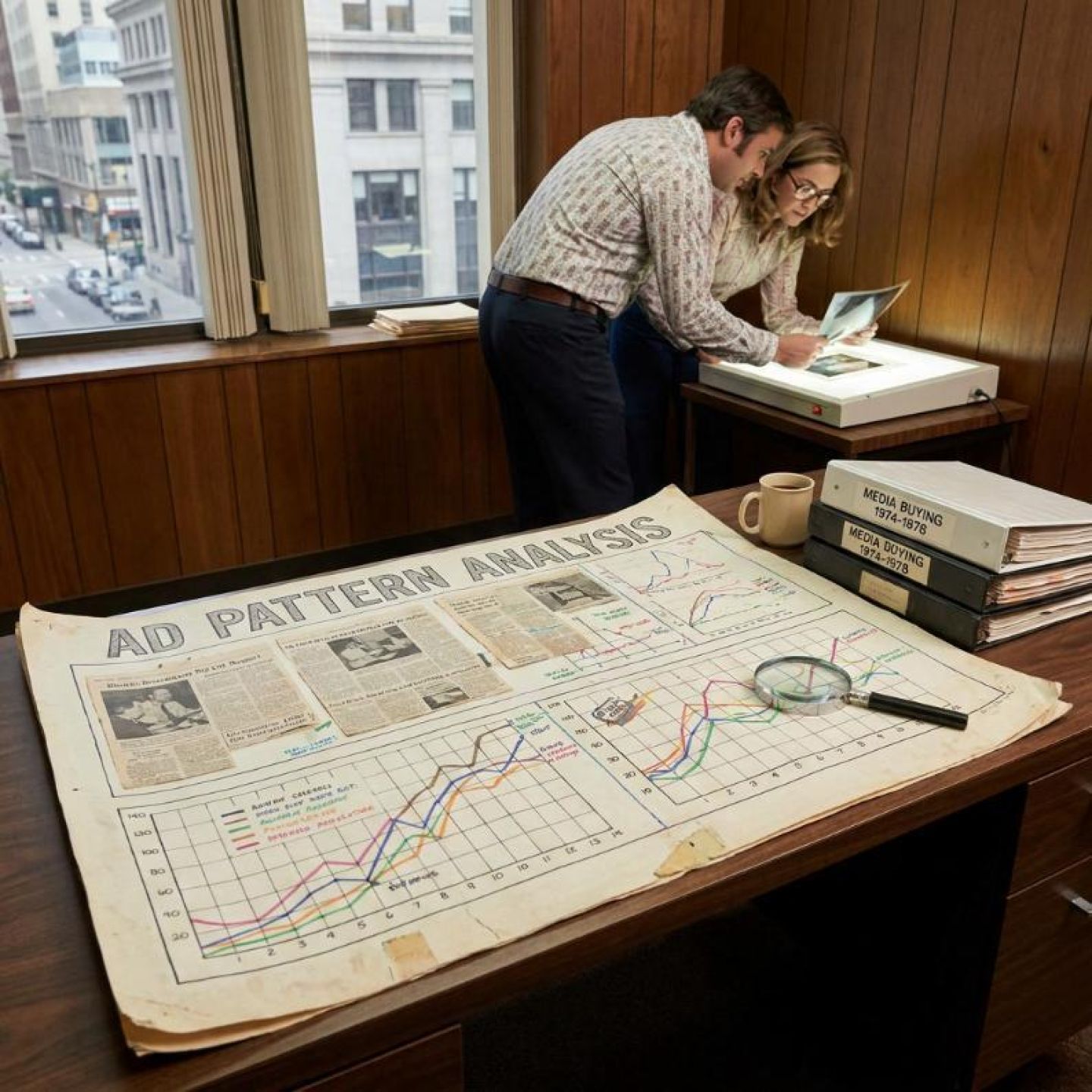
Pattern intelligence is the ability to identify recurring creative structures — headline formulas, hook sequences, image compositions, emotional triggers, and landing page architectures — that consistently convert across verticals, geographies, and traffic sources. It's not intuition dressed up in marketing jargon. It's a discipline built on large-scale observation of what's already winning, extracted from competitive ad intelligence tools and spy libraries containing hundreds of thousands of live advertiser creatives across native and push campaigns. These libraries function, in effect, as training data for human decision-making: a practitioner who has analyzed ten thousand high-performing native ads doesn't need a gut feeling about whether a curiosity-gap headline outperforms a direct benefit claim in a health vertical. They've already seen the structural answer repeated hundreds of times.
This is fundamentally different from prompt engineering, which sits downstream. A prompt is only as good as the strategic input feeding it. If you don't know what to generate — which angle, which emotional register, which visual composition has structural precedent for working in your traffic source and vertical — then no amount of prompt sophistication will save you. You're just generating variations on a guess.
The distinction matters because the industry keeps collapsing these two layers into one. The dominant narrative treats AI creative generation as a single-step process: describe what you want, receive output, deploy. But the practitioners consistently outperforming their competitors have added an intelligence layer before they ever touch a generation tool. They study what's already converting at scale — cataloguing headline patterns, dissecting thumbnail compositions, mapping the emotional arcs of advertorials — and only then use AI to produce variations on those proven frameworks. The intelligence layer comes first; the generation layer comes second.
This principle isn't just a scrappy affiliate marketer's hack. It's been validated at the enterprise level. DAIVID's creative intelligence platform, as covered by Search Engine Journal, was trained on tens of millions of human responses to ads, building predictive models that can score creative effectiveness before a single impression is served. The core insight is that when you have enough historical pattern data, creative performance becomes partially predictable. You can identify the structural and emotional signatures that correlate with attention, recall, and conversion — and you can do it before launch, not after you've burned through budget on a testing cycle.
Performance marketers working with native ad libraries are doing a scrappier, faster version of exactly the same thing. They don't have DAIVID's dataset or infrastructure, but they have something almost as valuable: real-time visibility into what thousands of advertisers are running right now, which creatives have persisted for weeks or months (a reliable proxy for profitability), and which structural patterns keep appearing across winning campaigns. That observational layer is the unfair advantage, not the AI tool used afterward to generate variations.
This is precisely why MarTech has argued that creative strategy must shift upstream — away from production and toward the strategic decisions that determine whether production efforts will pay off at all. When Amazon's own generative AI principal engineer described how their creative agent works, he explained that it is "grounded in the signals" provided by the brand, digesting past ads and identifying which creatives performed particularly well before generating new material. Even at Amazon's scale, the generation layer is subordinate to the pattern layer.
The marketers who understand this hierarchy — intelligence first, generation second — aren't threatened by AI commoditizing creative production. They're the ones leveraging that commoditization hardest, because they know exactly what to tell the machine to build.
When Unilever announced its plan to scale content production through a 300,000-creator network, it offered the advertising industry a blueprint — and a warning. The ambition was sound: more creative, more formats, more personalization across markets. But the underlying challenge Unilever faces is the same one confronting a solo performance marketer running AI-generated ads from a laptop. At a certain volume threshold, individual ads can look perfectly competent in isolation while aggregate performance quietly degrades. This is the signal-to-noise problem, and it doesn't discriminate by budget size. Whether you're orchestrating thousands of creators or prompting Midjourney at midnight, the math is identical: more output without a filtering mechanism doesn't increase your chances of finding winners — it buries them.
The industry's existing evaluation infrastructure wasn't designed for this pace. Human creative panels, once the gold standard for pre-launch quality control, operate on timelines measured in days or weeks. A/B testing, while indispensable, assumes a manageable number of variants flowing through a controllable number of channels. Running structured split tests across a network of 300,000 creators — or across 500 AI-generated ad variations — is logistically impossible without triaging what gets tested in the first place. Quarterly brand tracking studies, meanwhile, deliver insights so temporally removed from the creative decisions they're meant to inform that they function more as autopsies than diagnostics.
This is exactly where the workflow inversion discussed in the previous section becomes operationally critical. As MarTech has reported, leading advertisers are deploying continuous creative optimization loops in which AI evaluates engagement signals and automatically evolves messaging — but those loops still require a strong starting point. Without one, continuous optimization simply iterates on mediocrity faster. The brands winning at AI-native creative aren't feeding their systems random variations and hoping the algorithm sorts it out. They're front-loading the process with pattern research drawn from competitive ad libraries, entering the optimization loop with creative structures that already carry empirical weight.
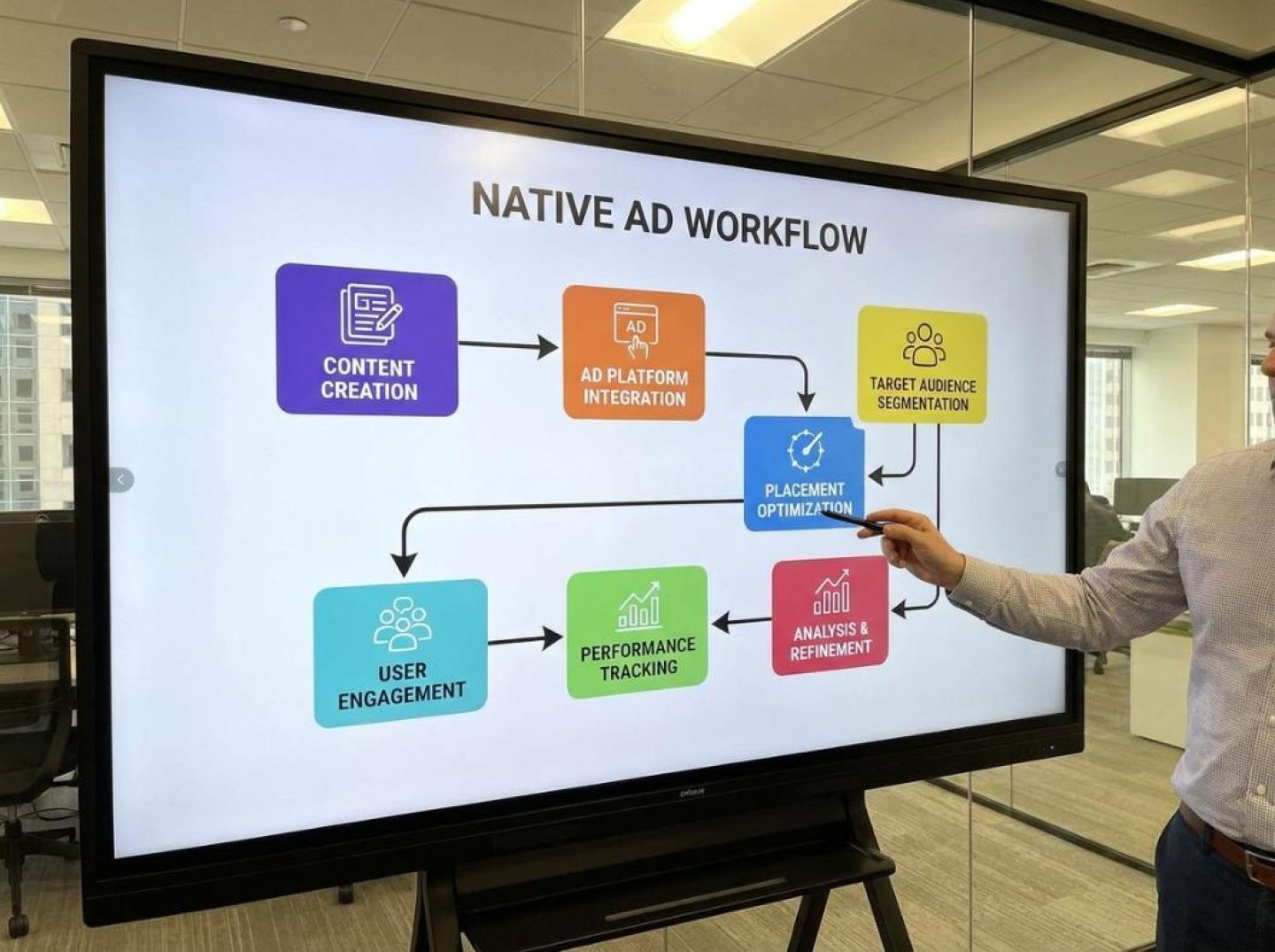
Consider the difference in practice. The default workflow most marketers follow today is linear: generate a large batch of creative, push it into testing, wait for statistical significance, learn what worked, and repeat. It's methodical, but at AI-generation speeds it becomes a resource drain — you're paying for impressions on hundreds of concepts that were never grounded in observable competitive patterns to begin with. Top native advertisers flip this sequence entirely. They start by studying what's already converting across dozens of competing campaigns, identify the structural patterns — the hook type, the emotional arc, the visual hierarchy — and only then generate a focused set of variations built on those proven frameworks. Instead of testing 500 random outputs, they're testing 15 variations of a structure they've already seen succeed. The workflow shifts from "generate → test → learn" to "learn → generate → validate."
This isn't a marginal efficiency gain. It's a fundamentally different relationship with creative volume. As Social Media Examiner has detailed, none of this works without one foundational step: building systematic context about your brand, your customers, and what a great ad looks like before you ever begin generating. Pattern intelligence from ad libraries is what makes that foundational step actionable rather than abstract. It transforms "what does a great ad look like" from an opinion into an evidence-based answer.
The trap, then, was never generating too little creative. It's generating too much without a compass — and mistaking the volume of output for the velocity of learning.
Enterprise brands are building something that most performance marketers don't even realize they're competing against: a closed-loop creative intelligence system that gets smarter with every campaign cycle. The partnership between DAIVID and ADIN.AI offers the clearest blueprint. Before a campaign ever launches, DAIVID's attention and emotion measurement technology scores creative assets for predicted engagement. Those scores then link to real-time performance data through ADIN.AI's platform, creating a continuous feedback channel between how an ad is expected to perform emotionally and how it actually performs commercially. After the campaign ends, the results feed back into benchmarking models that sharpen predictions for the next round. As DAIVID's Ian Forrester has explained, this kind of integration lets brands like Ajinomoto move beyond gut-feel creative decisions and toward a system where every campaign generates institutional knowledge that compounds over time.
Consider the three phases of the enterprise loop and their performance-marketing equivalents. Pre-launch creative scoring, in the enterprise context, means running assets through proprietary emotion and attention models. For performance marketers, the equivalent is systematic pattern extraction from native and push ad libraries — identifying which headline structures, image compositions, and hook sequences are appearing with high frequency and longevity across winning campaigns. You don't need a six-figure measurement platform to notice that a specific visual formula has been running across three verticals for eight weeks straight. That persistence is the score.
Real-time performance linking is the second phase. Enterprise brands pipe campaign metrics directly into their scoring models. Performance marketers do the same thing whenever they test a pattern-informed creative against their own traffic and record the results — click-through rates, conversion rates, cost-per-acquisition — in a structured way that ties back to the specific pattern they were testing. The key word is structured. Most marketers test constantly but log nothing in a format that feeds future decisions.
The third phase, post-campaign benchmarking, is where the compounding advantage emerges. Enterprise brands use each campaign's results to recalibrate their predictive models. Performance marketers can achieve the same effect through ongoing competitive monitoring: tracking how the patterns they identified weeks or months ago are evolving, which ones have been commoditized by imitators, and which new variations are emerging. This is not a static exercise. It's a living competitive intelligence discipline that, over successive cycles, builds a proprietary understanding of what works — and why it stops working — that no amount of prompt engineering can replicate.
The reason this distinction matters is that AI-powered creative tools, as Social Media Examiner has noted, are only as good as the context and instructions you give them. A prompt without pattern intelligence behind it produces volume without direction. But a prompt informed by three months of structured competitive observation, validated against your own performance data, and refined through ongoing benchmark tracking? That's a fundamentally different input — and it produces a fundamentally different output. The moat isn't the model. It's the loop.
The theory is clear: pattern intelligence beats prompt engineering. But what does this actually look like when you sit down to build a campaign? Here's a concrete, five-step workflow that any native or push advertiser can implement immediately — no enterprise budget required.
Step 1: Mine ad libraries for top-performing creatives in your vertical and geo. Start by systematically pulling winning creatives from spy tools, ad libraries, and network showcases in your specific niche and target geography. Don't just browse — catalog. If you're running health offers in tier-one English-speaking geos, you might pull fifty to a hundred top performers from the last 90 days. If you're in finance push, narrow to the last 30. The goal isn't inspiration in the casual sense; it's building a dataset of proven creative signals before a single pixel gets designed.
Step 2: Decode the structural patterns. This is where the real intelligence work happens. For each winning creative, break it into components: headline formula (curiosity gap, direct claim, listicle, question), image style (before/after, candid, editorial, UGC-style), emotional trigger (fear, aspiration, urgency, curiosity), CTA format (button text, implied action, soft vs. hard ask), and overall angle (problem-aware, solution-aware, testimonial). What emerges are reliable structural patterns — not individual ads to copy, but repeatable frameworks. In health verticals, for instance, before/after imagery consistently outperforms clean product shots by wide margins, because transformation is the promise the audience is buying. In finance push notifications, curiosity-gap headlines with numerical specificity ("$2,137 in 14 days") dominate because they satisfy the brain's pattern-completion instinct while triggering loss aversion.
Step 3: Use those patterns as the strategic brief for AI-generated variations. This is the critical inversion most advertisers get wrong. Instead of opening ChatGPT and asking for "10 headlines for a weight loss offer," you feed AI a structured brief built from your decoded patterns: the headline type, the emotional register, the specificity level, the image description parameters. As MarTech has argued, brands must strengthen strategic inputs like messaging architecture and audience understanding before AI can generate anything worth testing. The prompt isn't the strategy — the pattern brief is.
Step 4: Launch with pre-validated creative confidence. Because your variations are structurally modeled on proven winners, you're not gambling on novelty. You're launching with what amounts to a pre-tested hypothesis. This dramatically compresses the testing phase. Instead of burning budget on ten wildly different angles to find one that works, you're testing ten variations of a pattern you already know performs — refining execution rather than searching for product-market-message fit from zero.
Step 5: Feed results back into your pattern database. Every campaign becomes an input for the next one. Which pattern variations outperformed? Which emotional triggers are fatiguing? Which image styles are gaining or losing ground? This is exactly the kind of continuous testing, learning, and optimization loop that separates AI-native operating models from campaign-based thinking. Meanwhile, as Social Media Examiner has documented, training AI on who your customers are and what great ads look like is the foundational step that makes everything downstream actually work — and your pattern database is precisely that training material.
The compounding effect is what makes this workflow transformative. Each cycle sharpens your pattern library, which sharpens your AI briefs, which produces higher-quality variations, which generate cleaner performance data. After three or four cycles, you're not competing against other advertisers' prompts. You're competing with an evolving intelligence layer that most competitors don't even know exists.
Receive top converting landing pages in your inbox every week from us.
Guide
Discover why celebrity endorsements and global intellectual property don’t automatically translate into advertising success. This guide uses ad spy intelligence to explore how audience relevance, placement context, creative testing, and post-click performance help advertisers build high-ROI campaigns without expensive celebrity partnerships.
Elena Morales
7 minOct 9, 2026
Guide
Discover how native advertisers can turn the psychology behind big brand stunts like “Break Conference” and “World Menu Heist” into measurable performance campaigns. Learn how to use scarcity, owned IP, fandom, participation, and cross-channel funnels to build native and TikTok campaigns that generate attention and conversions.
Marcus Chen
7 minOct 8, 2026
Most Read
Learn how to turn sports, snacks, creator trends, and pop culture moments into high-ROI advertising funnels without relying on big budgets. This guide shows how to use Anstrex Native, Instream, and Push intelligence to identify emerging cultural angles, analyze ad duration and gravity, and adapt proven concepts to lower-cost placements.
Rachel Thompson
7 minOct 7, 2026