
6 minSeptember 30, 2026

Our tools monitor millions of native, push, pop, and TikTok advertising campaigns.
Get StartedIf you’ve ever argued for a specific face on a specific board along I‑95 because “that’s where the battle for share is actually happening,” you’re already closer to performance marketing than you think.
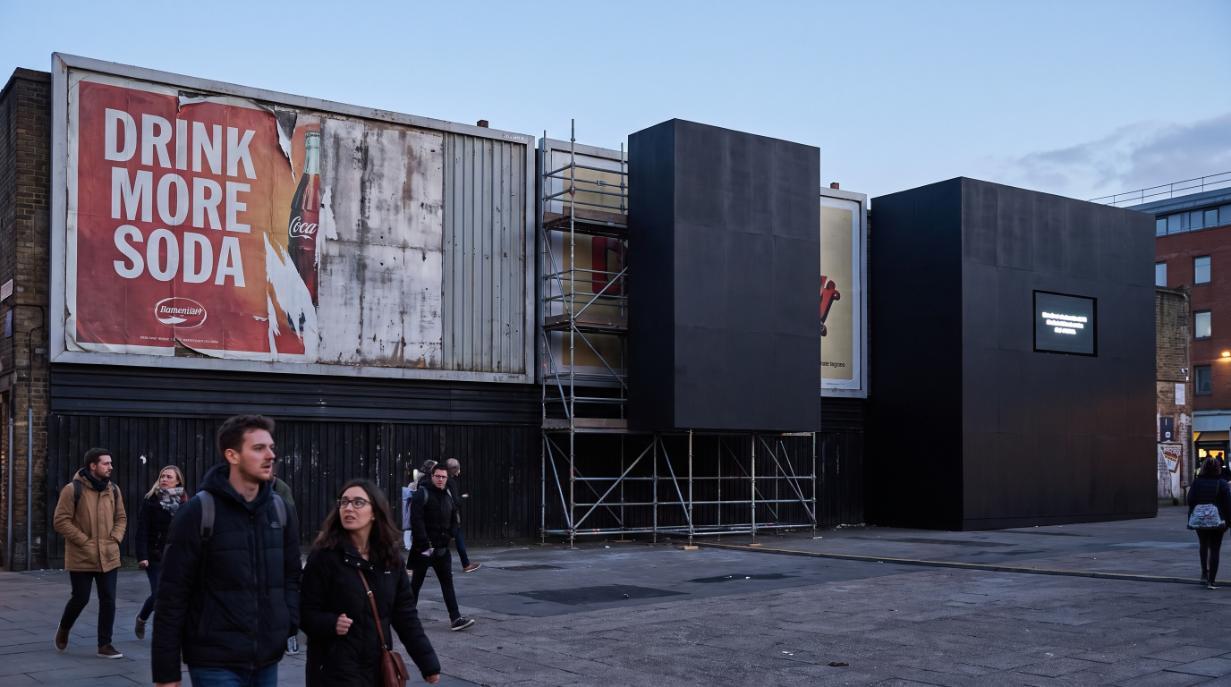
On paper, the two worlds look nothing alike. In one, you’re fighting for the perfect 14′ x 48′ panel that hits commuters twice a day. In the other, you’re bidding on a TikTok placement that might only serve a few thousand impressions before the algorithm decides whether your creative lives or dies. One is steel and vinyl; the other is dashboards and data streams.
But the underlying game hasn’t changed at all. It’s still about putting the right message in the right place at the right time for the right outcome.
The OOH industry has been wrestling with this shift already. As one OOH publisher asked in a recent piece, what if the industry stopped “selling billboards” and started selling the business outcomes brands actually wake up caring about: market share, launches, momentum, and competitive advantage, instead of just locations, impressions, and CPMs, which are “still just tools” (as Brent Baer argues here). That philosophical pivot is exactly the mindset performance marketers live in every day.
The surprise is that your “old-school” OOH instincts are built for this.
You already know how to read a market, not just a media kit. You’ve balanced intuition with data when deciding whether that board at the exit ramp beats the cheaper board a mile down. You’ve defended why a high-visibility board with the right audience is worth more than an extra 100 GRPs on paper. Performance marketing just wraps that same judgment in a new language: audiences, conversion windows, creative fatigue, lookalike models.
Platforms like AdQuick’s “universal adapter” have quietly pushed OOH into parity with those so‑called “modern” performance channels anyway. When machine learning analyzes “trillions of possible combinations” of inventory to hit the right audience in the right place at the right time, it’s not replacing your value—it’s scaling the kind of strategic pattern‑recognition you’ve already been doing manually. What used to be “gut feel plus a traffic report” is now precision, real‑time feedback, and measurable ROI flowing straight into the same dashboards your digital counterparts obsess over.
And here’s the bigger twist: performance marketers increasingly need what OOH people already understand. When brands run 80% of their budget through bottom‑funnel performance channels, they eventually hit a wall—CPAs climb, audiences saturate, and the “optimize harder” instinct stops working, because they’ve starved the top of the funnel for too long (as this breakdown of the 60/40 rule makes painfully clear). OOH veterans are fluent in building broad, real‑world awareness that quietly powers everything else—what some performance teams are only now discovering as the “halo effect” of OOH on adjacent digital campaigns.
So when you log into a black‑box ad platform or fire up a creative spy tool to see which TikTok ads are actually winning, you’re not entering an alien universe. You’re doing what you’ve always done: studying the street before you choose your corner. You’re scanning the competitive landscape, understanding context, then backing the message and placement that will move the numbers that matter.
The billboards may be replaced by ad sets and audiences. The traffic counts may be replaced by click‑through rates and conversion curves. But the people who know how to connect physical context, human behavior, and commercial outcomes have a massive unfair advantage in performance marketing.
You don’t need to abandon what you know to play this new game.
You need to weaponize it.
OOH veterans don’t need to “become performance people.” You already are. The rest of the industry is just now catching up to how you’ve always thought: Who am I reaching, where, how often, and what does it do for the business?
For years, the knock on out‑of‑home was simple: “You can’t measure it.” That objection is disappearing fast. Modern platforms have turned what used to be a static, intuition‑driven medium into a data‑rich, feedback‑driven system that behaves a lot more like paid social or programmatic display than most digital purists want to admit.
Take the way AdQuick describes its platform. Instead of planning off broad traffic counts and “gut feel,” the platform ingests consumer, demographic, and behavioral data, then uses machine learning to analyze trillions of possible combinations of OOH units. It scores those units based on how effectively they reach specific audience segments, at specific times, in specific contexts. That’s not “spray and pray.” That’s segmentation, targeting, and bid‑like decisioning—exactly how a performance marketer would think about building an audience and allocating budget across ad sets.
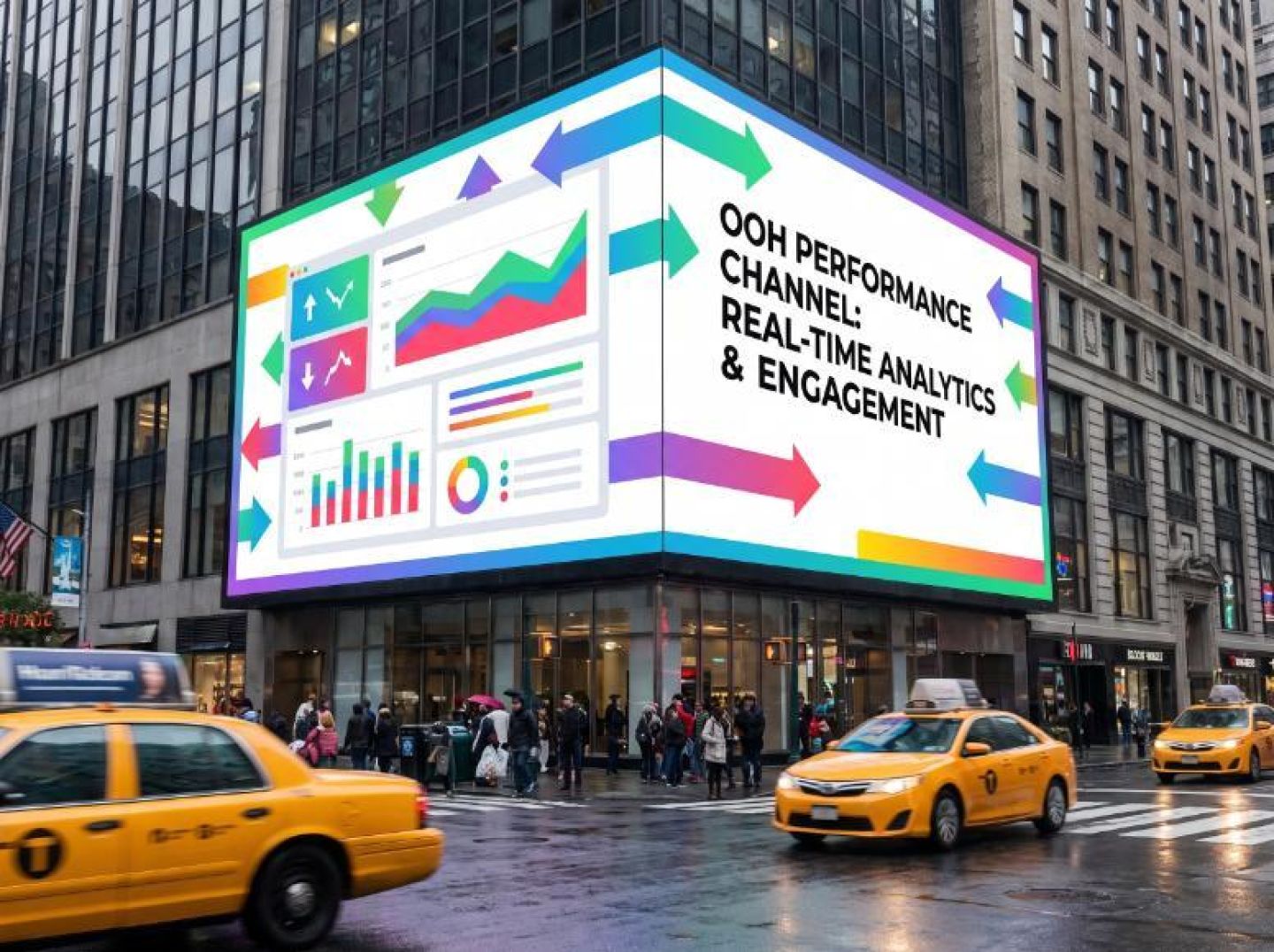
Crucially, that data isn’t arriving six weeks after your boards go up. As AdQuick’s team explains, inventory, audience, and outcome data can now be delivered in real time, putting OOH in practical parity with modern performance channels. When you can see impressions, movement patterns, and downstream digital behaviors in near‑real time, you’re not “doing a branding campaign”—you’re running an always‑on experiment in the real world.
This is where your existing instincts map cleanly into the black‑box world. Performance marketers obsess over “full‑funnel” impact; you already know that a perfectly placed board doesn’t just create awareness, it quietly boosts everything else. Modern measurement is finally proving that halo. As AdQuick notes, well‑planned OOH drives a measurable “halo effect” on adjacent digital campaigns—higher click‑through rates, better conversion efficiency, stronger branded search volumes. In performance language, OOH is a multiplier on ROAS, not just a line item in the brand budget.
If you’ve ever argued that a certain corridor gives your client “real‑world share of voice,” congratulations: you’re already thinking like a growth strategist. The 60/40 brand‑to‑performance rule that’s been popularized in effectiveness research is now being reframed in an OOH context. As one analysis in OOH Today explains, when brands over‑index on bottom‑funnel performance and starve brand investment, their dashboards look great—until they don’t. Acquisition costs climb, retargeting pools shrink, and the engine runs out of fuel. Mobile OOH formats like LED billboard trucks offer a way out of that trap: they build top‑funnel mental availability while simultaneously driving trackable outcomes in the markets where purchase decisions actually happen.
In other words, OOH isn’t the “brand tax” performance teams have to tolerate; it’s a demand‑generation machine that keeps their spreadsheets from falling off a cliff. You’ve already been planning for incremental reach, frequency, and share of voice. Translating that into performance terms just means tightening the loop between exposure and outcome—and the tools to do that now exist.
And the technology curve is bending even further toward your way of working. Agentic AI—systems that can autonomously plan, buy, and optimize—isn’t just a buzzword confined to ad tech decks. In a recent end‑to‑end campaign covered by OOH Today, buy‑side and sell‑side AI agents collaborated across the largest aggregation of global OOH inventory, using screen‑level audience indexes and dynamic creative to continuously refine delivery. That’s functionally identical to what performance marketers already do with algorithmic bidding and creative testing—except it’s happening across physical screens, in real cities, with first‑party performance data flowing back into the system.
So when you see phrases like “programmatic DOOH DSP” or “agentic trading,” don’t translate that as “a different industry.” Read it as a more automated version of what you already know how to do: orchestrate the right message, in the right place, at the right time, with clear feedback on what’s working.
OOH isn’t graduating into performance; it’s revealing that it was a performance channel all along. Your advantage is that you understand the canvas and the context better than anyone. The black boxes are just giving you knobs and dials you’ve never had before.
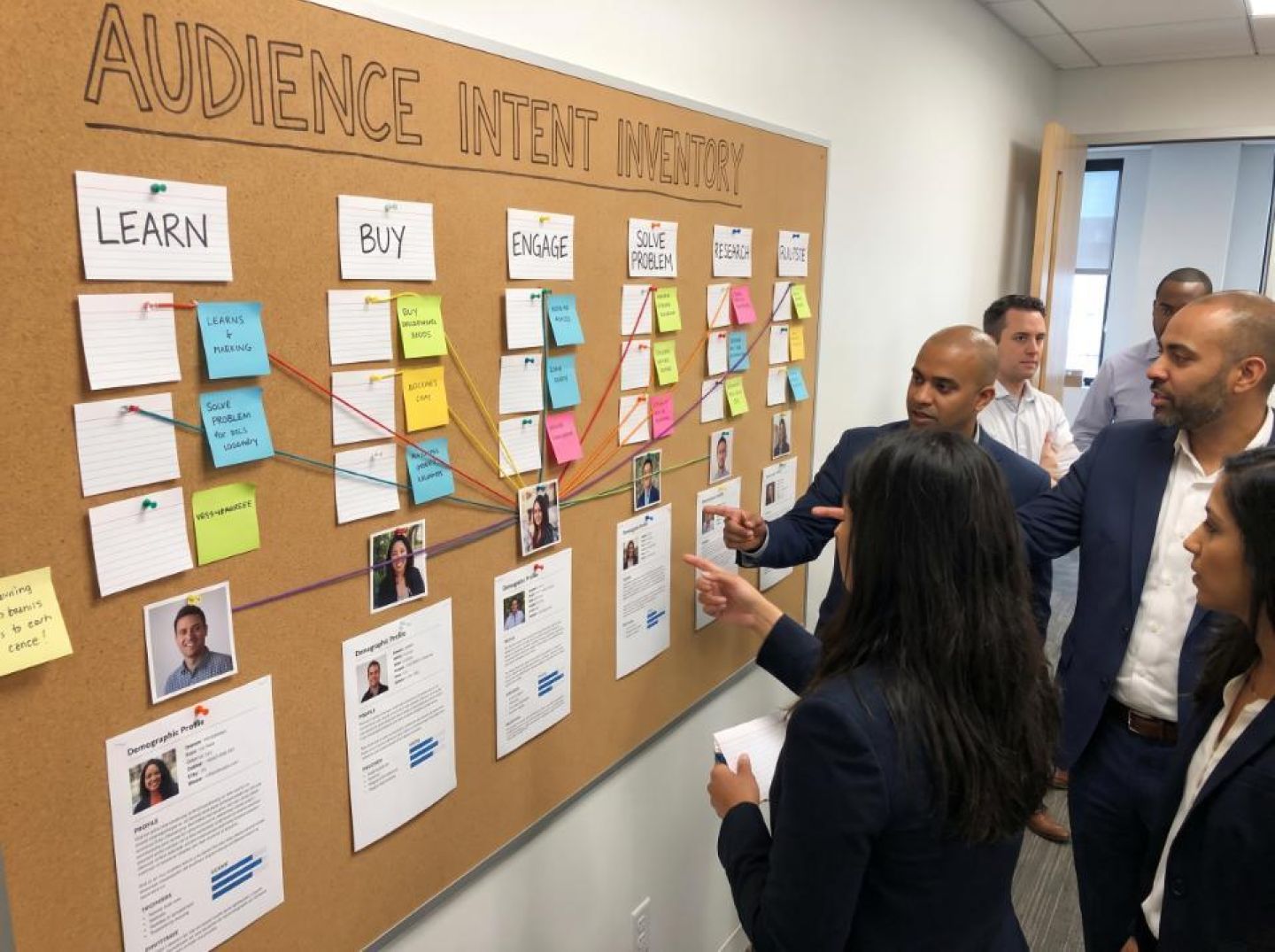
If you’ve ever spent a week in your car “driving the market,” you already understand the core of performance media buying. You were never just hunting for empty facings; you were evaluating three things that map almost perfectly onto the way high‑performing digital teams think: audience, intent, and inventory.
In OOH, “location, location, location” was always shorthand for who is there, what they’re doing, and how often you can hit them. In performance marketing, the language changes, but the job doesn’t.
In traditional OOH, you start by asking: Who passes this board? How many people? What do they care about? You lean on traffic counts, demographics, and your own qualitative feel for the market.
In performance marketing, “audience” is the same problem, just expressed in IDs and segments: website visitors, cart abandoners, “frequent travelers,” “new parents,” or “crypto enthusiasts.” What you used to infer from where people physically move is now revealed through what they click, search, and buy.
Modern OOH platforms have already dragged your world into this audience‑first mindset. Tools like AdQuick use machine learning to evaluate trillions of potential unit combinations, layering demographic, behavioral, and contextual data to ensure “the right audience, in the right place, at the right time,” effectively turning OOH into a precision targeting channel that behaves like a DSP for the physical world, as their own platform overview explains.
If you know how to select a board that over‑indexes for a specific demo or lifestyle, you’re halfway to building digital audiences. The interface and acronyms change, but the muscle memory—matching people to placements—is identical.
Location was never just a dot on a map; it was a proxy for intent. A unit outside a stadium says “fans with disposable income and heightened emotion.” A transit shelter in a commuter corridor says “people in a weekday work mindset, twice a day.” You’ve been segmenting by context your entire career.
Performance marketing formalizes that context as “intent.” Search queries reveal explicit intent (“best CRM software”), while content consumption and behavior hint at implicit intent (scrolling B2B SaaS content, visiting pricing pages). Media buyers decide whether to show upper‑funnel creative, a mid‑funnel explainer, or a hard offer based on those signals.
Your experience planning campaigns around events and environments maps cleanly to this. When AdQuick brought its “Infrastructure for Culture” narrative to Cannes, they deliberately used OOH to hit a hyper‑concentrated audience of industry leaders at peak professional focus, turning festival environments into intent‑rich inventory and sparking social amplification and new business conversations, as documented in their Cannes case study. That’s performance logic: don’t just reach people—reach them when they’re most primed to care.
If you can articulate why “arrivals at the airport on Sunday” is a different mindset than “departures on Friday afternoon,” you can quickly translate that to digital concepts like “first‑time visitor vs. returning high‑intent visitor” or “in‑market vs. broad interest.”
In OOH, inventory is finite and physical. You navigate formats, ownership, and availability: this wallscape is sold out, that digital spectacular has daypart holes, this transit shelter cluster gives you the right coverage at the right CPM. You balance reach, frequency, and cost across a fragmented supply landscape.
Digital performance channels simply explode that fragmentation. Instead of a few thousand units in a market, you’re staring at millions of impressions across exchanges, placements, and formats. But the underlying skills—evaluating quality, negotiating access, and assembling an efficient mix—are the same.
The OOH ecosystem itself is already moving toward the same automated, data‑driven supply mechanics that performance buyers live in daily. Agentic AI‑powered DOOH trading, like the recent Lot of Happiness campaign run on Broadsign’s massive global supply of static and digital screens, shows how AI agents can coordinate complex cross‑party tasks, use screen‑level audience indexes, and execute guaranteed buys at scale, as described in coverage of that campaign. That’s basically programmatic media buying for the physical world.
Meanwhile, the broader OOH market is proving that when inventory becomes more digital and data‑rich, spend follows. Digital OOH now accounts for over a third of total OOH revenue and is growing nearly 13% year‑over‑year, with formats like digital transit up 25%, according to industry reporting on record‑setting OOH revenues. That’s exactly the pattern you see in digital performance channels when inventory becomes easier to buy, optimize, and attribute.
If you can juggle panel availability, format constraints, ride‑alongs, and landlord politics to build an efficient market coverage plan, you can absolutely learn to navigate ad exchanges, bid strategies, and frequency caps. In both cases, the job is to turn a messy, fragmented supply universe into a coherent, performance‑driven media plan.
The shift from “location, location, location” to “audience, intent, inventory” isn’t about abandoning what you know—it’s about relabeling it. Your OOH instincts are already wired for performance; performance marketing just gives you more levers, more data, and, increasingly, more powerful tools to pull off the same strategic moves you’ve been making on the street for years.
If you’ve spent your career making cars slow down at a freeway exit, you’re already better at performance creative than most junior media buyers. The job hasn’t changed as much as the surface area. In OOH, you learned how to win three seconds of distracted, real‑world attention. In performance marketing, you’re fighting for the same three seconds — they just happen on a five‑inch screen instead of a 14’x48’.
The core principle carries over: simple, legible, emotionally loaded ideas beat clever, crowded ones. Your best boards have always been built for drive‑by cognition — one dominant visual, a single promise, a brand cue, and maybe a URL or QR. That same discipline is exactly what separates a thumb‑stopping ad from the fifty that get swiped past. Scroll is just pedestrian traffic at scale.
Digital teams often overcomplicate creative because they can. Endless variants, motion, infinite characters, dynamic everything. But attention hasn’t evolved nearly as fast as ad tech. When out‑of‑home revenue is setting records, with digital formats driving a 12.9% year‑over‑year jump in spend and being praised for a “unique combination of scale, creative impact, and measurable business outcomes,” that’s a signal that the kind of work you’ve been doing is what brands are hungry for everywhere else too, as recent OOH revenue data makes explicit.
Here’s the mindset shift: in performance marketing, creative isn’t “the thing we rotate every quarter.” It’s an input to a live system. Platforms and AI agents are constantly testing, ranking, and reallocating spend based on how each asset performs. The same way you’d watch traffic, weather, and construction before recommending a board, performance teams watch click‑through rate, cost per acquisition, and downstream revenue before scaling a creative concept.
That’s where “spy tools” become your new drive‑time. Instead of physically driving the market, you’re virtually driving the competitive landscape. Ad libraries, competitive intelligence platforms, and native tools from Meta, Google, and TikTok let you see which creative hooks, formats, and offers your category is running — and, by proxy, what’s likely working. Your OOH instincts help you cut through the noise: what would actually catch my eye from 30 feet away? That same clarity usually translates into high‑performing, high‑intent clicks.
Out‑of‑home’s role in this ecosystem is changing too. As AI agents start to filter inboxes, feeds, and even ad exposure itself, unmediated physical attention becomes more valuable, not less. That dynamic is already shaping modern campaigns; when a Cannes Lions takeover used OOH as “infrastructure for culture,” planners saw how a few well‑placed pieces of creative in the real world could ignite social sharing and inbound interest far beyond the boards themselves, as described in AdQuick’s Cannes case study. In performance terms, the boards weren’t just impressions — they were upstream creative that seeded cheaper engagement and conversion across every digital channel.
Agentic and programmatic DOOH are accelerating this convergence. In a recent fully agentic campaign for Lot of Happiness, buy‑side and sell‑side AI agents coordinated placements, screen‑level audiences, dynamic creative, and guaranteed buys end‑to‑end, turning what used to be static boards into a responsive, performance‑grade system with human guardrails, as the team behind this first agentic OOH execution explained. When creative is that tightly wired into real‑time signals, your job becomes designing assets that can flex — message hierarchies that work at different distances, framings that crop cleanly to mobile, versions that can swap offers without losing the core idea.
For OOH veterans, this is an opportunity, not a threat. Performance marketers are finally catching up to what you’ve known all along: constraints produce clarity, and clarity produces results. You already know how to write for the person glancing up from their steering wheel; now you’re just writing for the person glancing down at their feed, with spy tools and AI helping you see, in real time, which ideas really do what your best boards have always done — make people stop, notice, and act.
If you’ve sold a tough board on the wrong side of town and still hit your monthly, you already understand the soul of performance marketing: make asymmetric trades in your favor, repeatedly.
What changes in digital isn’t the game, just the scoreboard.
In OOH, you lived inside a world of yield: unsold inventory at month‑end, remnant digital loops, make‑goods, seasonal softness, overbooked corridors. You knew when a “rate card” was fiction and when a “sold‑out” line was just a negotiation tactic. In performance media, yield looks like underpriced clicks, cheap CPMs in overlooked geos, or audiences that competitors haven’t figured out how to convert yet. The behaviors you’ve already built — sniffing out value, timing your buys, packaging inventory creatively — translate almost one‑to‑one.
Here’s how to make that transition intentional instead of accidental.
When you pushed for a lower CPM on a digital transit network, you weren’t just being aggressive — you were doing manual arbitrage. You knew that audience was worth more to your client than what the operator was asking, so you compressed the spread.
In performance marketing, you’ll talk less about “discounts” and more about:
You’ve seen this shift happen in your own backyard. Digital OOH is already being sold as a performance channel, with record revenue growth driven partly by brands that treat it as measurable, conversion‑driving media rather than pure awareness, as one industry analysis of recent OOH revenue gains makes clear. That same mindset — prove the business outcome, not just the impression — is exactly what governs paid social, search, and programmatic.
OOH people instinctively track occupancy and sell‑through. You feel when a plant is “tight” or soft. Performance buyers think in similar terms, but the levers look like:
If you’ve ever negotiated a higher share of voice in a digital street furniture loop during a slow week, you already understand how to use yield pockets to your advantage. Programmatic DOOH platforms that treat OOH as “infrastructure” are making these levers look even more like classic performance media, with real‑time data, machine‑learning‑driven placement, and automated buying that mirrors how a DSP operates in other channels, as described in this overview of.
OOH veterans are naturally skeptical of black boxes. You’re used to walking the market, calling reps, photographing boards, and reading between the lines of a rate sheet. Performance “spy tools” — competitive ad libraries, auction insights, publisher transparency reports, creative scrapers — are just the digital extension of that same instinct.
In practice, you can:
As OOH becomes more programmatic and AI‑mediated, operators themselves are leaning into this “spy and optimize” posture. Fully agentic OOH campaigns are already coordinating tasks across buy and sell sides, stitching together massive global supply with data, dynamic creative, and guaranteed buying to unlock more efficient, performance‑driven trading, as one recent write‑up of an AI‑powered end‑to‑end OOH execution illustrates. If you’re comfortable living in the gaps between buyer value and seller pricing, this is your moment.
The real unlock is realizing you’re not just “good at getting deals”; you’re good at spotting mispriced attention. That’s the rarest skill in performance marketing.
To make it concrete:
Campaigns that treated OOH as a core part of the performance stack have already demonstrated this. When a festival‑focused deployment reached a highly concentrated, high‑value audience and triggered organic amplification, new business, and cross‑channel buzz, it functioned as a case study in how to remove friction and make OOH behave like any other agile, optimizable channel, as recounted in this look at.
In other words: your negotiation chops and yield instincts are not a side note in a digital career — they’re your competitive advantage. Performance marketing just gives you a more granular ledger, better spy tools, and a faster feedback loop to monetize the arbitrage you’ve been doing for years.
You’ve been living in a “halo effect” world. In OOH, you tell the story like this: people see the board, search more, click more, and everything else works a little better. The cause-and-effect line is real, but it’s fuzzy. Performance marketing doesn’t hate that story; it just demands you prove it with numbers that survive a CFO’s spreadsheet.
To make the jump, you don’t need to abandon brand thinking — you need a measurement makeover.
The classic 60/40 brand‑to‑activation split is built for long‑term equity. It’s the logic behind high‑impact OOH: you buy reach, fame, and borrowed attention from the real world. That’s why OOH is still smashing records, with revenue hitting $2.12 billion in Q1 alone and digital formats growing double digits, a surge driven in part because marketers now see OOH as a “performance‑driven media channel” rather than pure awareness, as.
Performance marketers don’t debate whether brand matters; they just measure it differently. Instead of arguing for 60/40 as a doctrine, they ask: “For this campaign, at this budget, what mix maximizes business impact in the next 30–180 days?” That’s not heresy — it’s just yield management applied to attention instead of inventory.
Your advantage: you already think in terms of outcomes. As Brent Baer argues, brands don’t wake up wanting a 14' x 48' panel; they want market share, launches, and momentum. Performance marketing just pushes you to quantify those outcomes, not narrate them.
In OOH, you’ve been trained to defend impressions, GRPs, TRPs, and reach. The underlying idea is sound: how many people did we touch? But in performance channels, the unit of heroism is different. It’s not “How many saw it?” but “What changed because we showed it?”
That’s incrementality: the lift that would not have happened without your media. In OOH, you’ve felt this as a “halo effect” — the way a strong placement suddenly spikes branded search and conversion rates on other channels. Platforms like AdQuick are now quantifying that, using mobility, behavioral, and outcome data to prove the “halo effect” OOH has on adjacent digital campaigns, and delivering that data in near real time. Performance marketing expects the same logic, just with tighter loops and cleaner baselines.
When you’re inside Meta, Google, or a performance‑led DSP, you talk in three questions:
You already think this way when you compare a board’s past performance, seasonality, and previous creative. The only shift is that the scoreboard now shows revenue per dollar instead of traffic per week.
ROAS (Return on Ad Spend) is just yield per dollar in disguise. Where you once asked “What’s the CPM on this 4‑week flight?”, performance marketers ask “For every $1 in, how many dollars out — and how fast?” Digital teams are ruthless about this because they can be; platforms like AdQuick now bring OOH into “parity with modern performance channels” by feeding real‑time exposure and outcome data and using AI to analyze “trillions of possible combinations of OOH units”. Performance buyers expect that same level of precision everywhere.
As an OOH pro crossing over, you don’t need to become a spreadsheet monk. You just need a few reflexes:
Here’s where spy tools become your secret weapon. In OOH, you’ve long argued that your campaign boosts everything else. Now you can go into Meta’s Ad Library, TikTok’s Creative Center, or third‑party spy platforms and show that when a competitor’s DOOH flight hits your market, their search, paid social, and display activity ramps at the same time, and that OOH‑heavy brands often sustain stronger always‑on performance. That turns “halo effect” from a vibe into a pattern.
Combine that external intelligence with the kind of real‑time OOH data the industry is finally embracing — where OOH is “fully integrated” into performance‑style buying and optimization, as AdQuick frames it — and you’re no longer the person in the room defending a fuzzy 60/40 slide. You’re the one saying:
“Here’s what OOH does to search, here’s how that shows up in ROAS, and here’s the incremental lift we can steal from your competitors by timing and targeting it better.”
That’s not abandoning brand. That’s weaponizing it.
Receive top converting landing pages in your inbox every week from us.
Quick Read
Discover how OOH professionals can transition into performance marketing by applying their existing strengths in audience targeting, site selection, creative strategy, negotiation, and media measurement. This guide shows how OOH talent can use ad spy tools and performance data to turn traditional media expertise into measurable digital growth.
Priya Kapoor
7 minSep 30, 2026
Most Read
Discover why competitive intelligence is becoming a critical function in modern OOH advertising teams. This guide explores how an Ad Intelligence Strategist can turn competitor monitoring into actionable insights for creative, targeting, pricing, sales enablement, and inventory strategy.
Samantha Reed
7 minSep 29, 2026
Recently Updated
Explore what OOH hiring trends reveal about the gap between traditional billboard operations and the industry’s performance-marketing ambitions. This guide examines job boards, missing data roles, and the growing need for competitive intelligence and performance-focused tools in out-of-home advertising.
David Kim
7 minSep 28, 2026




)