10 minOctober 11, 2026

Our tools monitor millions of native, push, pop, and TikTok advertising campaigns.
Get StartedIf you want to know where performance marketing arbitrage is headed, don’t look at martech press releases—look at who’s hiring in out‑of‑home.
The OOH category is in the middle of a quiet land grab, and you can see it right in the classifieds. When a niche starts spinning up business development reps in multiple metros, performance marketers should read that as a flashing indicator that new, underpriced inventory and data pipes are coming online.
Scan a recent batch of OOH employment listings and a pattern jumps out: it’s not just “billboard sales” in tertiary markets anymore. You’ve got a Business Development Representative for Liquid Outdoor Media in New York, an Ad Sales Account Executive role in Miami, a Sales Representative in Dallas, a National Account Executive slot in Los Angeles, and a Local Media Sales Executive in Denver. That’s a coast‑to‑coast sales buildout around digital spectaculars, interactive kiosks, and lifestyle‑center networks rather than just static posters.
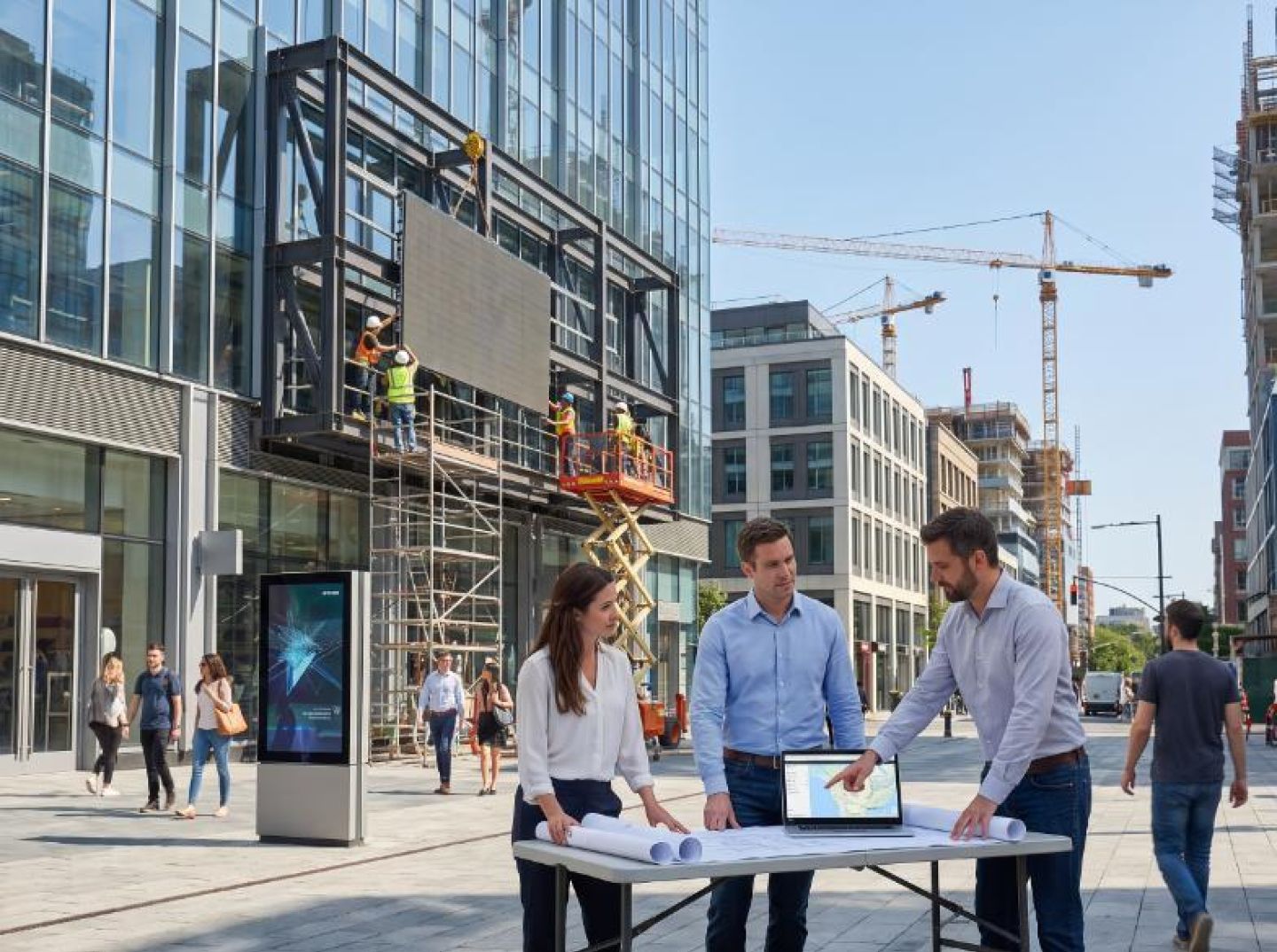
Crucially, these roles sit alongside hiring for real estate, operations, tech, and creative: Directors of Operations, graphic designers for digital‑first OOH, sign installers, and LED video screen service technicians are all in demand on the same OOH career board. That mix tells you this isn’t a cyclical fill‑in; it’s infrastructure building. Whenever a channel staffs up across sales, supply, and creative, it’s preparing to monetize new audience moments—and those moments are exactly where performance marketers find early arbitrage.
What makes today’s OOH surge different from previous cycles is where the demand is pointed. Players like Liquid Outdoor Media aren’t just selling rectangles by the highway; they’re assembling “digital and static out-of-home media assets” across open‑air lifestyle centers and entertainment districts, plus interactive kiosks and “innovative digital and experiential” activations woven into physical environments, as their own job description makes clear. That’s OOH repositioning itself from pure reach into a hybrid of brand canvas, data node, and commerce trigger.
The strategic intent becomes even clearer when you look at how industry thinkers are modeling the next decade. In a forward‑looking piece on autonomous mobility, OOH strategists argue that out‑of‑home will evolve into a “trigger layer for mobile commerce,” where passing a billboard can initiate an in‑car offer, load a product carousel, sync with AR overlays, or even enable instant booking for events and travel, turning outdoor into both awareness and mid‑funnel conversion in one pass, as this analysis of OOH in a self-driving world explains. Windows themselves are expected to become transparent OLED screens and AR surfaces, while computer vision maps the environment and ties physical placements to personalized digital experiences.
That vision requires more than media planners; it demands sales teams who can sell integrated packages, creative teams who can build adaptive content that changes with weather, vehicle type, or audience, and ops teams who can maintain LED clusters, programmatic feeds, and place‑based networks in mobility hubs and suburban corridors. The fact that there are simultaneous openings for billboard account executives, LED installation techs, and experiential‑friendly business development reps in the same OOH classifieds is the operational footprint of that strategy.
For performance marketers, this hiring surge is a leading indicator on two fronts.
First, it signals that OOH inventory is about to become more digitized, more targetable, and more tightly integrated with mobile and in‑car data streams. As high‑autonomy corridors, pick‑up and drop‑off ecosystems, and sprawling suburban routes turn into premium screen networks, the early buyers who know how to stitch those impressions into their attribution and bidding models will enjoy CPM and CPA advantages before the rest of the market catches up, a trajectory the self‑driving OOH forecasts for high-autonomy corridors and mobility hubs describe in detail.
Second, it hints at a coming arbitrage between how brands still mentally categorize OOH—as a “brand” line item—and what the channel is actually building toward—a measurable, triggerable layer in the commerce stack. That mismatch between perception and capability is where sophisticated performance teams historically find their best returns. Watch the OOH job boards closely: they’re not just staffing billboards; they’re staffing the dashboards performance marketers will be optimizing against next.
The trick is to stop reading OOH classifieds like a job seeker and start reading them like a quant scanning an order book.
Every role category—sales, real estate, ops, creative—maps to a different part of the future performance‑media stack. The more you learn to decode those patterns, the earlier you’ll see where pricing power, inventory liquidity, and measurement gaps are about to open up.
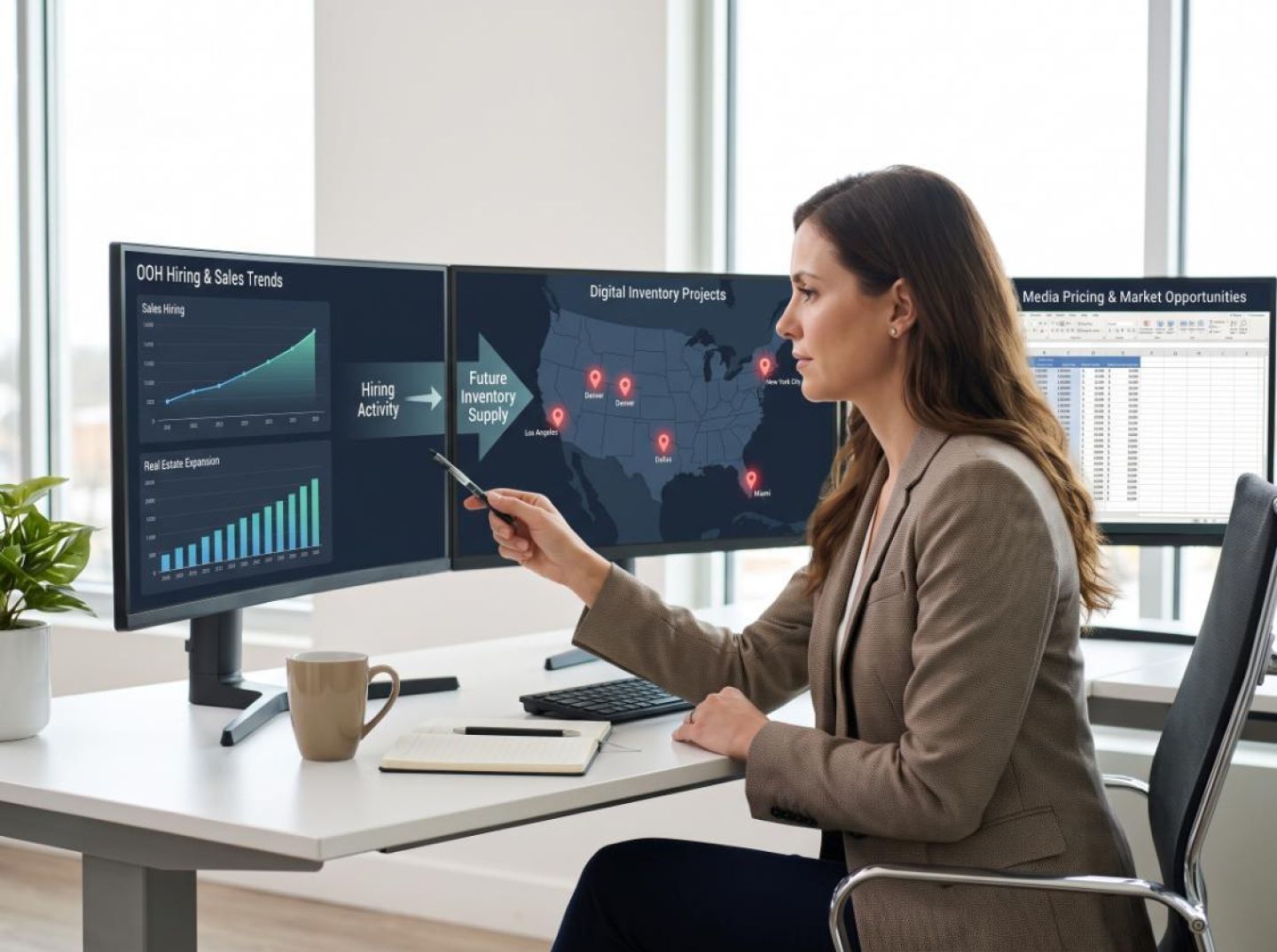
Start with the obvious signal: sales hiring. When you see multiple Business Development and Account Executive roles spun up across several markets in the same week, you’re not looking at “nice to have” backfills—you’re looking at a go‑to‑market push. In one recent batch of openings, you’ve got a Business Development Representative in New York at Liquid Outdoor Media, an Ad Sales Account Executive in Miami at EyeCatch Media, a Sales Representative in Dallas for Daktronics, and a National Account Executive in Los Angeles for SILVERCAST. The geographic spread—NYC, Miami, Dallas, LA, Denver—reads like a heatmap of where digital‑first OOH networks are trying to convert attention into booked revenue.
For a performance marketer, that’s the first arbitrage tell: when the OOH side is staffing hunters (Business Development, new‑business Account Executives) rather than farmers (Account Managers, Client Success), it usually means two things:
Liquid Outdoor’s Business Development role is explicitly tasked with proactive outreach to “larger regional advertisers and ad agencies” across key markets, and the company’s portfolio includes digital interactive kiosks, large‑format digital spectaculars, and experiential placements across lifestyle centers, all positioned as “innovative digital and experiential” opportunities integrated into on‑site activations. That combination—highly visible digital formats plus an emphasis on sponsorship and experiential—signals they’re not just peddling static GRPs; they’re trying to invent bundled products that behave more like full‑funnel performance media.
Zoom out to the management layer, and the signal gets stronger. In another classifieds run, a Southern Illinois Outdoor Advertising company is recruiting a Sales Manager to “develop and execute sales strategies to grow revenue and market share,” lead a team, and identify new business opportunities across local and regional advertisers, as described in an 11‑role roundup. A Sales Manager hire is structurally different from adding another rep: it means the organization expects enough volume to warrant process, forecasting, and structured outreach. That’s a second tell: when small and mid‑market plant operators add sales leadership, they’re about to become more sophisticated at packaging and selling remnant space that used to sit idle.
Then you have the non‑sales roles—your “invisible infrastructure” signals.
Real estate roles, like the VP/Director/Associate of Real Estate posted at Red Rock Outdoor in that same 11‑position listing, tell you where physical expansion is coming. Real estate headcount means new faces going up, new permits being chased, new landlord deals getting inked. That translates directly into:
Ops and install roles tell you about format evolution. When you see multiple listings for Sign Installers and LED Video Screen Service & Installation Techs at companies like Formetco in the same batch of OOH employment opportunities, that’s a very specific signal: more hardware is going up, and a larger share of that hardware is digital. For performance marketers, increased digital screen density means more addressable impressions, more day‑part and flighting flexibility, and a bigger surface area for programmatic pipes to latch onto—long before the bidstream fully reflects supply‑demand equilibrium.
Creative and brand roles point in a different direction: how OOH networks expect the value narrative to evolve. A Graphic Designer/Brand Marketing Specialist at SILVERCAST, highlighted among both the business development‑heavy postings and broader 11‑role snapshot, is there to make the product easier to buy and easier to justify. When media owners start investing in brand storytelling and creative support, they’re trying to push themselves up the value stack—from “we rent you pixels” to “we help you orchestrate culture moments on giant canvases.” That usually precedes price increases and more complex packaging (e.g., mixing spectaculars, content integrations, and social amplification).
Finally, the presence of “Free Agents” looking for roles in printing, services, and sales tells you talent liquidity is rising on both sides of the table. As more experienced OOH sellers and operators become available—and as classifieds explicitly invite those listings—you can anticipate faster diffusion of best practices across markets. For performance buyers, that’s a preview that even previously sleepy local operators will soon have reps who understand data‑driven buyers, performance narratives, and multi‑channel attribution.
Read together, these classifieds behave like a live options chain on the OOH ecosystem. Sales and sales management roles mark where supply is being aggressively monetized. Real estate and install roles mark where the underlying asset is expanding and digitizing. Creative and brand roles mark where the story is getting rewritten to court performance budgets. Decode each posting type, and you’re no longer browsing job ads—you’re front‑running where the next underpriced reach, frequency, and attention are going to appear.
If Section 2 was about reading the OOH jobs feed like an order book, this is where we zoom the chart out and map where that order flow is about to concentrate.
Three “hot zones” are forming in OOH right now. They’re not just media geographies; they’re arbitrage geographies—places where audience attention, physical infrastructure, and measurement are about to get wildly out of sync with pricing models. Performance marketers who learn to trade these mispricings early will buy cheap reach that behaves like premium inventory.
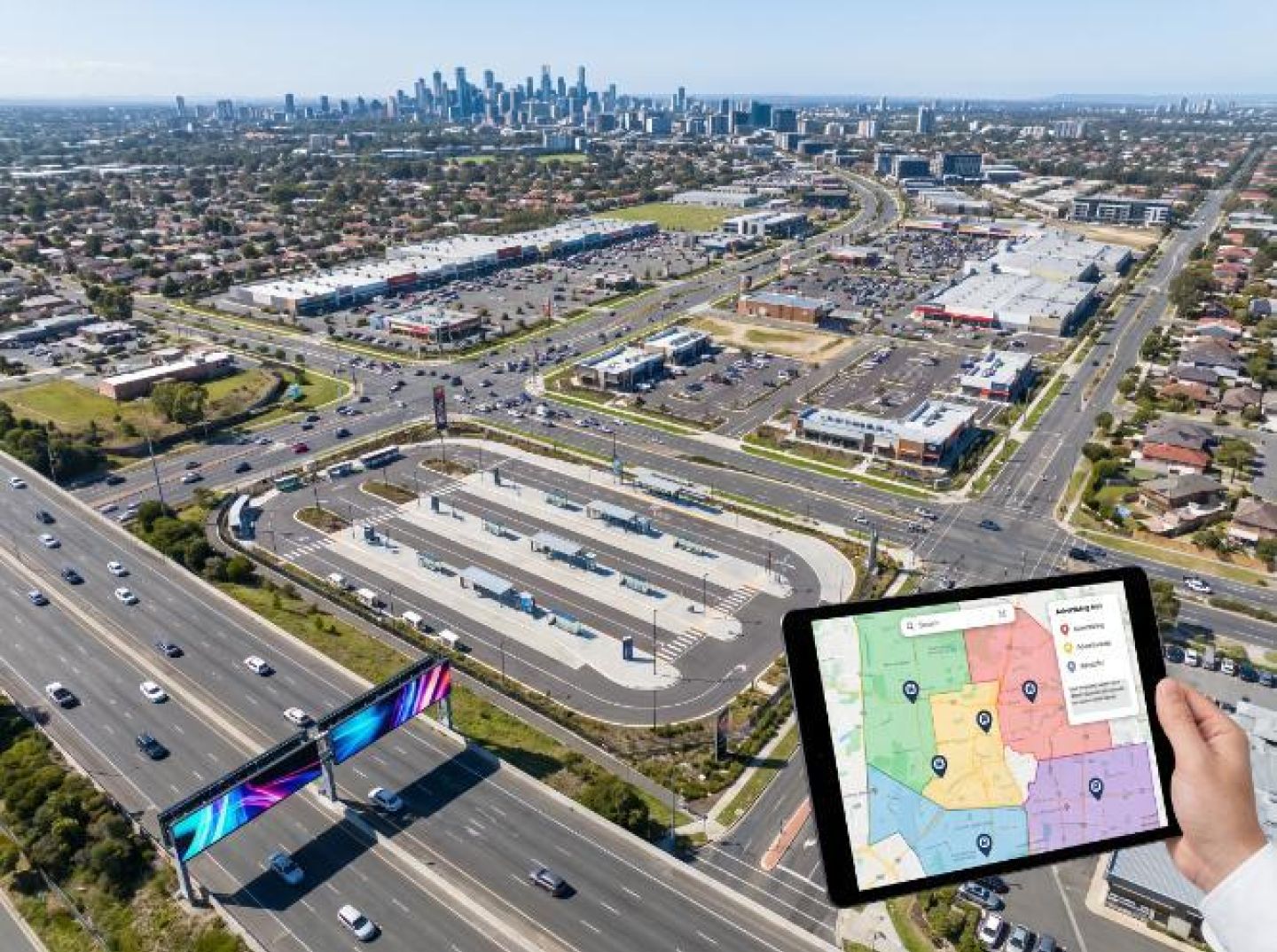
Follow the self‑driving pilots and you’ll find the first OOH arbitrage zone: high‑autonomy corridors.
As autonomous fleets scale, stretches of road designed for AVs will concentrate an unusually captive, screen‑rich audience. In a self‑driving world, passengers are no longer staring at the road—they’re staring at interfaces. According to an analysis of the “self‑driving world” by OOH Today, those high‑autonomy corridors will become some of the most valuable OOH screen real estate in the country, because billboards stop being passive impressions and start acting as triggers.
Think of a Phoenix‑to‑suburb corridor where AV adoption is heavy. A movie billboard isn’t just awareness; it can trigger an in‑car trailer, load a showtime carousel, or pre‑populate a ticket purchase flow on the rider’s phone, exactly the kind of synchronized “trigger layer for mobile commerce” that OOH Today forecasts.
Right now, though, most local sellers along these proto‑corridors are still packaging boards as old‑school reach and frequency. You can already see the infrastructure arms race in the classifieds—roles like LED screen technicians and sign installers in metros such as Dallas and Denver show up in the OOH employment listings that OOH Today shares. That’s your early signal that a corridor is being rewired for digital, dynamic inventory long before the CPMs reflect its true conversion value.
For performance buyers, this is a textbook mispricing: planners are valuing the boards as if they’re top‑funnel only, while autonomy and in‑car UX teams quietly turn them into mid‑funnel commerce triggers. If you can stitch OOH exposure to app events or site visits—even imperfectly—you’re buying yesterday’s rate card on tomorrow’s attribution surface.
The second hot zone isn’t linear; it’s nodal. Think hubs, not highways.
As ride‑share, micro‑mobility, and autonomous fleets cluster into dedicated pick‑up and drop‑off areas, the curb itself becomes a media product. In their look ahead to autonomous mobility hubs, OOH Today describes these nodes as future “digital plazas” packed with LED clusters, retail kiosks, and immersive brand takeovers.
If you read the classifieds closely, you can see this future being staffed up in real time. Companies with “lifestyle center” and “entertainment district” networks—like the national portfolio of digital kiosks and spectaculars described in a Business Development posting from Liquid Outdoor Media that appears in the listings curated by OOH Today—are quietly hiring hunters in New York, Miami, Los Angeles, and Denver. Those job descriptions talk about open‑air lifestyle centers, interactive kiosks, and experiential activations; that’s curbside inventory getting bundled with commerce on‑site.
Why this matters for arbitrage: these environments behave more like high‑intent search results than like broadcast billboards. People are standing still, waiting on rides, tapping phones, and literally deciding where to go next. Yet the media is often priced like generic “place‑based” impressions, not as last‑mile decision media.
Early‑stage mispricings here show up as:
Performance marketers who can plug curbside OOH into their incrementality testing—geo‑holdouts near mobility hubs, short‑burst flights around events—will find conversion‑grade media still priced like décor.
The third zone is quieter but just as potent: the suburbs are about to grow more screens than trees.
Once driving becomes frictionless, commute distance stops being a psychological tax. Autonomous and semi-autonomous travel encourages sprawl, pushing retail, dining, and entertainment nodes further along exurban corridors. As analysts of the self-driving future at OOH Today point out, when suburbs sprawl, “new mobility corridors = new billboard corridors.”
The OOH jobs tape is already tilting this way. You see sales roles in secondary metros like Denver and Dallas, plus service tech and installation roles for LED and large-format signage, sprinkled through the multi-city “10 OOH Employment Opportunities” roundups that OOH Today runs. Each of those listings is effectively an alert that a new suburban artery is being wired for digital impressions.
For performance marketers, sprawling suburbs create three distinct edges:
The play is not to assume that every new suburban screen is underpriced. It is to identify where infrastructure expansion, audience movement, and advertiser demand are temporarily out of sync. Job listings can point to markets where media owners are expanding their sales and installation capacity, but they cannot prove that inventory is available at a discount or that a campaign will be profitable. Treat them as early research signals, then validate pricing, audience quality, and measurement options before committing meaningful spend.
A practical approach is to build a watchlist of growing secondary metros, map the new retail and mobility corridors within them, and monitor which OOH operators are adding digital inventory. Use competitive intelligence to see which brands are already advertising in those markets and compare their messaging with the offers running in your digital channels. From there, design controlled geographic tests, establish a baseline, and measure incremental outcomes where possible.
The bigger opportunity is that suburban expansion may create a new layer of advertising inventory before buying habits and measurement standards fully catch up. Performance marketers who recognize that shift early can develop local-market expertise, test new audience pockets, and build campaigns around emerging demand instead of fighting exclusively for the same expensive urban impressions.
Across all three hot zones, the principle is the same: follow the infrastructure, investigate the attention, and verify the economics. High-autonomy corridors may create new in-transit touchpoints, pick-up and drop-off hubs may concentrate people near purchase decisions, and frictionless suburbs may expand the map of commercially valuable locations. The arbitrage opportunity lies not in assuming these environments will automatically outperform established media, but in finding the specific places where audience behavior, inventory availability, and pricing create a measurable advantage.
Mobile OOH is where the old “brand vs. performance” debate quietly breaks. It behaves like a broadcast channel in the real world, but it plans, targets, and measures like digital. That makes it the missing bridge between the billboard world and the dashboard world—and the ripest piggyback opportunity for performance marketers who know how to ride on top of other people’s brand budgets.
Brand math is the starting point. The classic 60/40 rule—roughly 60% of budget into broad, memory‑building brand and 40% into short‑term activation—isn’t academic trivia; it’s the operating system of profitable growth. When a brand’s share of voice outpaces its share of market, its market share tends to rise over time; when SOV lags SOM, the brand shrinks. As one breakdown of the 60/40 evidence argues, that imbalance is exactly why most performance‑heavy advertisers eventually “optimize” themselves into a growth ceiling: they overfund bottom‑funnel clicks and underfund the broad‑reach media that actually creates tomorrow’s customers in the first place, a tension explored in detail in this analysis of why the 60/40 rule should change how you think about OOH.
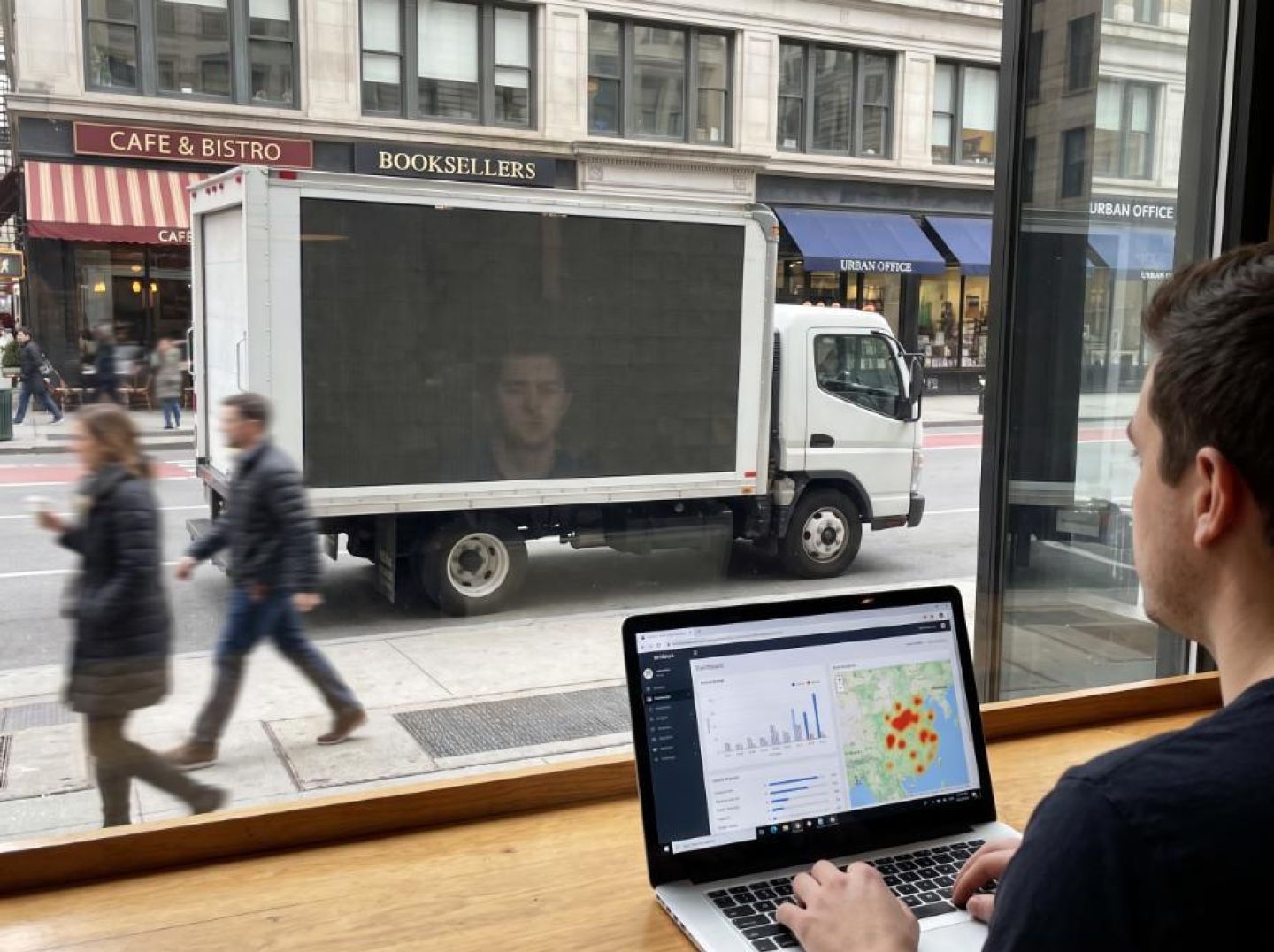
Mobile OOH—specifically LED billboard trucks at scale—slots into that 60/40 portfolio in a way static billboards never could. A routed truck fleet running across dozens of DMAs delivers classic brand benefits: mass, physical visibility, and mental availability in the exact cities where people live, commute, shop, and socialize. But because those trucks are planned off of persona data, movement patterns, and competitive mapping rather than fixed lat/longs, they act more like an addressable audience buy than a “board on Main Street.” The same campaign that’s pumping up excess share of voice in a market is simultaneously following high‑propensity segments past your category’s actual purchase triggers.
The behavior layer is where it flips from “brand channel” to “performance catalyst.” A static board hits whoever drives by. A routed mobile unit hits people whose routines and context you’ve chosen in advance: office parks before work, rival storefronts at lunch, big‑box parking lots on weekends, festival perimeters at night. As one planning framework for truck‑based campaigns puts it, static OOH targets geography, while mobile targets behavior—commute patterns, retail corridors, competitor locations, and leisure zones planned in advance so that by the time the truck rolls, it is essentially a rolling precision media vehicle, not a moving poster.
That shift in targeting logic changes the measurement game. If you grade mobile OOH on last‑click or vanity promo codes, you’ll undercount its real contribution and probably turn off your best growth lever by mistake. The Saatva story is the canonical warning: when the direct‑response dashboards said their OOH test “wasn’t working,” the brand nearly cut it—until they rebuilt the model around visit lift, organic and paid search lift, branded direct traffic, and aided and unaided recall tied to their actual sales cycle. Under that lens, the same campaign flipped from “underperformer” to their highest‑ROI channel, a reversal unpacked in the case study on how mis‑attribution nearly led them to kill their best channel.
For performance marketers, this is the arbitrage opening: you don’t need to own the trucks to benefit from them. You need to build piggyback mechanics that capitalize on the attention and intent they’re already generating.
Practically, that looks like three plays:
2. Geo‑sequenced retargeting. LED trucks are increasingly planned off of mobile movement data and can be paired with exposure‑zone geo‑fences. That means the anonymous device IDs that were in proximity to the route become the seed for post‑exposure mobile, CTV, or paid social. If the truck buy is someone else’s line item, position your digital program as the “always‑on follow‑through,” and index your bids and creative rotation to the truck schedule. Your CPMs don’t change, but your conversion rates do.
3. Attribution arbitrage. Because most organizations still measure OOH with a direct‑response bias, the channel is systematically undervalued on the books. That’s what created Saatva’s “false negative” in the first place. If you’re the performance owner who can bring a more complete attribution framework—the kind outlined in mobile‑OOH planning sessions such as the “Primed to Convert” webinar that walks through how to track lift in store visits, search, and brand‑direct traffic off of truck flights—you gain disproportionate influence over budget without increasing your own media costs, since you’re simply revealing the incremental impact that was already there.
When you look at OOH career postings and capex the way a quant looks at order flow, mobile inventory is clearly where the bids are clustering. That’s your forward signal. The brands paying list price for truck fleets think they’re buying “brand.” If you can wire your performance systems to ride the same wave—to intercept the searches, retarget the exposed, and measure the blended effect with more nuance than a last‑click spreadsheet—you’re not competing with those buys. You’re surfing them.
The old OOH game ran on hunches, handshakes, and whatever your rep swore “was hot this quarter.” The new game is running on graphs, machine learning, and real-time competitive intelligence. The arbitrage isn’t just in finding undervalued locations anymore; it’s in seeing demand patterns, category shifts, and creative trends days or weeks before everyone else—and then letting your media buying stack exploit that gap.
The clearest signal of this shift is what’s happening behind the scenes at operators like Trillboards. When a software-first signage network decides its constraint is no longer “more screens” but “better market intelligence,” you’re watching the ground move. As one recent piece on Trillboards’ partnership with the machine-learning platform hellOOH put it, the issue isn’t infrastructure execution anymore; it’s intelligence asymmetry. The companies that know, in near real time, who is buying what, where, and through whom, will move faster than the ones simply adding more inventory to a map.
hellOOH sits on top of the OOH ecosystem like an always-on ad spy layer for the physical world. Instead of scraping landing pages or Facebook libraries, it builds a verified campaign intelligence graph that tracks real campaigns over time—what brands ran, in which formats, across which geos. That alone turns “I think QSR is heating up in the Midwest” into “I know which QSR brands are ramping transit formats in tier‑2 metros.” But the deeper edge comes from the stacked intelligence layers that hellOOH’s own description of its system outlines: the decision-maker and agency graph, the relationship infrastructure, and a predictive demand engine that flags likely repeat buyers and category expansion before that demand becomes obvious on the street.
For performance marketers used to digital ad spy tools, this is the missing join key. In the browser world, competitive tools show you creative, funnels, and spend velocity; in OOH, they’ve historically shown you…nothing. You could drive the freeway, walk the mall, or scroll a PDF proof sheet, but you couldn’t query, “Show me every fintech advertiser who scaled from programmatic display into OOH in the last 90 days and which agencies brokered those buys.” Systems like hellOOH are effectively turning that into a solvable query problem instead of a rumor problem.
The magic happens when you plug those OOH signals into the ad intelligence tools you already live in. Imagine your workflow looks like this:
That alignment is your arbitrage window. When a category is ramping OOH, it usually means someone has already proved the unit economics on the performance side. Instead of guessing which niches to build offers for, you can ride the wave that machine‑modeled demand intelligence has already identified: mirror the creative angles, adapt the LP structures, and target adjacent audiences digitally while CPMs are still mispriced relative to the offline momentum.
There’s another, more strategic play here: deal flow. Because systems like hellOOH don’t just track campaigns but also map decision‑makers, holding companies, and independents into a navigable influence graph, you can invert the usual process. Instead of cold‑pitching “anyone spending in OOH,” you can filter for “brands currently in test‑and‑learn mode on OOH in my vertical” and use their campaign history as the pre‑qualifier. The article on Trillboards’ integration makes it clear that once you connect campaign data to a live contact and relationship graph, you effectively turn your CRM into a forward‑looking radar rather than a rear‑view mirror.
For performance marketers, the bigger unlock is philosophical: stop treating OOH as a mysterious line item that “brand” handles and start treating it as a market‑making signal source that feeds your dashboards. The next generation of out‑of‑home tools is already behaving less like static reporting and more like predictive market modeling—answering, as that Trillboards coverage framed it, not just “what happened?” but “what is happening, why, and what is likely to happen next?” Your edge won’t come from guessing that answer faster; it will come from wiring those machine signals directly into the same systems you already use to spy, model, and deploy capital across digital.
Receive top converting landing pages in your inbox every week from us.
In-Depth
Discover how out-of-home (OOH) job listings reveal the future of performance marketing, from data-driven media sales to programmatic digital billboards. Explore how sales, operations, creative production, and real estate roles are evolving as OOH becomes a more measurable, automated, and performance-focused advertising channel.
Elena Morales
7 minOct 11, 2026
Must Read
Discover how out-of-home (OOH) hiring trends reveal emerging opportunities in digital advertising, mobile billboards, and performance marketing. Learn to identify underpriced media inventory, spot promising geographic markets, connect OOH exposure with digital campaigns, and use competitive intelligence to uncover new arbitrage opportunities.
Liam O’Connor
7 minOct 11, 2026
Recently Updated
Discover why the next-generation Managing Director is becoming an obsessed media buyer who treats advertising like an intelligence operation. This guide explores how ad spying, automation oversight, attention data, competitive intelligence, and strategic courage can reshape modern media leadership.
Liam O’Connor
7 minSep 30, 2026