7 minOctober 11, 2026

Our tools monitor millions of native, push, pop, and TikTok advertising campaigns.
Get StartedIf you want to understand where performance marketing roles are headed, skip the think pieces and read the out‑of‑home classifieds.
Scroll through the recurring “OOH Employment Opportunities” posts on industry hubs like OOH Today and you’re not just looking at jobs—you’re looking at a fossil record of how a once‑static medium is being rewired for the performance era. The titles themselves sketch an evolutionary tree: Business Development Representative, Ad Sales Account Executive, National Account Executive, Local Media Sales Executive, Real Estate VP, Director of Operations, Graphic Designer/Brand Marketing Specialist, LED Video Screen Service & Installation Tech. Layer on the “Free Agent” listings and the sidebars for printing, mobile billboards, truck sides, and experiential, and you see a full ecosystem, from creative conception to steel‑and‑vinyl execution.
What jumps out first is how sales‑heavy the surface of that fossil record looks. New York needs a Business Development Representative for Liquid Outdoor Media; Miami wants an Ad Sales Account Executive for EyeCatch Media; Dallas is hiring a Sales Representative for Daktronics; Los Angeles is looking for a National Account Executive for SILVERCAST; Denver has an opening for a Local Media Sales Executive at Social Indoor. On paper, these are classic media‑sales roles, built around prospecting, pitching, and closing. But read the role descriptions and company overviews closely, and they start to sound a lot less like billboard peddlers and a lot more like performance marketers with a territory.
Liquid Outdoor’s Westchester/NYC posting describes a national portfolio of “digital and static out-of-home media assets,” including “high profile digital interactive kiosks and large format digital spectacular signage” in entertainment districts and open‑air lifestyle centers, backed by “traditional billboards, digital billboards and wallscapes” and “innovative digital and experiential advertising opportunities” integrated into on‑site activations across a nationwide network of lifestyle centers. That kind of inventory mix means these salespeople are really selling audience, intent, and attribution stories—exactly what performance marketers do in biddable channels.
The deeper structural clue is the spread of non‑sales roles. Real estate leadership at Red Rock Outdoor, operations leadership at Encompass Media Group, a Graphic Designer/Brand Marketing Specialist at SILVERCAST, and hardware‑oriented roles like Sign Installer and LED Video Screen Service & Installation Tech at Formetco collectively signal an infrastructure race: more digital screens, more complex placements, more creative formats that can be swapped, targeted, and measured in near real time. You don’t need a “programmatic” label on these listings to infer what’s happening; the mix itself implies a pipeline that runs from site acquisition and screen uptime to creative throughput and data‑driven selling.
That pipeline lines up neatly with how platforms like AdQuick are repositioning OOH overall. By using machine learning to analyze “trillions of possible combinations of OOH units” and layering in consumer, demographic, and behavioral data, AdQuick promises to place “every ad dollar” strategically, while delivering performance and measurement “in real time” and bringing OOH “into parity with modern performance channels.” When OOH can be bought through a DSP, optimized algorithmically, and credited with a measurable “halo effect” on adjacent digital campaigns, the people selling, operating, and designing for this medium inevitably absorb the language and expectations of performance marketing—KPIs, incrementality, lift, ROAS, and full‑funnel impact.
Viewed this way, the classifieds are less about today’s headcount and more about tomorrow’s competencies. The Business Development Representative who is “heavily” focused on new business for larger regional advertisers is really an account strategist who must translate machine‑optimized placement plans into business outcomes. The National Account Executive is no longer just negotiating rates but orchestrating cross‑market digital spectaculars that sync with online flights. Even the LED installation tech is part of delivering an always‑on, data‑addressable surface that can feed a programmatic DOOH buy.
In other words, the OOH job boards are telling you that performance marketing is expanding off‑screen. What looks like a familiar roster of media‑sales and operations roles is actually the skeletal structure of a performance channel that just happens to live in the physical world.
If you strip the jargon out of most OOH postings, what’s left are three surprisingly durable ideas: someone owns a patch of ground, someone knows the people who care about that ground, and someone else is willing to climb a ladder or walk a site in steel‑toe boots to make it all real.
You can see this plainly in the recurring sales listings on the OOH job boards. Titles like “Business Development Representative (Media Sales)” in New York, “Ad Sales Account Executive” in Miami, and “Local Media Sales Executive” in Denver reappear week after week in the classifieds that OOH Today aggregates. These roles are not abstract “growth hacker” positions. They are market‑anchored: New York (Westchester / NYC). Miami. Dallas. Los Angeles. Denver. A seller’s value is inseparable from a specific territory and the relationships they can activate inside it.
When you read the full text of a posting like the New York–based Business Development Representative at Liquid Outdoor Media, the subtext is even clearer. Liquid describes itself in terms of physical footprint: “high profile digital interactive kiosks,” “large format digital spectacular signage in entertainment districts,” and a portfolio that spans “traditional billboards, digital billboards and wallscapes.” The role, in turn, is framed as “proactive outreach to larger regional advertisers and ad agencies across key markets.” In other words, the asset is locations; the job is convincing people who care about those locations to spend money there, over and over again.
Performance marketers will recognize some of this as account management by another name, but OOH still codes it as territory work. The expectation is less “own this vertical nationwide” and more “own this geography so deeply that regional advertisers call you before they brief their media agency.” You are accountable not just for pipeline, but for the health of a local ecosystem of brands, landlords, brokers, and agencies who all have a stake in those screens and boards.
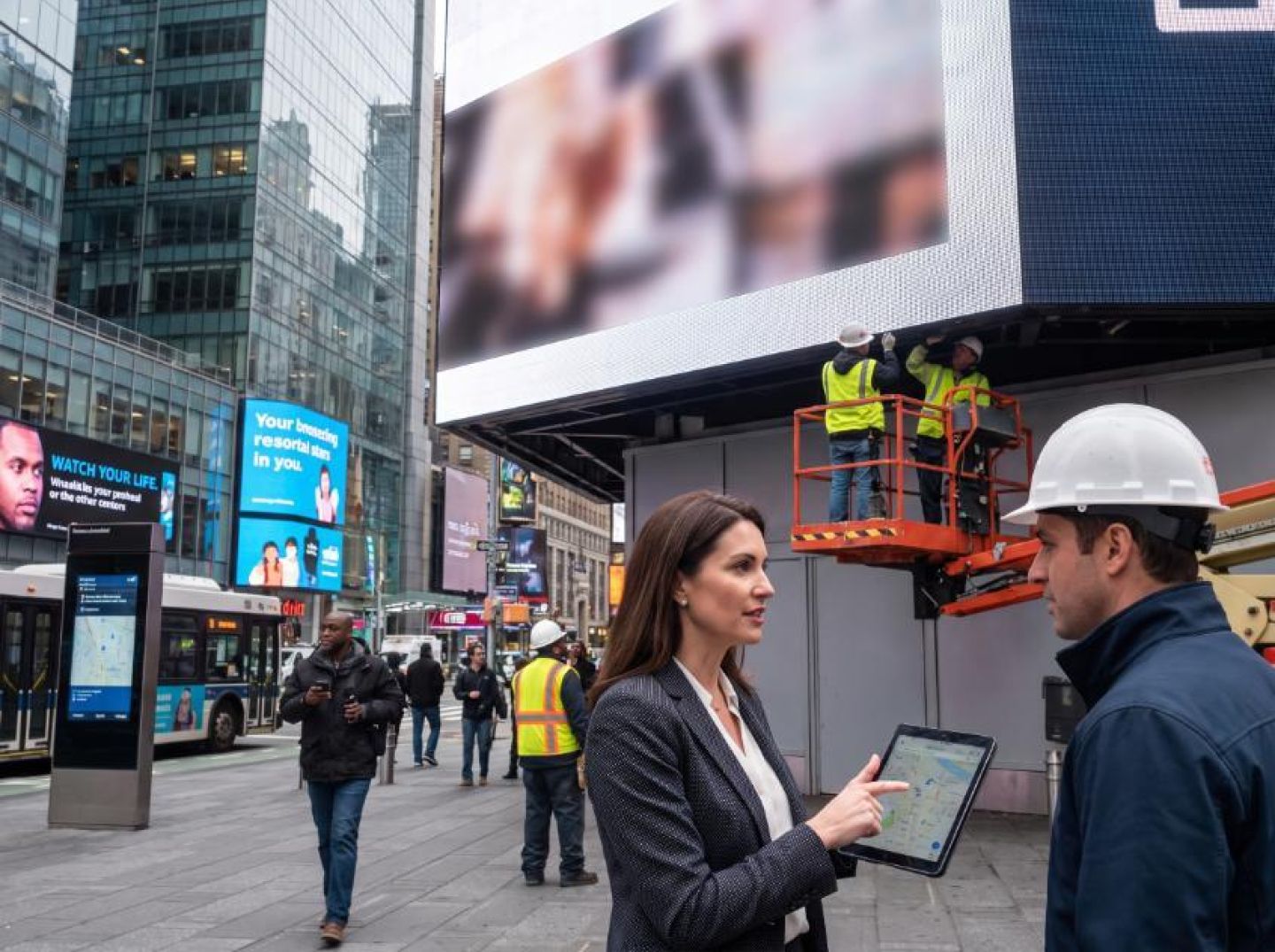
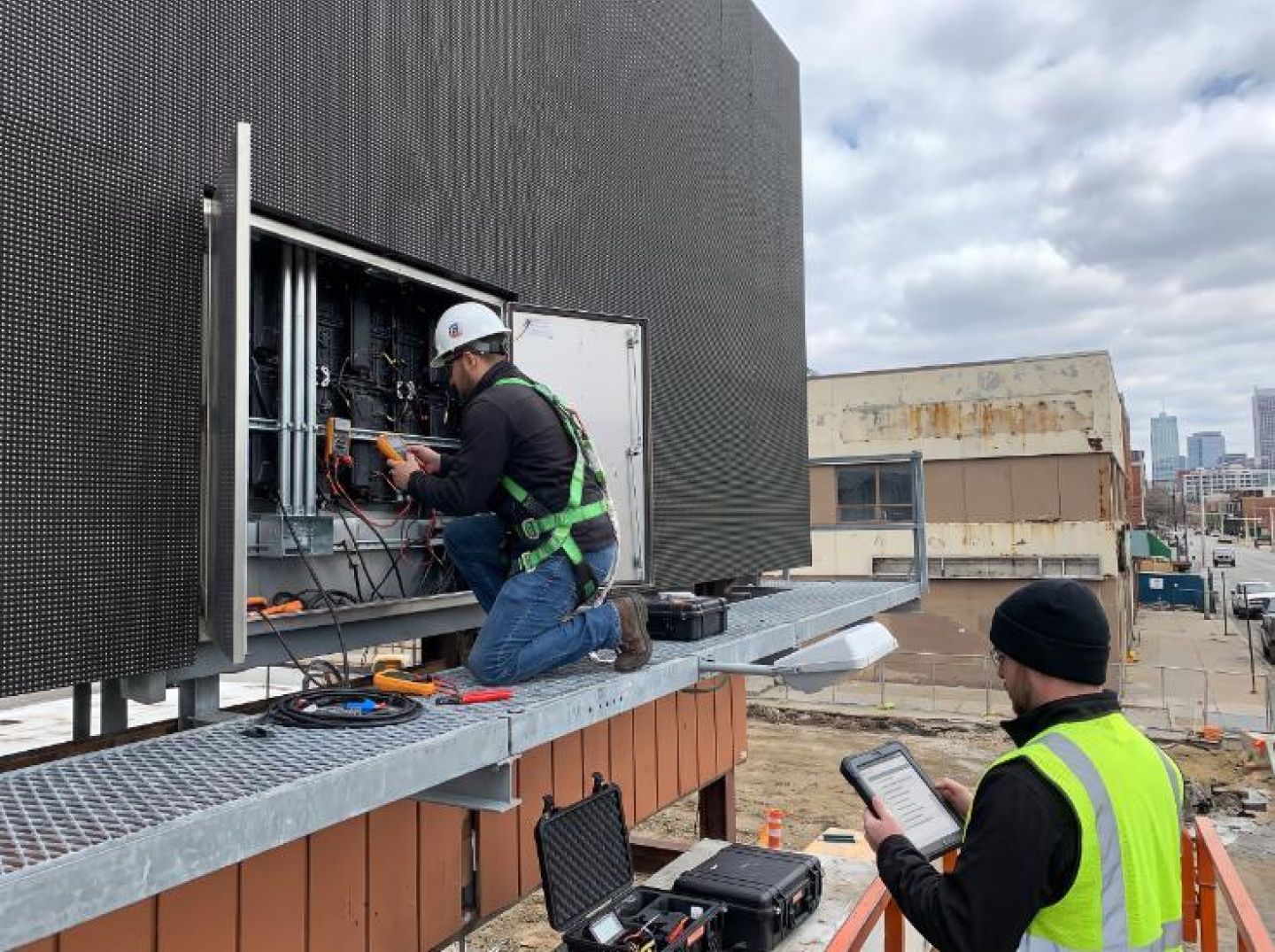
Then there’s the part of the industry that never left the trades. In the same classifieds where you see national account roles for Los Angeles–based digital specialists like SILVERCAST Media, you’ll also find openings for “Sign Installer” and “LED Video Screen Service & Installation Tech” at Formetco. The verbs in those descriptions are all physical: install, service, climb, wire, drive. This is the literal steel‑toe‑boots layer of the ad economy—the people who bolt the screen to the wall, run the power, and make sure the pixels light up when your campaign is supposed to start.
From a distance, those jobs might look irrelevant to someone working in bid optimization or lifecycle automation. Up close, they point to something performance marketing keeps abstracting away: media still has a body. Even in a world where platforms like AdQuick’s DSP can analyze “trillions of possible combinations of OOH units” and optimize placement using demographic and behavioral data, the underlying decisions are constrained by where structures can legally exist, which landlords will sign, and which markets can support another screen. Someone had to negotiate that wallscape, survey that corner, and guarantee that an installer could safely access the site.
Look again at the non‑sales roles sprinkled through the listings—“Real Estate VP/Director/Associate” at Red Rock Outdoor, “Director of Operations” at Encompass Media Group, even the hybrid “Graphic Designer/Brand Marketing Specialist – OOH” at SILVERCAST. Together, they sketch an operating model where territory, relationships, and operations are inseparable. Real estate teams secure and defend inventory in contested urban environments. Operations ensures uptime across a distributed network of analog and digital faces. Designers and marketers translate brand ideas into formats constrained by the physics of distance, legibility, and dwell time.
For the future of performance marketing roles, the signal is not that you need to learn how to hang a vinyl. It’s that, as OOH becomes “a non‑negotiable part of modern marketing strategies” and is brought “into parity with modern performance channels” through data and automation, according to AdQuick’s own framing, the winning practitioners will be those who can operate across both layers. They will understand how CPMs are set in an auction interface, and also why one side of a given intersection will always outperform the other for a specific cohort. They will be able to interpret a heat map of footfall and then translate that into a human conversation with a regional CMO who cares more about owning “the entrance to the ballpark” than about their MTA‑wide share of voice.
OOH job boards, in that sense, are not nostalgia; they are a reminder. As marketing chases ever more granular signals in the bidstream, the skills that persist in out‑of‑home—owning a territory, cultivating relationships, and staying grounded in the physical realities of media—are exactly the ones most likely to differentiate the next generation of performance roles.
If the earlier sections of the classifieds are about territory and inventory, the revenue roles are about something older and harder to automate: trust. “Sales Manager – Outdoor Advertising,” “Business Development Representative (Media Sales),” “Ad Sales Account Executive,” “Local Media Sales Executive”—the job board reads like a roll call of people whose real product isn’t screens or steel; it’s relationships that convert into predictable cash flow.
Look at that Southern Illinois Sales Manager – Outdoor Advertising posting. On paper, it’s a local role at a regional operator. In practice, it’s a P&L owner in disguise. The description is all verbs that performance marketers should recognize: “lead, coach, and manage a team,” “develop and execute sales strategies to grow revenue and market share,” “identify new business opportunities and key accounts.” That’s revenue operations, pipeline strategy, and key-account expansion—just expressed in the language of billboards and “local businesses” instead of dashboards and LTV:CAC.
The same pattern shows up in New York, where Liquid Outdoor Media is hiring a Business Development Representative. This is nominally a media sales role, but the emphasis is pure net-new revenue motion: “heavily” focused on new business, proactive outreach to “larger regional advertisers and ad agencies,” and a mandate to plug brands into a national portfolio of “digital interactive kiosks,” “large format digital spectacular signage,” and experiential activations across lifestyle centers. This isn’t “selling space”; it’s solution-selling reach, attribution, and on-site activations to sophisticated buyers.
What’s striking is how much these descriptions already anticipate the way performance marketing is evolving. OOH may still talk about “connecting businesses with their audiences,” but platforms like AdQuick have quietly turned that into a measurable, optimizable funnel. When an OOH seller can walk into a meeting and show real-time delivery data, cross-channel attribution, and the documented “halo effect” OOH has on adjacent digital campaigns inside a single interface, they stop being a territory rep and start looking a lot like a performance strategist with a quota.
In that world, the classic OOH sales archetypes forecast where digital revenue roles are headed:
For digital-native marketers, the uncomfortable implication is that the future of performance roles may look less like “hands on keyboard in a bid manager” and more like “trusted revenue partner to a finite set of brands.” The OOH job boards already assume that the person in the role can hold the room with a CMO, interpret data, and then walk outside and point at the actual asset a campaign will run on. As OOH becomes fully integrated into omnichannel stacks and powered by the same AI-driven planning that underpins modern programmatic buying, the most valuable sales and growth jobs will sit exactly at that intersection—where relationships still close deals, but the language of those relationships is increasingly ROAS, incrementality, and cross-channel lift.
Scroll down past the sales roles on the OOH classifieds and you hit the muscle and wiring of the industry: “Sign Installer,” “LED Video Screen Service & Installation Tech,” and a block of “Real Estate VP/Director/Associate” listings sitting right alongside “Director of Operations.” In a job board that also celebrates programmatic DOOH and measurable impressions, the presence of these intensely physical roles is not an accident. It’s a reminder that performance marketing’s newest playground is still bolted into dirt, steel, and municipal code.
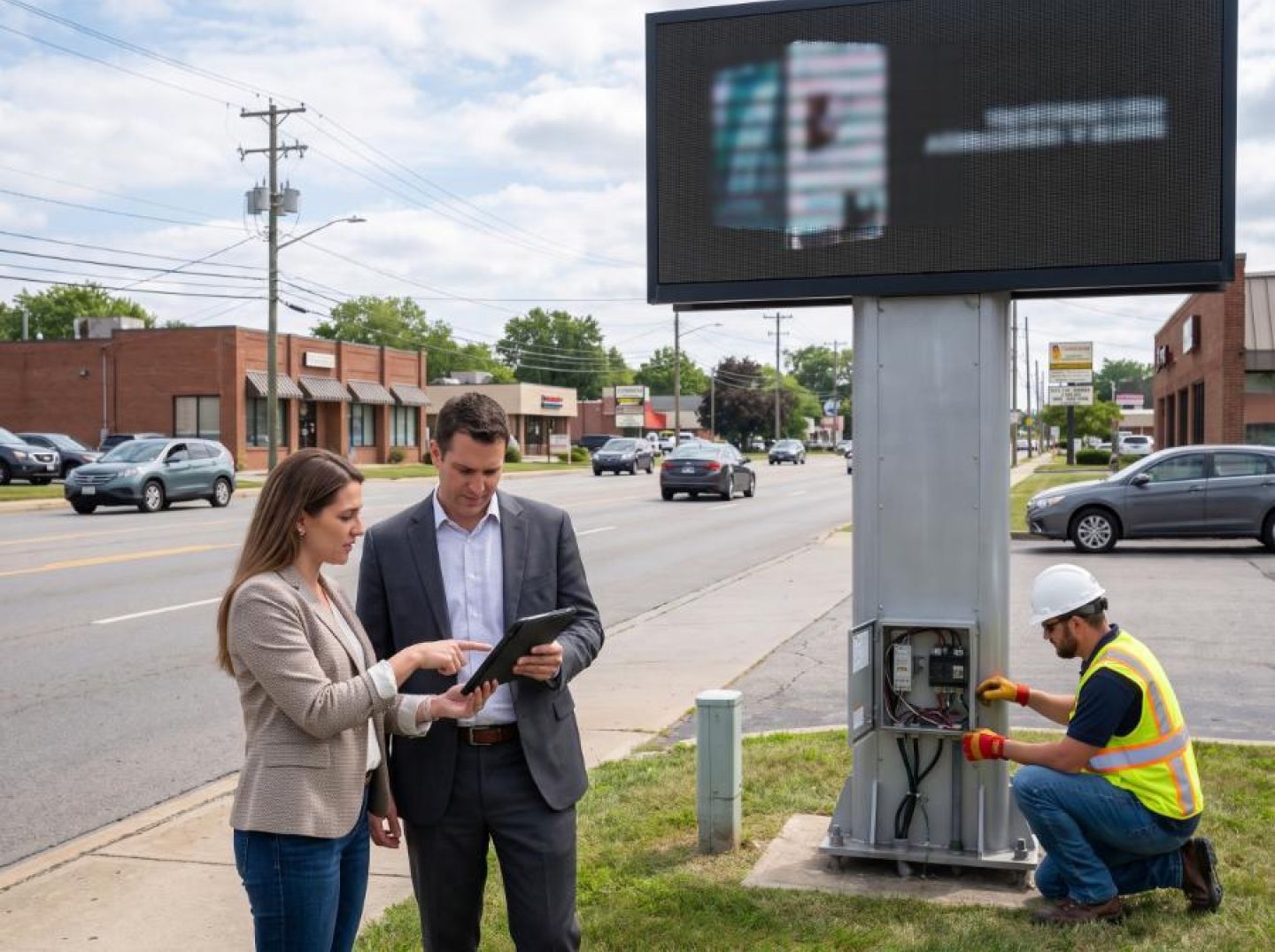
The “Sign Installer” slot that shows up in the recurring Formetco listings on the OOH Today board is not about creative flair or media math; it’s about permits, cranes, and safely suspending a 14’x48’ promise over a highway as the sun goes down. The same classifieds bundle that talks about national sales AEs also quietly notes that Formetco needs an “LED Video Screen Service & Installation Tech,” the person who actually climbs the structure, swaps modules, and troubleshoots power and data when a six‑figure digital face starts flickering in the middle of a campaign, as those OOH employment opportunities make clear. This is uptime as a job description: if your $200k launch is dark for Friday rush hour, nobody cares how sophisticated your attribution model is.
Digital OOH’s shift into a proper performance channel only raises the stakes for these roles. Platforms like AdQuick talk about bringing OOH “into parity with modern performance channels” by delivering placement and performance data in real time and using AI to optimize trillions of combinations of units so brands hit “the right audience, in the right place, at the right time,” as their own description of a data‑powered OOH stack puts it. But if those “right places” are digital spectaculars, interactive kiosks, or mall‑network screens, then the LED tech is effectively the last mile of the algorithm. Every time a campaign is auto‑reallocated to higher‑performing units, it implicitly creates a higher bar for physical reliability, service SLAs, and the people who can keep complex screens fully lit under real‑world conditions.
The same job boards that advertise DSP‑friendly digital inventory also surface the quiet land war underneath it. “Real Estate VP/Director/Associate | Red Rock Outdoor” appears right alongside sales and operations roles in OOH Today’s recurring list of career opportunities in out‑of‑home. These are not passive asset managers; they are performance marketers’ de facto supply‑chain strategists. They negotiate ground leases, navigate zoning and variances, and decide whether the hottest placement for a future attribution‑driven campaign is a static bulletin on the commuter belt or a digital spectacular in an “open‑air lifestyle center” where mobile IDs hum with high‑intent shoppers.
Seen through a performance lens, a “Real Estate Director” is optimizing impression inventory before a single pixel is bought programmatically. If AdQuick’s AI is selecting from “trillions of possible combinations of OOH units” to maximize campaign ROI, then the real estate team is defining which units exist in that universe in the first place, and where. Their work determines whether your brand’s bidstream ever includes the screen overlooking the stadium gate, the interstate chokepoint, or the last‑minute turnoff before a big‑box retailer.
For marketers used to toggling campaigns from a laptop, these classifieds hint at an uncomfortable truth: the most measurable, AI‑optimized OOH strategy still lives or dies on people who can pull permits, pour concrete, torque bolts, and rewire control boxes at 2 a.m. “Operations” in OOH is not a euphemism for ad ops; it is crews, trucks, and technicians whose output is measured in uptime, safety, and the literal visibility of your funnel. As OOH becomes fully integrated into performance marketing, the frontier role is not just the data scientist feeding models, but the field team whose everyday work makes a “non‑negotiable” performance channel physically exist.
In that sense, the installer, the LED tech, and the real estate lead are already performance marketers, just not by title. They decide where attention can be harvested, when a screen is actually on when your audience passes by, and how flexibly an operator can respond when an AI‑driven platform discovers a new pattern in the data. The future of performance roles will have to recognize that the path from bidstream to billboard still runs through boots on gravel and hands on steel.
If the sales listings on an OOH job board tell you who sells the dream, the creative and production listings tell you who has to make that dream visible, legible, and on‑brand at 60 miles per hour.
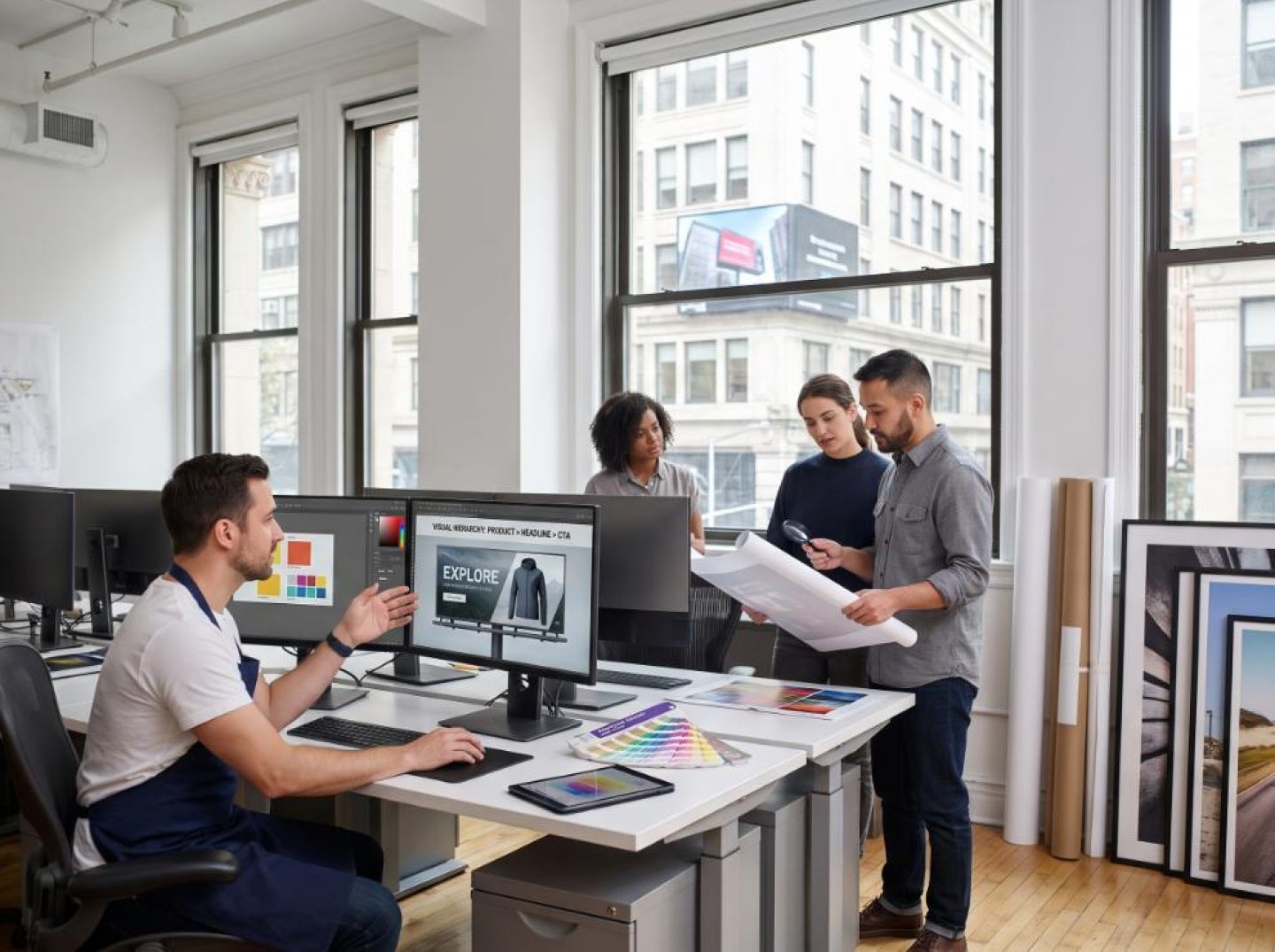
Tucked under “Real Estate, Operations, Creative and Administrative,” you’ll see a role like “Graphic Designer/Brand Marketing Specialist – OOH” sitting right between “Director of Operations” and “Sign Installer” on the same OOH classifieds page. It’s a subtle but important tell: the industry no longer treats creative as a vague, upstream “ad agency thing.” In out‑of‑home, creative is operational. It lives in the same column as the people who secure the dirt and bolt the structure to the ground.
For a company like SILVERCAST Media, that “Graphic Designer/Brand Marketing Specialist – OOH” is not just mocking up pretty rectangles. They’re translating abstract brand systems into outdoor‑ready assets that can live on “large format digital spectacular signage in entertainment districts and open‑air lifestyle centers,” the kind of inventory Liquid Outdoor Media brags about in its own job description. That means solving for:
This is where the gap between “performance marketer” and “OOH creative” quietly narrows. Performance teams optimize for scroll speed and thumb‑stopping power in a feed; OOH designers optimize for sightlines and dwell time on a freeway or in a concourse. In both cases, the job is to compress a brand and a call to action into the smallest possible cognitive package.
The twist is that OOH creative is now built atop the same measurement stack performance marketers live in. Platforms like AdQuick have pulled out‑of‑home into the same real‑time, data‑rich environment as paid social and programmatic, promising that “all of this data is delivered in real time, bringing OOH into parity with modern performance channels” and enabling genuinely AI‑powered optimization. When you can A/B test placements, match exposures to conversion lift, and treat billboards as one node in a performance funnel, the creative on those billboards can’t be a static brand poster anymore—it has to behave like a performance asset.
That has two implications for roles hiding under boring job‑board labels.
First, the “Brand Marketing Specialist” half of that SILVERCAST title suddenly looks more like a growth marketer with a Figma habit. This person needs to understand not just brand guidelines, but also media plans, attribution models, and how their layouts will be evaluated in the same dashboards that report on CAC and ROAS. As OOH shifts “from a channel driven by guesswork into one powered by data and performance,” in the words of AdQuick’s own positioning, creative people are being pulled downstream into performance conversations.
Second, the production ecosystem around them—the “Printing” and “Services” categories that sit quietly at the bottom of those employment listings—is becoming part of the performance stack whether it likes it or not. A miscalibrated LED panel, a vinyl that fades too fast, or a printer that can’t hit brand colors under harsh sun becomes a conversion problem, not just a craftsmanship issue.
This is why the OOH job board shows printing and services in the same breath as “mobile billboards, photos, truck sides, and experiential” opportunities, as one recent roundup made clear. The production layer is where brand promise, creative strategy, and media dollars are converted into photons and ink. When impressions are measurable and optimized in real time, any friction or failure in that translation is visible in the numbers.
For performance marketers, this should feel familiar. You already worry about landing page load speed tanking conversion or a mismatched ad/LP headline killing Quality Score. The OOH classifieds reveal that outdoor now has analogous chokepoints: the designer who doesn’t understand how their file will be sliced across an LED matrix; the printer who can’t turn around a creative swap fast enough to match a new bid strategy; the “services” vendor whose QA process can’t keep up with programmatic cadence.
In other words, the aesthetics and production roles on OOH job boards are early prototypes of a broader future: creative and operations fused into performance infrastructure. The people who choose the typefaces and the people who tune the printers are moving into the same orbit as the people who tune algorithms—and increasingly, they’ll all be judged by the same thing: lift.
If the first two sections of the job board feel rooted in physical space and production craft, the next layer reads like it was lifted from a programmatic media RFP. Buried in those same “career opportunities in out-of-home” posts, you’ll find roles that sit squarely in the bidstream: sales reps selling digital inventory, operators overseeing networks of screens, and specialists who are expected to treat roadside impressions with the same rigor as a paid search auction.
Look at how a company like Liquid Outdoor describes itself when recruiting a Business Development Representative. This is not a local poster company; it’s a “leading outdoor advertising company with a national portfolio of digital and static out-of-home media assets,” explicitly calling out “digital interactive kiosks and large format digital spectacular signage” alongside traditional billboards and wallscapes as part of its portfolio of digital and static out-of-home media assets. In the same breath, it pitches “innovative digital and experiential advertising opportunities,” as if you’re selling a connected screen network instead of a static structure. That framing is a tell: this is inventory designed to live inside DSPs, SSPs, and cross‑channel dashboards, not just in a traffic department’s spreadsheet.
Zoom out from individual listings and you see the same story in how modern platforms talk about their technology. When AdQuick describes its platform as a “universal adapter” that makes the “unmeasurable measurable,” it is claiming parity with the tools performance marketers already use for search, social, and display. The company emphasizes that impression, mobility, and attribution data are “delivered in real time,” explicitly positioning OOH in “parity with modern performance channels” and promising that brands can finally plan and optimize with digital‑grade precision across its programmatic DOOH buying capabilities. For anyone who has ever spent a day toggling between Google Ads and a DSP UI, the language is uncannily familiar.
This convergence is exactly what makes those job-board snippets so revealing. A National Account Executive selling large-format digital spectaculars in Los Angeles is now, in practice, competing for line items that used to be reserved for display and video. The Denver‑based Local Media Sales Executive at Social Indoor is selling an indoor place‑based network that likely transacts partially via programmatic pipes and delivers device‑level exposure data in ways that are intelligible to a performance marketing team. The listings may still be organized under “Sales” and “Real Estate, Operations, Creative and Administrative,” but the commercial reality is that a huge share of that revenue now flows through the same funnels as any other media sales channel.
Critically, none of this is framed as experimental. AdQuick is explicit that its goal is to move OOH “from a world of intuition to a future defined by precision and performance,” arguing that OOH has become “a non-negotiable part of modern marketing strategies” and that its DSP enables “automated, data-driven execution that aligns with how today’s marketers already operate across other channels” through fully integrated programmatic DOOH buying. In other words, this is not a sidecar tactic; it’s a line item that expects to be scored on ROAS and CPA just like Meta or Google.
For performance marketers, this is the real meaning of “Meanwhile in the bidstream.” While your dashboards still label OOH as a brand or awareness channel, the companies behind those assets are already staffing as if they are selling a responsive, targetable, optimizable medium. Business development reps are briefed to call on “larger regional advertisers and ad agencies” that think in terms of audience segments and funnels, not just GRPs. Ops leaders are expected to oversee systems that plug into attribution partners and mobility datasets. Even creative roles are being written to support dynamic content that can change by time, location, or audience, making OOH creative a live variable in a test-and-learn roadmap rather than a fixed JPG exported to a printer.
The net effect is that OOH has quietly crossed a threshold. In the guts of job descriptions and product one‑pagers, the industry now talks about billboards, kiosks, and indoor networks in the exact same grammar as performance marketing: real‑time data, AI‑powered optimization, programmatic buying, and measurable incremental lift. As a result, the next generation of “billboard people” will also be bidstream people—and the next generation of performance marketers will be expected to treat out-of-home not as a nice‑to‑have awareness booster, but as a channel that can and should perform under the same scrutiny as every other digital medium.
Receive top converting landing pages in your inbox every week from us.
In-Depth
Discover how out-of-home (OOH) job listings reveal the future of performance marketing, from data-driven media sales to programmatic digital billboards. Explore how sales, operations, creative production, and real estate roles are evolving as OOH becomes a more measurable, automated, and performance-focused advertising channel.
Elena Morales
7 minOct 11, 2026
Must Read
Discover how out-of-home (OOH) hiring trends reveal emerging opportunities in digital advertising, mobile billboards, and performance marketing. Learn to identify underpriced media inventory, spot promising geographic markets, connect OOH exposure with digital campaigns, and use competitive intelligence to uncover new arbitrage opportunities.
Liam O’Connor
7 minOct 11, 2026
Recently Updated
Discover why the next-generation Managing Director is becoming an obsessed media buyer who treats advertising like an intelligence operation. This guide explores how ad spying, automation oversight, attention data, competitive intelligence, and strategic courage can reshape modern media leadership.
Liam O’Connor
7 minSep 30, 2026