11 minNovember 7, 2026

Our tools monitor millions of native, push, pop, and TikTok advertising campaigns.
Get StartedMost Anstrex.com/blog/what-billboard-campaigns-from-ally-primark-and-purito-can-teach-performance-marketers-about-native-ad-creative" target="_blank" rel="noreferrer noopener">performance marketers do not have a shortage of competitive data. They have a problem turning that data into decisions.
Ad libraries, spy tools, auction insights, SEO platforms, social listening tools, and competitor reports can reveal an enormous amount of activity. But collecting more advertisements and building bigger dashboards does not automatically help a team make better media decisions.
The real challenge is knowing what changed, why it might matter, and what your team should test next.
That challenge becomes more important as advertising platforms use AI-assisted systems to adjust bids, manage budgets, evaluate creative, and distribute campaigns. When your own campaigns can change while they are running, a competitor report that arrives days later may already be outdated.
This is where AI-first competitive intelligence becomes useful.
Instead of treating competitor research as a reporting exercise, performance marketers can build workflows that continuously organize advertising observations, identify recurring creative and funnel patterns, and turn those findings into testable hypotheses.
Anstrex can provide an important source of competitive advertising data within that workflow. AI can help interpret and organize the information, while human strategists decide which opportunities make sense for their brand, margins, and business objectives.
The goal is not to collect everything.
It is to make better bets with the information that matters.
Much of traditional competitive intelligence was designed around quarterly planning, periodic reporting, and separate channel teams.
Marketers collect competitor activity, compare benchmarks, prepare presentations, and distribute reports. The process may look comprehensive, but it often describes what happened rather than helping teams decide what to do next.
For performance marketers working in fast-moving advertising environments, that delay can be costly.
AI-assisted advertising systems are increasingly involved in campaign decisions while campaigns are still running.
MarTech's analysis of AI in media investment discusses how AI is moving beyond production efficiency toward decisions about bids, creative, targeting, channel mix, and where the next advertising dollar should go.
That creates a timing problem for traditional competitive research.
Imagine that your team receives a report on Friday describing a competitor's activity from earlier in the week. By then, the competitor may have changed its offer, introduced new creative variations, or shifted its campaign emphasis.
The report may still be useful for historical analysis, but it is less useful as a timely decision input.
Many teams already use several sources of competitive information:
The problem is that these tools often operate separately.
A team may know that a competitor launched new advertisements, increased search visibility, or changed its landing page. But those observations may never be connected into one explanation of what the competitor is testing or what the change means for the team's own strategy.
MarTech's discussion of the marketer's new AI-powered competitive intelligence playbook describes this gap between collecting information and producing useful competitive interpretation.
The distinction is important.
A report that says a competitor launched 127 new advertisements is an activity summary.
A research process that identifies a recurring offer, groups related creative variations, and recommends a controlled test is much closer to decision support.
The same problem appears in SEO and market research.
A tool can show ranking changes, keyword movements, and competitor visibility. But understanding why a competitor is gaining ground requires context.
Neil Patel's discussion of human-led SEO explores why tools and automated analysis still need human interpretation.
A similar principle applies to advertising intelligence.
A strategist needs to understand whether an observed competitor move is relevant to the brand's audience, product positioning, margins, and commercial objectives.
A competitor's discount-heavy campaign may be unsuitable for a premium brand. A creative approach that appears frequently in one market may not translate to another. A funnel that looks persuasive may introduce compliance or operational risks.
The data does not make those decisions by itself.
As AI becomes more common in advertising and marketing technology, simply having access to AI tools is less likely to be a meaningful differentiator.
The quality of the information those systems receive matters.
illumin's analysis of AI advertising trends discusses the importance of connected data, first-party signals, and well-governed performance information in producing stronger recommendations and more useful insights.
This is why adding another disconnected feed may not improve a competitive intelligence program.
The better opportunity is to connect the information you already collect, establish consistent definitions, and use AI to help monitor and interpret it.
Neil Patel's article on AI content systems also explores the broader value of combining AI capabilities with human experience and an organized operating process.
For performance marketers, the role of competitive intelligence should therefore change.
It should become a decision-support system that:
The objective is not to predict a competitor's private performance data. It is to use observable market activity and your own verified results to make better-informed decisions.
An AI-first competitive intelligence program does not require one magical platform that replaces every advertising tool.
It requires a connected system.
Your existing spy tools remain important because they provide access to visible advertising activity. AI adds a layer that can organize the information, interpret patterns, and help connect findings with the workflows where campaign decisions are made.
Think of the system as three connected layers.
Most teams already use tools such as:
Each source may describe competitors differently.
One tool may organize information by advertiser and creative. Another may focus on search visibility, traffic estimates, or keyword activity. A third may provide landing-page or placement information.
Before introducing AI agents, establish a consistent structure for the information you collect.
Your competitive intelligence repository should organize relevant observations around shared concepts such as:
Think of this as a competitive knowledge base that sits alongside your internal brand guidelines, product information, and campaign history.
MarTech's guide to AI agents for marketing workflows discusses why shared knowledge resources matter when multiple agents or workflows need consistent information.
Without a common reference point, different agents may produce conflicting summaries or interpret the same competitor activity differently.
Once your information is structured, AI can help transform raw observations into more useful categories.
For example, one agent could organize competitor creatives according to:
Another agent could monitor search and SEO information to identify where competitors appear to be gaining visibility.
This connects advertising research with broader customer intent.
Neil Patel's discussion of human-led SEO provides context for treating organic search information as a source of market understanding, rather than simply a traffic metric.
The objective is to turn raw activity into a structured observation.
For example:
Raw observation: A competitor introduced several new creatives across different placements.
Structured interpretation: The new creatives share a risk-reversal message, use similar product demonstrations, and lead to a landing page emphasizing a trial offer.
Potential hypothesis: The competitor may be exploring whether a lower-risk offer helps reduce hesitation among prospective customers.
Notice the distinction: the hypothesis is an interpretation, not proof that the campaign is profitable.
A competitive intelligence system becomes much more useful when its findings reach the people responsible for making campaign decisions.
AdExchanger's analysis of AI and omnichannel advertising orchestration discusses the gap between AI-generated recommendations and actual execution across advertising systems.
A team may receive an insightful report but still need to manually translate it into campaign briefs, testing tasks, and budget scenarios.
That is where orchestration becomes important.
Your intelligence workflow can connect with:
For example, if the system detects a competitor introducing a new offer across several placements, it could create a structured research brief containing the relevant creatives, destination pages, observations, and suggested test ideas.
The brief can then be reviewed by a strategist before any campaign changes are made.
Once the core information is organized, different agents can perform specific tasks.
A competitive monitoring agent could review selected competitor activity and prepare a recurring digest explaining what changed and why it may matter.
A reporting agent could compare those observations with your own campaign results to help identify whether the market change coincides with shifts in your performance.
A creative analysis agent could group new advertisements by message, format, and funnel role.
MarTech's guide to AI marketing agents provides an example of how specialized agents can support recurring marketing workflows and reduce manual effort.
The important principle is that these agents should share the same definitions and knowledge base.
Your spy tools remain the sensors. The AI layer helps organize and interpret the signals. Your existing marketing systems provide the place where decisions and experiments are managed.
That is how competitive intelligence can move from disconnected research to an operating system for better decisions.
The real value of competitive intelligence is not knowing what competitors did.
It is using that information to make better decisions about what your own team should investigate next.
That requires an intelligence layer: a process that turns raw observations into clear, testable hypotheses.
AI can help with the analysis, but the system must be designed around decisions rather than dashboards.
A report titled “Competitor creatives from the last 30 days” may contain useful information, but it does not automatically explain what your team should do.
A more focused research question might be:
Are competitors in our category increasingly using customer demonstrations instead of discount-led creatives, and is that shift worth testing in our campaigns?
This question gives the analysis a purpose.
It tells the system what to compare, what information to retrieve, and what kind of output would be useful.
AdExchanger's discussion of next-generation ad intelligence explores how conversational interfaces can make it easier to move from a marketing question to a structured answer across markets and advertising channels.
The benefit is not simply faster reporting. It is a workflow that begins with a decision the marketer needs to make.
AI agents can monitor visible competitor activity and summarize changes across advertisements, landing pages, pricing, and other accessible sources.
The output should not stop at a list of new creatives.
It should help marketers formulate hypotheses such as:
MarTech's article on AI agents for marketing workflows discusses how recurring agent-based monitoring can help turn competitive research into a more consistent operating habit.
The value comes from the hypotheses those observations generate, not from the digest itself.
Not every hypothesis deserves the same level of attention.
An AI-assisted intelligence layer can help rank ideas according to factors such as:
For example, a competitor's move into a new advertising channel may be worth investigating if your own historical data shows that the audience responds well to similar creative formats.
But a recommendation to shift a specific percentage of budget should not be treated as an automatic instruction.
The system needs reliable internal performance data, comparable measurement, and a clear understanding of the business constraints.
illumin's discussion of agentic AI in programmatic reporting explores the movement from dashboards toward recommendations and next actions within marketing workflows.
An intelligence layer should produce something a team can act on.
For example, if competitor research identifies a growing use of product demonstrations in a particular market, the system might prepare a test brief containing:
AdExchanger's article on AI orchestration in omnichannel advertising discusses how AI can connect planning, activation, and optimization across existing tools.
The intelligence layer should support that connection without bypassing human approval for important budget, brand, or compliance decisions.
A recommendation is only useful if the team can understand why it was made.
If the data is incomplete, inconsistent, or based on estimates, the system should say so.
AdExchanger's discussion of ad intelligence methodology highlights the difficulty of comparing information across different media and markets.
Similarly, illumin's analysis of AI advertising trends discusses the importance of trust and governance in AI-driven advertising decisions.
Every recommendation should distinguish:
The result is a continuous workflow:
Observe → Interpret → Hypothesize → Prioritize → Review → Test → Learn
That is how competitive intelligence moves beyond reporting and becomes a practical decision-support process.
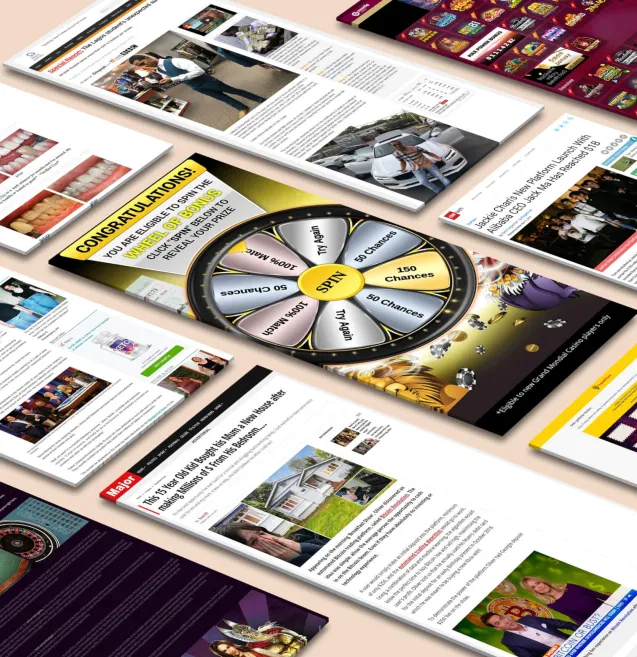
Your Anstrex subscription can provide a valuable source of visible competitor advertising information, including creatives, landing pages, networks, geographic markets, and verticals.
The opportunity is to make that information part of a repeatable research process rather than relying entirely on manual browsing.
Instead of opening Anstrex whenever someone has time, an AI-assisted workflow can organize selected observations into a structured research library.
The agent does not need to mirror every available advertisement.
It should focus on information relevant to your research priorities.
Depending on the available data and permitted access methods, the workflow may organize:
The purpose is to maintain a useful collection of competitive observations, not an unlimited archive of unrelated advertisements.
An AI agent that reacts to every new creative can quickly create more noise than value.
On the other hand, a workflow that only studies advertisements that have remained visible for a long period may miss emerging concepts.
Use a balanced research framework.
Possible controls include:
These rules should reflect the data Anstrex actually makes available. Do not assume that every platform's impression counts, spend levels, or performance metrics are directly visible.
AdExchanger's analysis of ad intelligence methodology provides context for why consistent methods are important when comparing advertising information across markets and media.
Once the agent has collected relevant creatives and landing pages, it needs to organize them in a way that strategists can understand.
Instead of presenting hundreds of screenshots, it can classify assets according to:
For example, an agent might identify several advertisements that share a risk-reversal message and direct users to trial-focused landing pages.
It can then present that as an observed pattern with a possible explanation:
Several advertisers in this category are using trial-based offers alongside messages designed to reduce purchase risk. This may be worth testing against the current offer structure.
That is more useful than simply displaying the advertisements in a gallery.
The next step is to make the information easier for media buyers and strategists to retrieve.
A user should be able to ask focused questions such as:
AdExchanger's analysis of AI-native ad intelligence discusses the value of reducing the time between a question and a useful answer.
For an Anstrex-based workflow, the practical goal is to turn research into a structured response that can feed a hypothesis backlog.
The agent should not automatically launch campaigns or change budgets simply because it detects a competitor pattern.
Its responsibilities should be:
A strategist still needs to decide whether an idea fits the brand, customer, margins, and business objectives.
As Neil Patel's discussion of human-led SEO reinforces, tools can reveal movement, but context and judgment are still essential for deciding what that movement means.
Anstrex becomes more valuable when the team spends less time browsing and more time deciding which observed patterns deserve further investigation.
Collecting competitor advertisements is only the first step.
The next challenge is identifying the recurring ideas behind them.
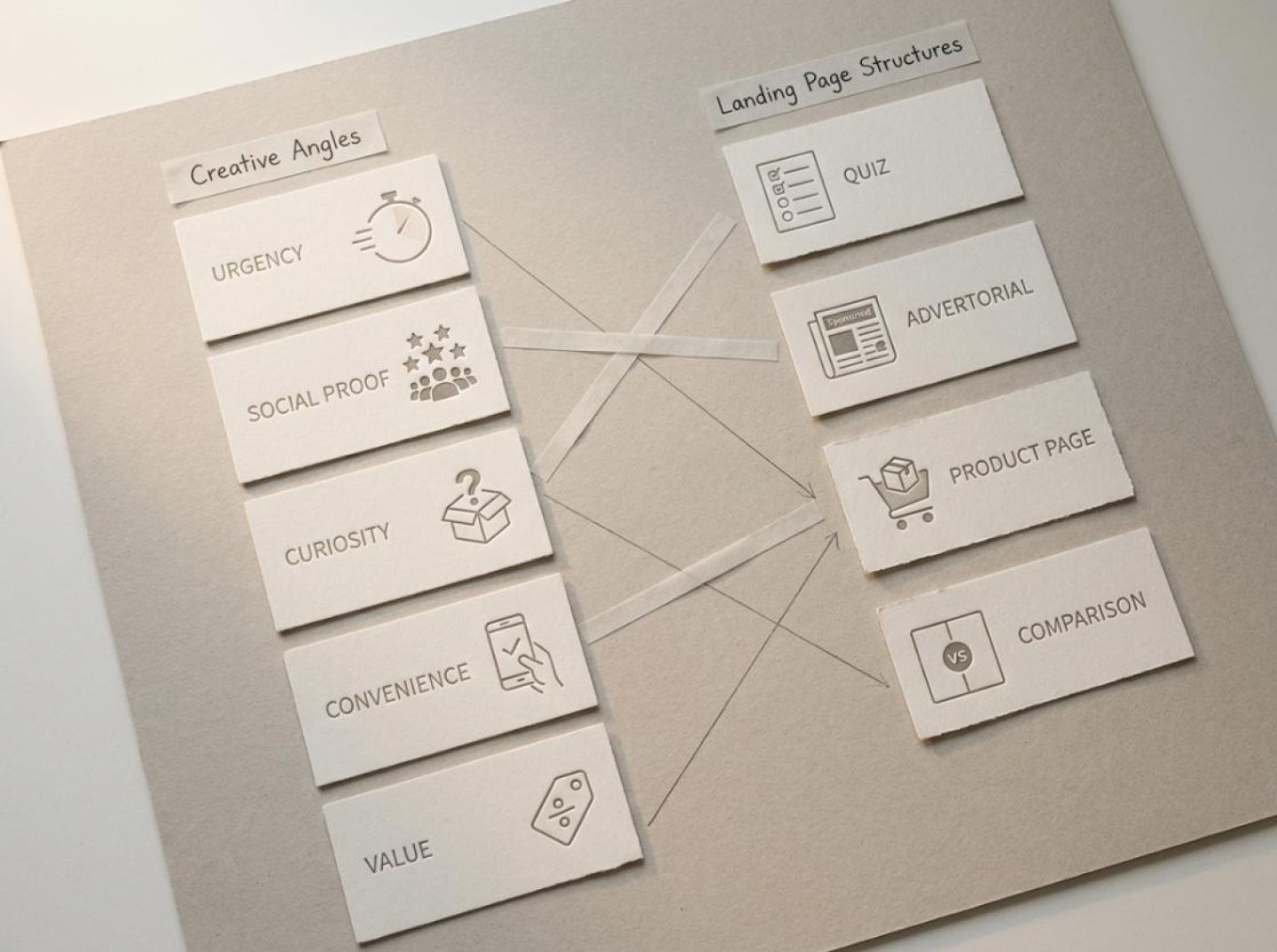
A hundred separate creatives may appear unrelated at first. But when they are grouped by persuasion angle, offer, and landing-page structure, they can reveal a smaller number of recognizable campaign approaches.
This is where AI-assisted clustering can help.
An agent can review the text, visuals, and available metadata associated with advertisements and landing pages.
Instead of broad labels such as “benefit-focused,” use categories that can inform specific creative tests.
Examples include:
Fear and loss aversion
Messages that emphasize a potential problem, risk, or missed opportunity.
Examples:
Urgency and scarcity
Messages that emphasize a deadline, limited availability, or a reason to act soon.
Examples:
Social proof
Messages that use customer experiences, reviews, testimonials, or other credibility signals.
Examples:
Curiosity and pattern breaks
Messages designed to create interest through an unexpected statement, unusual visual, or surprising question.
Examples:
Gain and value
Messages that emphasize a potential benefit, saving, or commercial opportunity.
Examples:
Convenience and simplicity
Messages that make the product or process feel easier to understand or use.
Examples:
These categories help the agent organize creative concepts around the underlying persuasion approach rather than just the words used in an advertisement.
Creative clustering can use several types of information.
Text analysis can identify repeated hooks, claims, and offers.
Visual analysis can help recognize patterns such as countdown timers, badges, product demonstrations, testimonials, and before-and-after layouts.
Available metadata can add context about networks, markets, observation dates, and creative formats.
When combined, these inputs can help group similar assets into angle clusters.
However, the clusters should be treated as analytical classifications. An AI-generated label does not prove that every advertisement in the group has the same objective or performance.
The same advertising angle can be used in very different funnel structures.
For example, a curiosity-led message may lead to a quiz, an educational article, or a direct product offer.
An AI agent can organize landing pages into broader funnel categories such as:
For each observed funnel, record:
This makes it possible to compare creative angles and funnel structures together.
The most useful insights often appear when creative angles and funnel types are analyzed together.
For example, a team might want to investigate:
The agent can identify the combinations that appear frequently in the observed dataset and flag unusual or underrepresented combinations for further research.
It should not label a combination as a proven winner unless reliable performance data supports that conclusion.
illumin's discussion of agentic reporting provides broader context for using AI to connect reporting with recommendations and next actions.
Once the agent has organized the creative and landing-page patterns, it can produce an angle-by-funnel matrix.
The practical workflow becomes:
For example, if several relevant competitors use curiosity-led hooks that lead to quiz-based experiences, your team might investigate whether a similar structure could address an unanswered customer question.
The idea is not to assume that the combination will perform well. It is to identify a structured opportunity worth testing.
After competitor creatives and landing pages have been collected and grouped, the next job is to identify what is changing.
A static list of creative categories is useful, but a timeline can reveal whether certain themes are becoming more or less common in the observed dataset.
An AI agent can compare current observations with previous periods and summarize the differences.
Instead of manually logging into multiple tools every week, create a consistent review process.
The agent can compare the latest available observations with an earlier baseline and report:
This creates a recurring summary of visible market activity.
The method should remain consistent across reporting periods. Otherwise, changes in data collection or classification may be mistaken for actual changes in the market.
AdExchanger's analysis of AI-native ad intelligence discusses the value of making complex advertising information easier to interpret and query.
A change in competitor activity does not explain itself.
If several advertisers introduce new testimonial-based creatives, possible explanations might include:
The agent can suggest possible explanations using relevant information from other sources, such as search trends, customer feedback, CRM insights, or market reports.
But it should distinguish a plausible explanation from a verified cause.
illumin's discussion of agentic AI in programmatic reporting explores how AI can connect reporting with contextual recommendations.
The purpose is to give strategists a more useful starting point for investigation.
A useful weekly output should contain a limited number of specific, falsifiable ideas.
Each hypothesis should include:
The following examples illustrate how such a report might be structured. They are hypothetical examples, not verified findings from Anstrex or claims about current market performance.
1. Social-proof messaging may deserve more testing in skincare campaigns.
Observation: Several advertisers in the selected research set are using testimonial-led creatives and customer demonstrations.
Hypothesis: Trust and product explanation may be important concerns for shoppers evaluating skincare offers.
Test: Compare a proof-led creative with the current control while keeping the offer and audience as consistent as possible.
2. Long-form educational funnels may be worth investigating for higher-consideration products.
Observation: Some competitors use longer editorial landing pages and detailed product explanations.
Hypothesis: Customers may need more information before considering a higher-priced product.
Test: Compare a detailed educational page with the current shorter landing-page experience.
3. Urgency may be more suitable for follow-up than initial discovery.
Observation: Some campaigns use stronger deadline and scarcity messages in retargeting-oriented experiences.
Hypothesis: Urgency may be more relevant after a customer has already shown interest than during initial discovery.
Test: Compare an educational opening message with an urgency-led message across suitable funnel stages.
4. Creative diversity may provide more testing opportunities than relying on one dominant concept.
Observation: Some advertisers maintain several distinct creative formats and message angles.
Hypothesis: A broader range of concepts may help a team explore different customer motivations and reduce dependence on a single creative approach.
Test: Compare a controlled set of distinct creative angles against the current campaign structure, using consistent evaluation criteria.
5. More detailed proof may be a useful alternative to aggressive claims in regulated categories.
Observation: Some advertisements use explanations, demonstrations, and supporting evidence rather than relying entirely on broad promotional statements.
Hypothesis: Clearer substantiation may help communicate value while reducing reliance on claims that create compliance risks.
Test: Compare a proof-led message with the current compliant control. Review all claims before launch.
6. Cross-channel creative patterns may reveal useful research opportunities.
Observation: A similar message or creative concept appears across more than one channel or geographic market.
Hypothesis: The advertiser may be adapting a shared campaign idea to different environments, or the concept may be common across the category.
Test: Adapt the underlying message to one additional channel and evaluate it using that channel's own performance metrics.
These examples show how an agent can move from observation to a test plan without pretending to know a competitor's internal results.
The goal is not to test every hypothesis.
A strategist should review the evidence, remove ideas that do not fit the brand, and prioritize the experiments with the clearest business rationale.
A weekly output might therefore include only five to ten hypotheses, each with its supporting examples and limitations.
This keeps the research actionable.
The agent is responsible for reducing the amount of manual sorting and summarization. The marketing team is responsible for deciding which opportunities deserve time and budget.
The final step is connecting the research process to the work your team actually performs.
An AI-generated report is not a successful workflow if someone still has to manually reconstruct every recommendation before it can be evaluated.
The intelligence system should make the handoff easier.
Each approved idea should become a research or testing task.
A useful task record includes:
This allows the team to move from a competitor observation to an experiment without losing the reasoning behind the idea.
Not every AI recommendation should be activated automatically.
A practical approval process might include:
Stage 1 — Research review
Confirm that the observation is accurate, relevant, and supported by the available evidence.
Stage 2 — Strategic review
Evaluate brand fit, audience relevance, commercial objectives, and competitive positioning.
Stage 3 — Financial and compliance review
Check margin assumptions, offer terms, customer acquisition targets, and applicable advertising requirements.
Stage 4 — Experiment approval
Agree on the test design, budget limits, success metric, and evaluation period.
Stage 5 — Results review
Compare the experiment with the control and document what was learned.
This keeps AI in a supporting role while ensuring important decisions remain accountable.
Once a hypothesis is approved, it can be transferred into the tools the team already uses.
Examples include:
AdExchanger's discussion of omnichannel AI orchestration provides context for connecting planning, activation, and reporting across existing platforms.
The aim is not to create another isolated dashboard. It is to reduce the distance between a useful observation and a properly reviewed experiment.
After the campaign runs, compare the results with the original hypothesis.
Did the new creative improve the intended metric? Did the landing-page change reduce friction? Did the offer attract qualified customers? Did the result remain commercially viable after accounting for costs?
Record both successful and unsuccessful tests.
This information becomes part of your internal knowledge base and can improve future recommendations.
It also helps prevent the team from repeatedly testing ideas that have already been evaluated.
illumin's analysis of AI advertising trends reinforces the importance of trusted information and governance as AI becomes more involved in advertising decisions.
A competitive intelligence system should therefore learn from two sources:
The first helps generate hypotheses. The second helps determine whether those hypotheses deserve to become part of your strategy.
Competitive intelligence should not end with a collection of advertisements, screenshots, or weekly reports.
The real opportunity is to build a system that turns observable competitor activity into useful research and better-informed campaign decisions.
Anstrex can provide the competitive advertising inputs: creatives, landing pages, networks, geographic markets, and vertical-level observations. AI-assisted workflows can help organize those inputs, identify recurring angles, classify funnel structures, and summarize what has changed.
From there, the intelligence layer can generate hypotheses and prioritize opportunities for further investigation.
But the process still needs human judgment.
A competitor's visible advertising activity does not reveal its actual ROAS, margins, targeting configuration, or internal budget decisions. An AI-generated pattern is not proof of performance. A recommendation is not automatically the right choice for your brand.
The strongest workflow combines three things:
When those pieces work together, competitive research becomes more than a reporting function.
It becomes a repeatable system for identifying opportunities, testing assumptions, and improving the decisions behind your next campaign.
Stop collecting data just to have more data. Build an intelligence workflow that helps your team turn market signals into better bets.
Receive top converting landing pages in your inbox every week from us.
Editor’s Pick
More competitor data does not automatically lead to better campaigns. Discover how performance marketers can use Anstrex as an intelligence input for AI-assisted monitoring, creative and funnel clustering, market-change summaries, and prioritized testing hypotheses.
Samantha Reed
7 minNov 7, 2026
Announcement
Generic holiday marketing advice can quickly become outdated. Learn how to use competitive ad intelligence to study competitor campaigns, uncover creative and funnel patterns, and turn those observations into structured experiments for the 2027 holiday season.
Rachel Thompson
7 minNov 7, 2026
Most Read
A single high-performing advertisement rarely tells the whole story. Learn how to use Anstrex to investigate the systems behind competitor campaigns — from landing pages and pre-sell experiences to creative testing, channel sequencing, and optimization patterns.
David Kim
7 minNov 6, 2026