8 minMay 26, 2026

Our spy tools monitor millions of native ads from over 60+ countries and thousands of publishers.
Get StartedLet's dispense with the polite framing. What Google unveiled at Google Marketing Live 2026 wasn't a product update — it was the architectural completion of a closed-loop commerce ecosystem that now stretches from idle curiosity to confirmed purchase, all without a shopper ever touching an external URL.
The centerpiece is Universal Cart, a single persistent shopping cart that operates across every major Google surface. A consumer can add makeup from Sephora inside the Gemini app, toss in cleaning supplies from Target via Google Search, and drop a pair of Nikes into the same cart from a YouTube video — then check out once. The cart is powered by the Universal Commerce Protocol, a technical standard Google introduced earlier this year as what it calls a "common language" for commerce systems and AI agents. UCP handles the backend plumbing: inventory verification, payment processing, and order routing, all while letting merchants remain the legal merchant of record. Launch partners include Sephora, Target, Nike, Ulta Beauty, Walmart, Wayfair, and Shopify merchants, with rollout planned for this summer.
But Universal Cart is only the transaction layer. Sitting above it is a suite of new AI Mode ad formats designed to capture — and monetize — every stage of intent that precedes the buy button. Google VP of Global Ads Dan Taylor introduced three formats during the summit. Conversational Discovery units let Gemini evaluate a user's natural-language query and generate a custom ad creative from a relevant brand in real time. Highlighted Answers embed sponsored placements directly within AI-generated recommendation lists. And the most aggressive addition, Explainers, are Gemini-powered contextual overlays that synthesize product information and pop up as part of the ad experience inside AI Mode, ostensibly to build trust but functionally to eliminate any reason a user might open a new tab to research elsewhere.
Map these pieces together and the strategic intent becomes unmistakable. Discovery, comparison, carting, and checkout now all resolve inside Google-owned surfaces. As Search Engine Journal observed, Google is building "a commerce infrastructure layer that connects discovery, shopping behavior, checkout, payments, and AI agents into one ecosystem." Historically, Google Search sent users outward to retailer websites. Universal Cart reverses that gravity entirely.
And the ambition isn't confined to U.S. retail. Google announced that UCP-powered checkout is expanding into Canada and Australia, with the U.K. planned later, and that the protocol will extend into hotel bookings and local food delivery — verticals that signal a horizontal commerce play far beyond product search.
Here's where the cognitive dissonance gets loud. Google's VP and GM of Merchant Shopping, Ashish Gupta, insisted the company is "not a retailer" and "not a marketplace" but rather a "matchmaker connecting shoppers directly with businesses." That language is doing extraordinary load-bearing work. When a platform controls the search interface, generates the ad creative via its own AI, embeds the ad inside its own answer, hosts the cart, processes the checkout, and is now expanding into multi-category verticals across international markets, the word "matchmaker" starts to feel like a legal positioning strategy rather than a description of reality.
Taylor himself framed the moment as a shift "from marketing automation to marketing intelligence." Strip away the euphemism, though, and the intelligence flows in one direction: toward Google, which now sits at every node of the commerce funnel it once merely pointed users toward.
Google wants you to think of it as a matchmaker — a benevolent intermediary connecting eager buyers with the right products at the right moment. It's a framing that Ashish Gupta, Google's VP of Ads, leaned into heavily during GML 2026, and it's strategically brilliant. Matchmakers are neutral. Matchmakers don't pick winners. Matchmakers certainly don't charge escalating tolls for access to the people standing on the other side of the door. But that's precisely what's happening, and the economics tell a far less romantic story than the metaphor suggests.
Consider what the new AI-powered Shopping ads actually do. When someone searches for an espresso machine, Gemini pulls up relevant products and instantly writes a custom explainer highlighting why a particular product may be the right choice. Read that again: Google's AI is now editorially constructing the sales pitch for your product. It decides what features to emphasize, what language to use, and how your product is framed relative to competitors — and you're paying for the privilege through your ad spend. This isn't matchmaking. This is an intermediary that controls the narrative, charges admission, and keeps the customer on its own property throughout the entire interaction.
The toll-booth architecture extends well beyond explainers. With promotion bundling, brands upload discounts and guardrails, then Gemini constructs a deal — perhaps a product bundle — to present what it deems the most compelling offer for a specific search. With Business Agent for Leads, a brand agent powered by your website content handles the conversation inside Google's interface, turning what used to be a practical form-fill interaction into a lead that Google's AI mediates from first click to final handoff. And with native checkout through UCP, the transaction itself completes without the user ever leaving Google. At every stage, the brand pays more for less direct contact with the buyer.
The cost implications are structural, not incremental. CPCs in competitive shopping categories were already climbing before any of this existed. Now those same bids have to fund an AI intermediary layer that decides which brands get surfaced, how they get described, and whether a shopper even sees an alternative. As Search Engine Journal noted, Google is positioning its platforms as the place where users discover products, compare options, monitor pricing, manage carts, and potentially complete purchases — pulling activity that historically happened on retailer websites back into Google itself. That consolidation doesn't just shift traffic; it shifts leverage. When Google owns the discovery layer, the comparison layer, the conversation layer, and the checkout layer, the "matchmaker" has effectively become the landlord, the bouncer, and the cash register.
Who owns the customer relationship in this architecture? Not the brand. The brand owns a data feed, a bid strategy, and whatever downstream signal Google decides to pass back. The customer's trust, attention, and purchase context all live inside Google's ecosystem. Even the Business Agent — nominally representing your brand — operates on Google's infrastructure, shaped by Google's AI, rendered in Google's interface.
This is the cost problem that makes the arbitrage opportunity explored later in this piece not just attractive but existentially necessary. When every layer of AI mediation between you and your buyer extracts margin, the only rational response is to build demand somewhere Google's toll booths don't reach — and then capture it on your own terms.
Every walled garden has a boundary, and Google's boundary is the search bar. The entire commerce ecosystem described above — Universal Cart, AI Mode shopping ads, agentic checkout — activates only after a user expresses intent. Someone has to type "best espresso machine," ask Gemini for a laptop recommendation, or click a shopping ad before Google's machinery kicks in. But what about the minutes, hours, or days before that moment? What about the consumer who hasn't yet decided they want an espresso machine at all — who is still scrolling a food blog, reading a newsletter about morning routines, or watching a lifestyle creator's apartment tour? That consumer exists in what we might call the pre-intent layer: the phase where interest, curiosity, and brand preference are forming but haven't yet crystallized into a query.
This layer matters more now than ever precisely because Google is compressing everything that comes after it. As Neil Patel has argued, the traditional funnel — awareness, consideration, decision — is collapsing into a conversational exchange where AI narrows options, provides context, and supports purchase decisions within a single session. Google's vision of agentic commerce, where a user asks one question and an AI agent handles comparison, deal-finding, and checkout, could shrink what used to be a multi-day research process into a sixty-second conversation. That compression is a feature for Google. It means fewer exits, fewer competitor touchpoints, and more transactions completed on Google properties. But it also means that by the time a user enters the funnel, the funnel is nearly over. The window to influence preference inside Google's ecosystem is shrinking to almost nothing.
This creates a structural opportunity that sits entirely outside Google's reach. Native advertising, push notifications, and pop traffic operate in the pre-intent layer by design. They reach users while they're browsing content, consuming media, or engaging with apps — environments where Google has no cart, no checkout protocol, and no AI agent whispering recommendations. A native ad on a cooking site can plant the seed for a specific espresso machine brand weeks before the consumer ever searches for one. A push notification can surface a curated deal at a moment of idle attention, creating desire rather than responding to it. These channels don't compete with Google's walled garden. They preempt it.
The asymmetry here is significant. Google can capture and monetize expressed intent with extraordinary efficiency, but as Adweek reported, the entire native checkout infrastructure is designed to keep consumers on Google's platforms once they arrive — it has no mechanism for reaching them before they arrive. Universal Cart works across Google surfaces; it doesn't work across the open web. AI Mode shopping ads appear inside AI Mode conversations; they don't appear inside someone's favorite newsletter or content app. The more tightly Google integrates its commerce tools, the more dependent it becomes on users initiating the journey on a Google property.
This dependency is the arbitrage window. Marketers who shape brand preference in the pre-intent layer — through native placements that build familiarity, push sequences that create urgency, or content syndication that establishes authority — are effectively programming the inputs to Google's AI before the AI ever runs. When a consumer finally does ask Gemini "what's the best espresso machine," they already have a brand in mind. They already have a price anchor. They already have an emotional association formed by content they consumed days earlier on a platform Google doesn't control. The AI may curate, compare, and recommend — but it's working with a consumer whose preferences were shaped upstream, outside the wall, in territory Google cannot enclose no matter how aggressively it extends its checkout infrastructure.
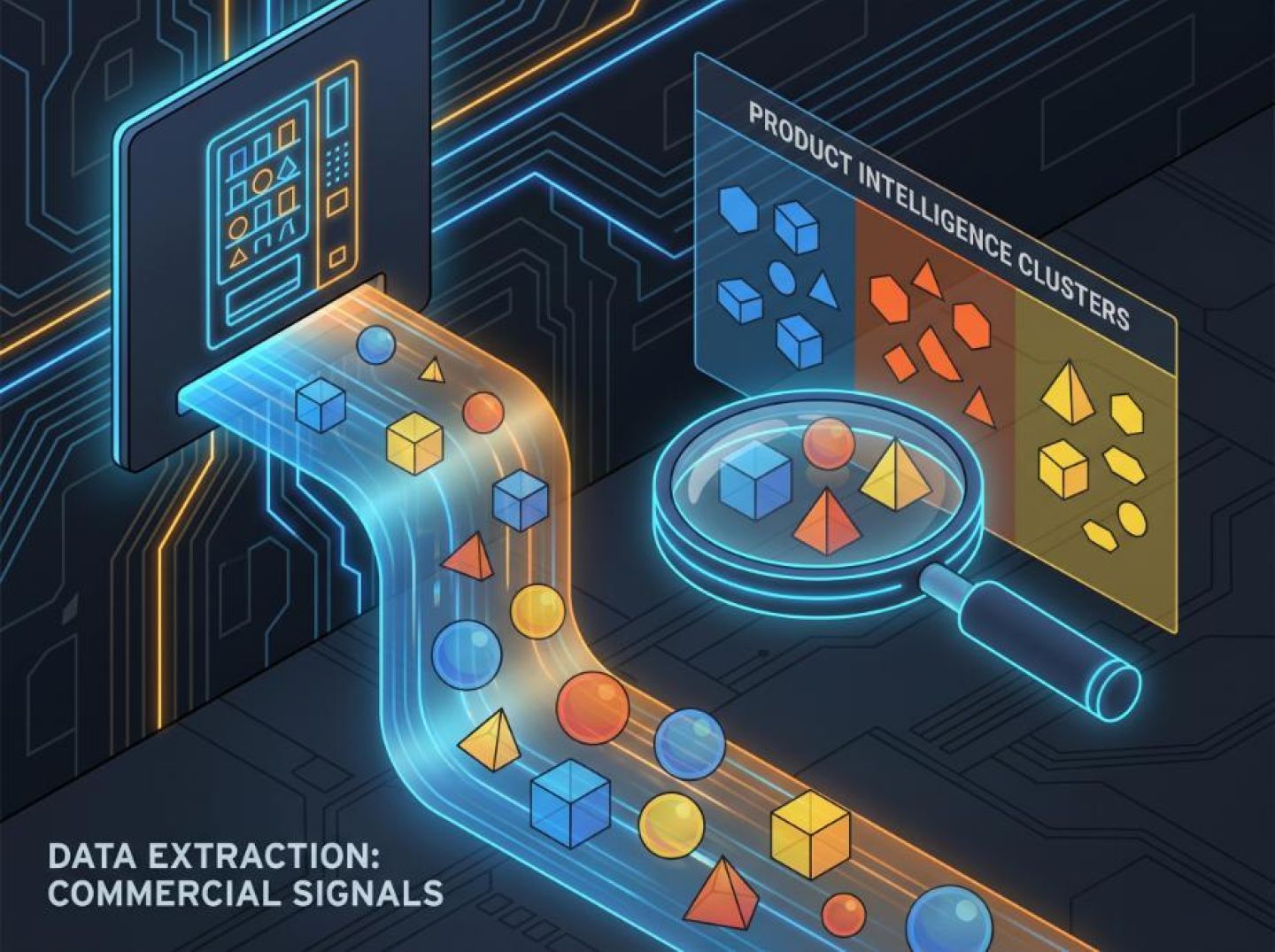
Every dollar a competitor pours into Google Shopping is a confession — a public admission, backed by real budget, that verified commercial demand exists for a specific product category. The mistake most performance marketers make is treating that data as someone else's problem. In reality, it's the most underutilized demand signal in the entire ecosystem, and the playbook for exploiting it is hiding in plain sight.
Start with surveillance. Tools like SEMrush, SpyFu, and Google's own Auction Insights report let you monitor Shopping auction dynamics at a granular level — rising CPCs, new advertiser entrants, and shifting impression share across product categories. When you see three or four major brands suddenly escalating bids on "organic protein powder" or "standing desk converter," that's not noise. It's validated purchase intent at scale. As Search Engine Journal noted, retailers investing heavily in Merchant Center feeds, product data quality, and inventory accuracy are positioning themselves for stronger visibility across Google's expanding commerce surfaces — which means their feed investments are also a readable signal of where they expect demand to concentrate.
The next layer is feed analysis itself. Merchant Center feeds are structured data goldmines. By monitoring competitors' product listing ads — titles, descriptions, price points, promotional extensions — you can identify not just which categories are heating up but which specific product narratives are being tested. Is the messaging shifting from "budget-friendly" to "premium ingredients"? Are new SKUs appearing that suggest brands are targeting an adjacent need? These micro-signals tell you what consumer pain points the market has already validated with spend.
Here's where the arbitrage opens up. Google's walled garden captures intent at the moment of the query, but as Neil Patel's analysis of conversational commerce suggests, consumers will increasingly ask AI questions like "Which protein powder is healthiest?" — meaning the decision journey starts well before any Shopping ad fires. Your job is to intercept that journey 24 to 72 hours earlier, when the same consumer is scrolling a native content feed or receiving a push notification, before their curiosity hardens into a search query that Google can monetize.
The specific workflow looks like this. First, monitor Shopping auction data weekly for categories showing rising CPCs and new entrant clustering — these are your demand validators. Second, reverse-engineer the underlying consumer need behind the product surge. If standing desk converters are spiking, the need isn't furniture; it's back pain, productivity, or a return-to-office mandate. Third, build native content angles and push notification sequences that speak directly to that need — "3 Signs Your Home Office Setup Is Destroying Your Posture" — and target the same demographic and psychographic segments the Shopping advertisers are chasing.
The economics are stark. Shopping CPCs in competitive verticals routinely exceed three to five dollars per click, while native and push placements addressing the same audience segments often deliver CPMs that are 60 to 80 percent lower. You're reaching the same person with the same commercial motivation, just before they've condensed that motivation into a keyword that Google can auction off to the highest bidder.
The brands fueling Google's Shopping machine are doing your research for free. They're spending millions to validate which product categories carry real purchase intent, as Semrush's coverage of Universal Cart makes clear by showing how aggressively Google and its retail partners are investing in closing the gap between discovery and transaction. Every expansion of that infrastructure confirms the demand exists. Your only question is whether you'll pay Google's toll to access it — or whether you'll use their own spending data to reach the same buyers first.
The most common failure mode in pre-intent campaigns is creative laziness — taking the same direct-response ad you'd run on Google Shopping, dropping it onto a native or push placement, and wondering why your conversion rate flatlines. The reason is simple: users on these channels haven't typed a query. They haven't self-selected into a purchase mindset. They're scrolling a news feed, glancing at a notification, or clicking through a content recommendation. If your first touchpoint screams "BUY NOW — 20% OFF ESPRESSO MACHINES," you've skipped the very stage of the funnel you're trying to exploit.
Native ads need to feel editorial, not transactional. The winning creative format here borrows directly from what Google itself is building inside AI Mode. As Adweek reported, Google's new "Conversational Discovery" ad units evaluate the context of a user's prompt and then generate custom ad creative that functions as a direct, contextual response — not a banner, not a product listing, but a content-native explanation of why a product might solve a specific problem. That's your creative model for native placements outside Google's walls. Write advertorial-style headlines — "The Unexpected Reason Baristas Are Switching to This Espresso Machine" — and send clicks to a pre-sell landing page that educates before it pitches. The page should read like a product review, not a product page: comparison tables, use-case breakdowns, embedded video, and a single call-to-action that moves the user to the actual offer only after they've consumed enough context to self-qualify.
Push notification sequences need a value-first cadence. The first push a subscriber receives should never be a promotion. It should deliver something useful — a buying guide, a price-drop alert framework, or a curated list relevant to the category intelligence you mined in Section 4. Only after two or three value touches should you introduce a product recommendation, and even then, frame it as editorial ("We compared 12 options — here's what stood out"). This mirrors the broader philosophical shift Neil Patel identified when analyzing Google's 2026 announcements: as he noted, YouTube is becoming a stronger bridge between discovery and conversion rather than a siloed awareness channel, precisely because it generates familiarity and trust before the user ever asks a purchase-ready question. Your push sequences should accomplish the same thing — building preference before the click that converts.
Pop traffic requires the most aggressive warm-up architecture. Because pop users have the lowest baseline intent of any pre-intent channel, sending them directly to an offer page is almost always a money-losing proposition. Instead, route them through a two-step funnel: a quiz, comparison tool, or interactive selector that forces micro-engagement before revealing a recommendation. The act of answering three or four questions ("What's your budget?" "Do you prefer manual or automatic?") transforms an accidental visitor into a participant. By the time they see a product, they've invested cognitive effort — and that investment dramatically lifts conversion rates compared to a cold landing page.
Across all three channels, the conversion flow design principle is identical: account for the intent gap. Google's walled garden captures users who already know what they want. Your pre-intent campaigns must manufacture the wanting — through content, through sequencing, through interactive friction that feels like value rather than obstruction. Get the warm-up architecture right, and you're converting demand you created at a fraction of the cost Google charges for demand it merely intercepted.
Receive top converting landing pages in your inbox every week from us.
Guide
Discover how native advertisers can turn the psychology behind big brand stunts like “Break Conference” and “World Menu Heist” into measurable performance campaigns. Learn how to use scarcity, owned IP, fandom, participation, and cross-channel funnels to build native and TikTok campaigns that generate attention and conversions.
Marcus Chen
7 minOct 8, 2026
Most Read
Learn how to turn sports, snacks, creator trends, and pop culture moments into high-ROI advertising funnels without relying on big budgets. This guide shows how to use Anstrex Native, Instream, and Push intelligence to identify emerging cultural angles, analyze ad duration and gravity, and adapt proven concepts to lower-cost placements.
Rachel Thompson
7 minOct 7, 2026
How-To
Discover how competitors turn “great ads” into full-funnel revenue by building an invisible layer of search, native, CTV, social, DOOH, and measurement around their hero creative. Learn how to reverse-engineer these systems using ad intelligence and uncover the signals that reveal how campaigns are actually monetized.
David Kim
7 minOct 6, 2026