11 minJuly 14, 2026

Our spy tools monitor millions of native ads from over 60+ countries and thousands of publishers.
Get StartedEvery time a new advertising channel emerges, the industry follows a depressingly predictable pattern: scramble for access, secure inventory, port over existing creative, and wonder why performance disappoints. We're watching that exact cycle unfold right now with AI-Native advertising — and the stakes have never been higher.
The numbers alone suggest a land grab of historic proportions. U.S. businesses are expected to spend $57 billion on AI-powered advertising this year, roughly 12% of total ad spend, as brands race to plant flags inside conversational AI platforms, AI-powered shopping assistants, and LLM-based search placements. ChatGPT ads, Amazon's Rufus, Perplexity's sponsored answers — the list of shiny new surfaces grows weekly. And the industry's collective reaction has been overwhelmingly focused on one question: How do I get in?
That's the wrong question.
Access is table stakes. The real competitive fault line isn't whether you can buy a placement inside a conversational AI environment — it's whether you understand that the format itself has fundamentally changed what "an ad" even is. As MarTech documented, in these environments "the recommendation itself becomes the ad." When a user asks an AI assistant to compare project management tools or recommend a winter jacket for sub-zero hiking, the system doesn't serve a banner alongside the answer. It weaves product mentions, trade-off analyses, and purchase nudges directly into the conversational flow. If your brand isn't part of that synthesized response — or worse, if it appears but with messaging calibrated for a display banner — you've already lost the moment of intent.
Yet most performance marketers are approaching these channels with legacy creative playbooks: headline-description-CTA frameworks designed for search engine results pages, or thumb-stopping visuals engineered for a social feed scroll. They're optimizing for impressions and click-through rates in an environment where the user never "clicks through" at all. The mismatch is structural, not cosmetic.
The intelligence gap compounds the creative gap. As AdExchanger noted, competitive signals now emerge simultaneously across markets, formats, and platforms — including newer AI-driven channels like ChatGPT ads — but most teams still evaluate channels in silos through inconsistent metrics. Dashboards built for a pre-AI world simply cannot keep pace with the speed at which conversational environments evolve. The result is slower analysis, slower decisions, and budgets allocated based on hype rather than evidence.
Meanwhile, the few teams gaining early traction are doing something counterintuitive. Instead of obsessing over access to AI-native inventory, they're reverse-engineering the language patterns, value propositions, and narrative structures that actually influence purchasing behavior in conversational contexts. They recognize that when AI compresses the decision journey into a single dialogue, the traditional funnel collapses — and the messaging that wins looks nothing like the messaging that wins on Google or Meta.
So where are these teams finding their creative intelligence? Not by guessing. Not by running blind A/B tests inside expensive new channels with minimal traffic. They're looking at performance data from formats that have quietly mimicked conversational AI dynamics for years — formats most sophisticated marketers have long dismissed as bottom-of-the-barrel inventory. The answer, it turns out, has been hiding in plain sight.
While the broader marketing world debates how generative AI will reshape creative workflows, there's an entire ecosystem that has been operating at AI-level iteration speed for years — powered not by algorithms, but by sheer economic pressure and human ingenuity. Native advertising and push notification campaigns represent the highest-velocity creative testing environment in digital marketing, and almost nobody on the brand side knows it exists.
Here's how the machine works. Performance affiliates — the media buyers who live and die by return on ad spend — don't have the luxury of quarterly creative refreshes or six-week production cycles. They operate in a brutal, Darwinian proving ground where a headline that converts at 0.3% instead of 0.25% can mean the difference between a profitable campaign and a dead one. As Voluum's guidance on native ad strategy makes explicit, the workflow demands that marketers test their creatives, headlines, and landing pages until they start giving profitable results — changing combinations relentlessly, comparing KPIs across time ranges, and treating every element of an ad as a variable to be optimized. This isn't a suggestion; it's a survival requirement. A serious native buyer might cycle through two hundred or more creative variations in a single week, killing losers within hours and scaling winners just as fast.
The result is a creative library of staggering depth — millions of headline-image-landing page combinations refined against real user behavior at massive scale. These libraries encode something invaluable: pre-validated messaging intelligence. The curiosity-gap headlines that drive clicks on Taboola and Outbrain widgets. The advertorial formats that walk a reader from problem awareness to purchase intent within a single page. The push notification copy distilled to its most psychologically potent form — forty characters that must compel a thumb-tap on a locked phone screen. Every one of these assets has been pressure-tested across demographics, geographies, and device types with a rigor that most brand creative never encounters.
The profound irony is that the workflow brand marketers are now racing to build with generative AI is the exact workflow native and push buyers have been running manually for years. MarTech highlights that competitive advantage in the AI advertising era flows from deploying continuous creative optimization loops, where AI evaluates engagement signals and automatically evolves messaging — and from the ability to test and adapt hundreds of variations quickly to respond to cultural moments and competitive shifts. That description isn't aspirational for native affiliates. It's Tuesday.
So why is this ecosystem structurally invisible to brand-side marketers? Several reasons reinforce each other. Native and push campaigns run on ad networks and traffic sources that rarely appear in brand media plans. The affiliates who run them operate under NDAs, behind cloaked landing pages, and with a deliberate opacity designed to protect competitive edges. The creative itself — often sensationalized, sometimes borderline — offends brand-safety sensibilities, making it easy to dismiss the entire channel as low-rent direct response. And because performance affiliates optimize for clicks and conversions rather than brand lift or awareness metrics, their data never surfaces in the dashboards that CMOs review.
But dismissing the data because you don't like the packaging is a strategic mistake. Underneath the clickbait veneer lies a real-time, continuously updating map of what language patterns, emotional triggers, and content structures actually move human behavior at scale. That map is about to become extraordinarily valuable — because the AI ad formats now emerging look far more like native advertorials than they do like banner ads. The marketers who recognize this connection first will own the next arbitrage window. The ones who don't will be left running the same inefficient cycle described in Section 1, porting yesterday's creative into tomorrow's channel and wondering why it falls flat.
Strip away the chrome and look at what's actually happening when a conversational AI recommends a product. A user asks a question. The system interprets intent, evaluates options, and surfaces a recommendation embedded within a flow of trusted information. There's no banner. No pre-roll. No interstitial. The ad doesn't look like an ad — it looks like an answer. And if you've spent any time studying high-performing native campaigns, that description should sound eerily familiar.
Native advertising has always operated on the same structural logic: a curiosity-driven headline, an editorially framed thumbnail, and an advertorial landing page that earns attention by matching the content environment around it. The unit of persuasion isn't the impression — it's the contextual fit. A native ad works precisely because it feels like a recommendation surfaced organically within a stream of content the user already trusts. That's not a rough analogy to conversational AI ad placements. It's a near-perfect structural match.
The parallels become unmistakable when you examine what actually wins in AI-native environments. As MarTech makes explicit, when a user asks an AI assistant to compare products or recommend solutions, the system "doesn't return a page of links" — it "evaluates trade-offs, highlights differentiators, and narrows choices within the conversation itself." The recommendation becomes the ad. And the competitive consequence is stark: "if your product isn't included in the synthesized answer, you effectively don't exist at the point of intent." That's a description of a winner-take-all environment where the format of influence is recommendation-shaped, trust-dependent, and context-embedded — the exact three qualities that define a high-performing native ad unit. Every media buyer who has split-tested fifty headline variations on a Taboola campaign already understands, at a visceral level, how to craft messaging that earns inclusion in a trusted information flow. They just don't realize they've been training for this.
What makes this insight actionable — and urgent — is that the creative DNA is transferable in ways most marketers haven't grasped. The curiosity gap headline ("The One Feature Dermatologists Say You're Overlooking"), the editorial-style framing that mirrors surrounding content, the benefit-led angle that answers an implicit question — these aren't artifacts of a legacy format. They're proto-conversational ad creative. They're what "recommendation" sounds like when you have to write it for a human scanning a content feed, which is functionally identical to what "recommendation" sounds like when an AI synthesizes an answer.
Meanwhile, the intelligence infrastructure to study these patterns already exists but remains trapped in pre-AI frameworks. AdExchanger highlights that competitive signals now "emerge simultaneously across markets, formats and platforms, including newer environments such as AI-driven channels like ChatGPT ads," yet most teams still evaluate channels in silos through inconsistent metrics. The implication is that native ad spy tools — platforms like AdPlexity, Anstrex, and SpyPush that catalog millions of native creatives with granular performance proxies — contain a dataset that is structurally predictive of conversational AI ad performance, but almost nobody is querying it with that lens.
This is the analytical core of the arbitrage window. The highest-velocity creative testing environment in digital marketing has been generating data for years about what works when ads must look like recommendations, earn trust through editorial context, and match the informational intent of the user. That data isn't hypothetical. It's sitting in native ad intelligence platforms right now, cataloged by vertical, geo, duration of run, and network — free for anyone disciplined enough to mine it before the rest of the market catches on.
The framework starts with a premise that should feel familiar to anyone who's studied competitive intelligence seriously: the most valuable signals in modern advertising are hidden in media allocation decisions, efficiency trends, placement strategies and channel shifts. That insight, drawn from social auction analysis, applies with even greater force to native and push environments, where creative Darwinism operates at a pace that social platforms can't match. The difference is that almost nobody is systematically watching.
Here's how to change that, broken into four signal layers you should be tracking weekly.
Layer one: vertical velocity. Monitor which product categories are seeing accelerating creative volume across native networks like Taboola, Outbrain, MGID, and push platforms like PropellerAds and RichPush. When a vertical — say, AI-powered productivity tools or GLP-1 supplement alternatives — suddenly goes from a handful of creatives to hundreds across multiple networks within 30 days, that's not noise. It's a product-market fit signal suggesting the offer resonates with information-seeking audiences, which means it will almost certainly transfer to conversational AI channels where, as MarTech has documented, the recommendation itself becomes the ad.
Layer two: headline durability. Don't just track which headlines launch — track which ones survive. Any spy tool can show you new creatives. The edge comes from identifying angles that have been running continuously for 60, 90, or 120-plus days. These long-lived headlines represent durable psychological triggers that transcend platform mechanics. A curiosity-gap headline that survives three months of native ad ruthlessness ("The method dermatologists won't post on TikTok") isn't just a winning ad — it's a template for how a conversational AI might frame a product recommendation when a user asks about skincare routines.
Layer three: landing page architecture mapping. Catalog whether winning native campaigns are driving to advertorials, listicles, comparison pages, or quiz funnels. Each of these architectures maps directly to a distinct conversational AI ad format. Advertorials become narrative product recommendations. Listicles become structured option sets. Comparison pages become the AI's trade-off analysis. Quiz funnels become the back-and-forth dialogue that conversational interfaces handle natively. When you see a particular architecture dominating a vertical in native, you're seeing the future shape of AI-native creative in that category.
Layer four: cross-network scaling. When an offer scales simultaneously across multiple native networks, it signals universal demand rather than platform-specific arbitrage. These are the offers most likely to maintain performance when transplanted into AI discovery environments, because their appeal isn't dependent on a single audience pool or recommendation algorithm.
The measurement infrastructure required for this kind of intelligence work isn't hypothetical — it already exists. Performance marketers running native and push campaigns have spent years building tracking stacks designed for environments where cookies are unreliable and attribution is murky. That experience with cookieless tracking and custom conversion architectures, the same capabilities Voluum has emphasized as essential for modern native campaigns, translates directly to the measurement challenges of AI-native channels, where traditional pixel-based attribution simply doesn't function. The discipline of measuring actual sales outcomes rather than platform-reported conversions — what Search Engine Journal's enterprise research calls focusing on end impact, not platform reporting — is already second nature to performance marketers who've never trusted a single network's dashboard.
The competitive advantage isn't in having better tools. It's in pointing existing tools at the right signals before everyone else realizes they should be looking.
Receive top converting landing pages in your inbox every week from us.
In-Depth
Explore what Pure Leaf’s “Break Conference” reveals about the gap between polished brand marketing and measurable performance. This guide breaks down how Native, Push, TikTok, and affiliate-style funnels use creative testing, clear offers, first-party data, and hard performance metrics to turn cultural moments into revenue.
Rachel Thompson
7 minOct 1, 2026
Must Read
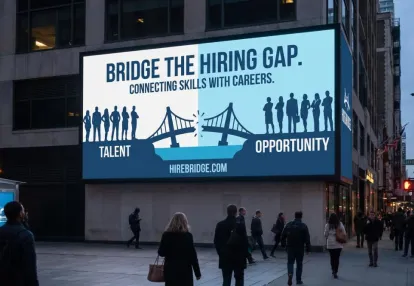
Explore why traditional OOH experience is no longer enough as out-of-home advertising becomes more data-driven, measurable, and connected to digital channels. This guide outlines the cross-channel, measurement, AI, and competitive-intelligence skills modern OOH employers and candidates need.
David Kim
7 minSep 25, 2026
How-To
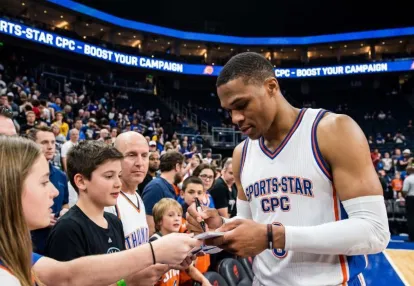
Learn how to measure whether sports-star and celebrity advertising actually delivers efficient CPC, CPA, search lift, and downstream conversions. This guide shows how to test celebrity creative against creator alternatives and use competitive intelligence and measurement to turn expensive star power into a measurable performance asset.
Elena Morales
7 minSep 25, 2026