10 minNovember 6, 2026

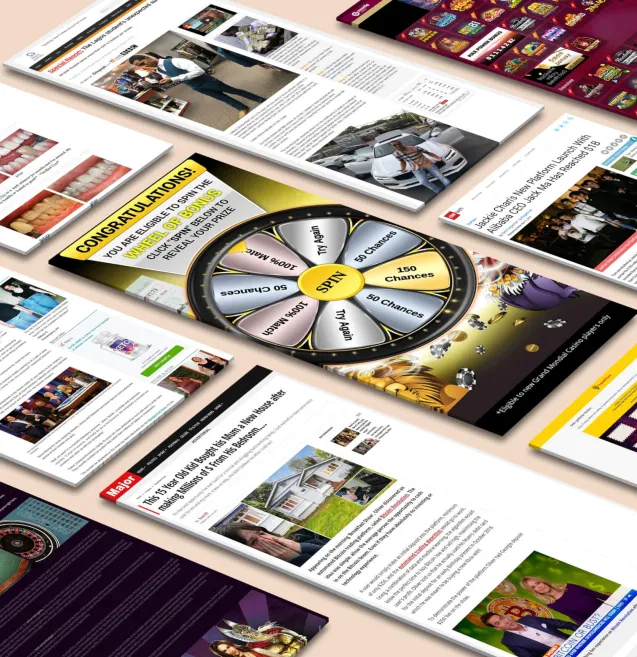
Our spy tools monitor millions of native ads from over 60+ countries and thousands of publishers.
Get StartedCompetitor ad intelligence can save marketers time. Instead of starting from a blank page, you can examine the hooks, formats, offers, and landing pages other advertisers are using. But there is a hidden cost when research turns into imitation.
When every brand copies the same visible winners, advertising becomes increasingly predictable. Creative fatigue accelerates, brand identities become harder to distinguish, and marketing teams gradually lose the ability to develop original ideas.
This is the hidden creative tax of ad spying.
The problem isn't using competitor data. It's treating competitor advertisements as ready-made creative strategies rather than evidence about the market. A campaign that appears frequently in an ad intelligence tool may offer a useful research clue, but its visibility does not prove profitability, long-term effectiveness, or suitability for your brand.
The better approach is to use competitive intelligence to understand what the market is already doing, identify where creative approaches are becoming saturated, and find opportunities to communicate differently.
With Anstrex, marketers can investigate advertising patterns across supported formats and networks. The goal should be to learn from those patterns without becoming another copy of the same campaign.
Marketers rarely include it in their media plans, but there is a real creative cost when an advertising strategy depends too heavily on spy tools and copycat creatives.
At first, the process looks efficient. Find competitor advertisements, identify popular hooks and formats, and adapt those ideas for your own campaigns. It can feel like a shortcut to better performance.
But the cost compounds in several ways.
When multiple advertisers use the same visible concepts, audiences begin seeing nearly identical promises, headlines, and visual patterns.
Think about how often feeds repeat familiar formulas:
These formulas may attract attention in some contexts, but widespread imitation makes them increasingly predictable.
As discussed in Voluum's coverage of in-app advertising, creatives and headlines copied from spy tools can lose effectiveness when audiences repeatedly encounter similar executions.
The result is a cycle of constant replacement. Teams spend more time refreshing variations simply to maintain their existing performance rather than developing genuinely stronger creative concepts.
A brand becomes recognizable through more than its logo or product name. Its language, visual identity, positioning, and consistent point of view all contribute to how people perceive it.
When advertisements become statistically indistinguishable from competitors, those differences become harder to communicate.
The industry debate around hyper-personalized advertising raises a related concern: an excessive focus on individual micro-variations can weaken the broader cultural signals that help brands build recognition and authority. See AdExchanger's discussion of the personalization measurement paradox.
Spy-tool mimicry can create a similar problem. Instead of developing a coherent brand story, marketers keep making small tactical changes based on what they see other advertisers doing.
The brand becomes a collection of borrowed tactics rather than a distinctive idea.
Advertising intelligence tools primarily expose observable advertising activity. Depending on the platform and available data, marketers may see creatives, landing pages, placements, campaign duration, or other visible signals.
But these observations do not necessarily reveal the complete strategy behind an advertisement.
A visible direct-response campaign might be supported by other channels, audience data, retargeting, or automated optimization. Copying its headline or visual format does not reproduce the conditions that made it useful to the original advertiser.
This is particularly important when examining campaigns associated with automated systems such as Google Performance Max or Meta Advantage+.
The temptation is to copy what looks like a winning conversion-focused advertisement. But short-term response is not the same as long-term brand value.
A campaign can generate clicks without building preference, trust, or pricing power.
The creative tax also affects how teams work.
If the standard for a good idea becomes "we found something similar in a competitor's ad," creative development gradually turns into imitation.
Teams stop asking:
As MarTech's analysis of the creative cost of chasing small performance gains illustrates, optimizing for narrow improvements can make creative work increasingly repetitive.
The rise of generative AI makes this issue more important. AI can produce countless variations, but feeding it generic competitor-inspired prompts can simply accelerate the production of derivative advertisements.
The better use of AI is to work from your own brand voice, customer understanding, and creative standards.
The takeaway: ad spying can help you understand the competitive landscape, but treating competitor creative as your primary source material creates a hidden cost in fatigue, differentiation, and creative capability.
When a feed is filled with competitor advertisements, it is easy to assume that generic, aggressive creative is simply what advertising algorithms reward.
The response becomes predictable: if competitors are using bigger discounts, louder headlines, and more aggressive calls to action, your brand must do the same.
But a race to the bottom is not simply a media optimization problem. It is often a brand strategy problem that media amplifies.
Copycat creative usually appears when brands stop defining their own point of view.
If every creative brief starts with a spy tool, the team naturally gravitates toward the same visible hooks, layouts, and offers.
The result may be an advertisement that generates clicks but contributes little to brand recognition.
A click tells you that someone interacted with an advertisement. It does not automatically tell you whether the interaction built preference, strengthened positioning, or increased long-term customer value.
This distinction is central to MarTech's discussion of chasing small performance gains.
Clicks, view rates, and engagement are useful performance indicators. They should not become substitutes for understanding what the brand means to its customers.
Consider two brands competing in the same category.
One focuses almost entirely on being cheaper, faster, or more heavily discounted than its competitors. The other builds a distinct position around a customer lifestyle, belief, experience, or problem.
The first brand is constantly forced to defend its price and specifications. The second has more room to communicate a reason to choose it beyond the latest offer.
This is the broader idea behind purpose-led brand positioning discussed in Adweek's coverage of Paulie Dery and Victoria Lozano.
A strong brand does not need to avoid product benefits or competitive comparisons. It needs a larger story that makes those benefits meaningful.
Dynamic creative optimization and generative AI can produce and test large numbers of advertising variations.
As explained in MobileAds' overview of programmatic creative and DCO, these systems can assemble and optimize creative combinations using available inputs.
But technology does not automatically create differentiation.
If the only instruction is to maximize immediate conversions, automated systems may repeatedly favor the most transactional messages available within the permitted creative and targeting environment.
If the creative system instead includes brand voice, audience needs, product truth, and positioning guidelines, AI can help explore different expressions of a distinctive strategy.
Social Media Examiner's guide to improving ad creative with AI emphasizes the importance of giving AI meaningful brand and customer context.
The principle is simple: platforms and tools can help scale a strategy, but they cannot replace the need to define one.
Blaming media for generic advertising is like blaming a microphone for bad lyrics. Spy tools, dashboards, and AI optimizers can amplify a weak creative strategy, but they do not have to determine it.
Most marketers approach Anstrex as a swipe file with additional research capabilities. They search for advertisements that appear successful, save interesting examples, and use them as inspiration.
There is another way to use it.
Treat Anstrex as a creative saturation scanner: a way to understand where your category is crowded, which messages are repeated, and where your brand may have an opportunity to communicate differently.
Instead of beginning with "What is working?", begin with:
"Where is everyone already clustered?"
Choose your category, product type, or core keyword themes and examine the advertising activity available within your research scope.
A 30–90-day review window can be a useful starting point when the available filters support it. Compare visible patterns by factors such as impressions, campaign duration, or network reach where those indicators are available.
Then group the advertisements according to four creative dimensions:
The goal is not to create a list of the top advertisements to copy. It is to map the creative patterns that are already common in your category.
Look for repeated formulas.
For example, a category might be crowded with:
Some of these techniques may have legitimate uses. The problem is when they become the only language a category seems to speak.
The phrase "cult of performance" is explored in AdExchanger's discussion of marketers becoming followers of performance culture.
Your job is to recognize when a frequently repeated tactic has become a category convention rather than a meaningful differentiator.
You can turn your observations into a simple creative saturation map.
1. Cluster dominant angles
Group advertisements by repeated promises or approaches.
For example:
Record how many advertisers appear to use similar approaches and how frequently those patterns appear in your research.
2. Flag overused formats
If a category is dominated by similar UGC testimonials, jump-cut videos, or static product comparisons, identify those formats as crowded.
A frequently observed format is not necessarily a differentiator.
3. Mark identity black holes
An identity black hole is a creative approach that makes your brand indistinguishable from the rest of the category.
Examples include positioning your entire message around being:
These approaches can be relevant in specific campaigns, but relying on them as your entire positioning makes it difficult to establish a unique reason to choose your brand.
The purpose-led positioning discussion in Adweek provides a useful contrast: a brand can compete around a larger belief or customer experience rather than only product specifications.
Another pattern to watch is the endless production of minor variations.
You might see advertisements with almost identical headlines, slightly different colors, or small layout changes.
Those variations may be part of a legitimate testing process. But when the entire category relies on tiny adjustments, it can indicate that creative development is becoming too focused on marginal improvements.
This connects with AdExchanger's discussion of the measurement challenges created by AI-tailored advertising and MarTech's analysis of small performance gains.
Use these patterns to establish no-go zones: areas where another minor variation is unlikely to create a meaningful distinction.
A saturation scan should not only show what to avoid. It should also help you identify areas worth investigating.
Look for three kinds of potential white space.
Underserved contexts
Are advertisers heavily concentrated in retargeting and direct-response placements while giving less attention to contextual or brand-building environments?
The evolving role of contextual signals and AI in advertising is discussed in illumin's overview of AI in AdTech.
A lack of visible activity may suggest an opportunity to investigate. It does not prove that audiences are interested in an untested format.
Missing emotional jobs
If most competitor advertisements focus on discounts and specifications, consider which emotional territories are less represented.
Potential directions include:
These themes can provide a different starting point for your creative strategy.
Format asymmetries
If your research shows a heavy concentration of static images and short UGC clips, investigate whether longer demonstrations, narrative sequences, or more polished branded content could offer a meaningful alternative.
The absence of a format in competitor research is a hypothesis to test, not evidence that the format will automatically perform better.
By mapping where your category is creatively crowded — and where it may be less developed — Anstrex becomes more than a source of inspiration. It becomes a tool for identifying where not to compete in the same way as everyone else.
Once you understand where competitors are clustered, the next step is not to find a slightly better version of their advertisements.
It is to find an angle that gives your brand a different reason to be noticed.
This is the transition from copycatting to deliberate differentiation.
Start with the clusters from your Anstrex research and reduce them to a short list of repeated patterns:
Then ask a more strategic question:
If someone saw five advertisements from this category in a row, what would they believe the entire category stands for?
That question reveals something more important than creative similarity. It reveals category conditioning.
When every advertisement tells the same story, audiences may begin to see every brand as interchangeable. The remaining difference becomes price, discount, or the strength of the latest promotional claim.
Use the dominant patterns as a starting point for creative exploration.
If every competitor is emphasizing urgency, consider whether a calmer, more confident message could reinforce your positioning.
If everyone is focused on product specifications, consider whether a lifestyle or identity-based approach could communicate a different reason to buy.
If every advertisement uses a staged testimonial, investigate whether a practical demonstration, expert explanation, or original visual concept could better express your product's value.
The purpose is not to be different merely for the sake of being different. The alternative must still be relevant to your customers and credible for your product.
One practical way to encourage differentiation is to stop using competitor comparisons as the starting point for every brief.
Instead of asking how to make a better version of Brand X, define the broader customer problem your brand wants to address.
For example:
These are illustrative creative directions, not ready-made claims. They need to be adapted to the actual product, audience, and brand promise.
This broader approach reflects the purpose-led positioning principles discussed in Adweek's coverage of Paulie Dery and Victoria Lozano.
Anstrex can help you pressure-test new ideas before investing heavily in production.
A practical process looks like this:
Generative AI can help teams explore alternative headlines, narratives, visual concepts, and campaign directions.
But it needs meaningful input.
Give AI information about:
This gives AI a more useful foundation than a collection of competitor advertisements.
The guidance in Social Media Examiner's three-step approach to better AI ad creative supports the importance of brand and audience context.
Remember that creative production volume is not the same as creative strategy. Generating 100 variations of an undifferentiated idea does not make the idea distinctive.
CTR and other engagement metrics still matter, particularly for direct-response campaigns.
But white-space creative should also be evaluated according to whether it strengthens recognition, communicates a clear position, and attracts the right audience.
Depending on the campaign, useful measures might include:
These measures do not all apply to every campaign, and no single metric proves brand differentiation. The point is to avoid judging every creative concept exclusively by its immediate click performance.
The purpose of ad spying is not to copy every advertisement that appears successful.
You need rules of engagement: clear situations where you examine a competitor's advertisement, understand its possible appeal, and deliberately choose not to imitate it.
A competitor's advertisement may appear to outperform another version by a small percentage.
That difference is not automatically meaningful.
It could reflect audience composition, campaign timing, placement, delivery conditions, or normal variation.
As discussed in MarTech's analysis of small performance gains, teams can spend significant time debating minor creative changes while gradually narrowing their overall creative range.
Your rule should be simple: if the apparent improvement is too small or uncertain to support a meaningful conclusion, record it as an observation rather than a creative mandate.
Some advertisements rely heavily on aggressive discounts, exaggerated urgency, or questionable claims.
Those approaches may attract attention, but they may not fit your brand's positioning or customer relationships.
If your strategy is premium, relationship-driven, or focused on long-term customer value, copying an aggressive discount campaign may create the wrong expectations.
Ask yourself:
Would we still be comfortable with this advertisement if it became the standard way people recognized our brand?
If the answer is no, record the tactic as something to avoid.
An advertisement does not operate independently of its delivery environment.
Its performance may depend on:
For example, a message such as "Still thinking about those sneakers?" may be effective because it responds to a specific prior interaction.
Copying the headline without access to comparable data or delivery conditions may produce a completely different result.
The useful lesson is to understand the underlying principle — relevance, specificity, or timing — and adapt it to the signals and capabilities you actually have.
For background, see MobileAds' explanation of dynamic creative optimization.
A competitor may appear to have many versions of the same advertisement.
But hundreds of small headline, color, or crop changes do not necessarily represent hundreds of distinct creative ideas.
Platforms and automated systems evolve, so claims about exactly how a particular platform groups or evaluates variations should be checked against current documentation before being used as a campaign rule.
The strategic principle remains useful: prioritize genuinely different concepts over endless micro-adjustments that do not change the central message.
Use AI and modular creative production to explore different narratives, formats, and customer problems rather than producing more versions of the same idea.
See Social Media Examiner's AI creative guidance for further context.
An advertisement with impressive views, engagement, or visible activity may still have an unclear path to qualified demand.
A spy tool cannot establish a competitor's actual profitability simply from observable creative activity.
Before adapting an idea, ask:
The danger is confusing advertising activity with financial progress, a concern also explored in MarTech's discussion of performance metrics.
Advertising practices and data availability continue to evolve as privacy requirements and platform policies change.
A campaign that appears to rely on highly granular behavioral information may not be a suitable model for a brand with different data access, consent requirements, or risk standards.
Investigate alternatives such as contextual relevance, permitted first-party data, and privacy-conscious audience approaches.
illumin's overview of AI in AdTech provides background on the evolving relationship between AI, targeting, and advertising technology.
Also consider the quality of the inventory where an advertisement appears. Avoid copying manipulative clickbait, misleading claims, or low-quality placements simply because they are visible in a competitor research tool.
The objective is to protect both business performance and brand trust.
The rule of engagement: competitor intelligence is a research resource, not a scoreboard that tells you what to imitate. Sometimes the most valuable decision is to recognize a visible tactic and deliberately walk away.
Not every competitor tactic needs to be rejected.
There is one part of the funnel where borrowing common advertising conventions can be practical: tightly scoped bottom-funnel campaigns aimed at people who already show meaningful purchase intent.
This is the harvest zone.
At this stage, the customer may have visited your website, added a product to their cart, searched for your brand, or begun a clear purchasing process.
They do not necessarily need another broad brand manifesto. They may need a straightforward answer to a final question.
Think of these advertisements as conversion utilities rather than primary brand-building assets.
Some functional cues are common because they make offers easier to understand.
Clear, specific offers
Examples include:
If competitors repeatedly communicate a particular reassurance, investigate whether your customers need the same information.
Only advertise offers and policies your business actually provides.
Strong, direct calls to action
Examples include:
These phrases are functional and easy to understand. You do not need to invent an entirely new way to communicate a straightforward next step.
Benefit-first headlines
Someone who is already considering a product may respond better to a direct benefit than an abstract brand message.
The key is to keep the benefit accurate, relevant, and consistent with what the product delivers.
Hyper-relevant messaging and automated optimization can be useful in these situations because the campaign is focused on helping an existing prospect take the next step.
This is also where dynamic creative optimization can support controlled testing. For more context, see AdExchanger's discussion of personalization and measurement and illumin's overview of AI in AdTech.
Functional creative should not be allowed to define the entire brand.
Draw clear boundaries between conversion-focused assets and broader brand communication.
1. Audience-based containment
Keep more direct-response and offer-heavy creative focused on audiences with an appropriate intent signal, where permitted by platform policies and applicable privacy requirements.
Examples may include:
Do not automatically treat every audience as eligible for retargeting. Respect consent, platform rules, frequency limits, and applicable privacy obligations.
If a campaign has a dual objective — generating new-to-brand reach while also converting existing prospects — it needs a creative strategy that accounts for both goals.
2. Template isolation
Keep conversion-focused templates separate from brand-building templates in your asset library.
The harvest templates can be more direct, specific, and offer-oriented.
Brand templates should continue to reflect the brand's visual identity, voice, and positioning.
This separation helps prevent short-term performance tactics from becoming the default creative language across every campaign.
3. Message depth, not message breadth
A bottom-funnel advertisement does not need to introduce a completely new brand story.
Its job is to reinforce the one or two strongest reasons to buy that have already been established.
For example, if your brand has already communicated product quality and ease of use, a retargeting message can reinforce those benefits with a clear offer or next step.
The broader strategic distinction is similar to the argument explored in AdExchanger's discussion of personalization and macro-level brand signals: short-term performance messages and broader brand communication have different jobs.
4. Ethical and brand-safety standards
Do not copy shock tactics simply because they appear attention-grabbing.
Avoid misleading claims, manipulative urgency, disguised advertising, and questionable inventory.
Your retargeting should not teach customers to associate your brand with the least trustworthy parts of the advertising ecosystem.
The concerns raised in AdExchanger's analysis of performance-driven advertising culture are a useful reminder that efficiency should not come at the expense of brand trust.
Imagine that several competitors use a quiz followed by a product recommendation and a limited-time offer.
You may decide that this structure makes sense for your own retargeting campaign.
That does not mean you need to copy their messaging, visual identity, claims, or entire customer journey.
Use your own product benefits, proof, brand language, and customer insights.
AI can help generate additional approved headline or image variations, as discussed in Social Media Examiner's guide to better AI ad creative.
But remember:
Creative volume is a production tactic. Positioning is a strategy.
Harvest campaigns should be practical, direct, and useful. They should help an interested customer take the next step without replacing the distinctive brand experience that brought that customer into the funnel.
Ad spying is most valuable when it helps you make better strategic decisions — not when it gives you another collection of advertisements to imitate.
The hidden creative tax appears when teams confuse visibility with proof, repetition with success, and competitor activity with a ready-made strategy.
A more disciplined approach looks different.
Use Anstrex to:
The goal is not to ignore competitors. Their advertising can reveal useful information about the market, the language being used, and the approaches advertisers are exploring.
But your brand should not become a reflection of the most visible campaigns in your research results.
Use competitor data to understand the playing field. Use your own customer insights and brand strategy to decide how to compete.
When you stop treating Anstrex as a vending machine for winning hooks and start using it as a saturation scanner, creative research becomes much more valuable.
You are no longer paying a hidden tax to your competitors' strategies.
You're using their advertising activity to find your own creative advantage.
Receive top converting landing pages in your inbox every week from us.
Editor’s Pick
More competitor data does not automatically lead to better campaigns. Discover how performance marketers can use Anstrex as an intelligence input for AI-assisted monitoring, creative and funnel clustering, market-change summaries, and prioritized testing hypotheses.
Samantha Reed
7 minNov 7, 2026
Announcement
Generic holiday marketing advice can quickly become outdated. Learn how to use competitive ad intelligence to study competitor campaigns, uncover creative and funnel patterns, and turn those observations into structured experiments for the 2027 holiday season.
Rachel Thompson
7 minNov 7, 2026
Most Read
A single high-performing advertisement rarely tells the whole story. Learn how to use Anstrex to investigate the systems behind competitor campaigns — from landing pages and pre-sell experiences to creative testing, channel sequencing, and optimization patterns.
David Kim
7 minNov 6, 2026