Native Ads, Push Ads, TikTok Ads
8 minOctober 16, 2026

Our spy tools monitor millions of native ads from over 60+ countries and thousands of publishers.
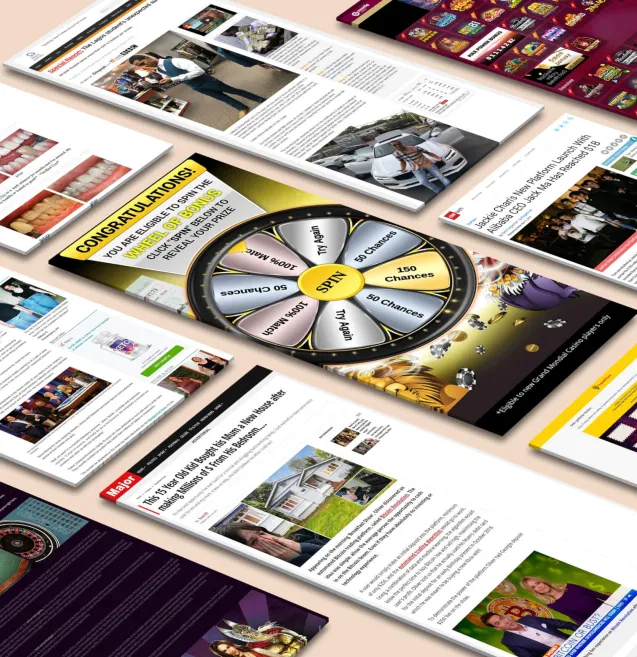
Get StartedFor the last decade, native arbitrage has depended on one thing: an endless supply of cheap clicks from low-quality inventory. You buy traffic to a “story,” load it with ads or affiliate offers, and rely on volume to outrun rising CPAs. That model is now colliding with a different kind of volume problem: AI-generated everything.
Media buyers are already treating “AI slop” as a new brand-safety line item. As programmatic practitioners told AdExchanger, generative tools have made it trivial for made‑for‑advertising sites to crank out low‑effort text, audio, and video at industrial scale, often paired with aggressive ad clutter and paid traffic. Studies cited in the same report estimate that in some recent months, upwards of 70% of new sites and roughly half of online articles contained AI-generated content. The result is a feed of cheap impressions polluted with junk signals: clicks that don’t correlate with attention, engagement, or purchase intent.
On the surface, that sounds like a death sentence for arbitrage. If every publisher is flooding the web with machine‑written listicles and recycled TikToks, where do you still find exploitable gaps?
The answer isn’t to opt out of AI; it’s to follow the attention shift into AI-native environments. As answer engines and conversational interfaces become the default discovery layer, the arbitrage opportunity is moving from “more pages and placements” to “better answers and trajectories.” Instead of scraping together a vaguely relevant article to host Taboola widgets, you’re crafting AI-ready, high-signal content that large language models can recognize, quote, and route users through.
SEO teams are already doing this under the banner of answer engine optimization, or AEO. As the team at Backlinko explains, an “AI-ready asset” is built to be found, cited, and trusted by LLMs: headings that mirror natural language questions, front‑loaded stats and definitions, and tightly scoped sections that express one clear idea. Bullet lists, tables, and explicit methodologies make your information highly extractable and easy to summarize. In legacy search, those tactics helped you win featured snippets; in answer engines, they dictate whether you get injected into the model’s response at all.
This is where the new content arbitrage flywheel begins. Answer engines need reliable source material to synthesize. When your content is structurally optimized for extraction and your brand shows up as a cited authority, you’re effectively “renting” a piece of the answer layer at a steep discount versus traditional paid search. Each inclusion becomes upstream intent you can redirect into performance funnels on native placements, push notifications, or TikTok landing experiences.
Critically, AI-native advertising isn’t just about better copy; it’s about re-architecting the whole system around answers instead of ads. As one analysis from MarTech argues, the brands that win won’t be those who push the most impressions, but those whose products and content are structured so AI systems can interpret, differentiate, and recommend them. That means clear positioning and accessible data for models, but it also means creative and operations built for continuous, AI‑driven testing rather than quarterly campaign dumps.
Look at what’s happening on the creative side. When a company like Unilever orchestrates a 300,000‑creator network of AI‑assisted influencers, the sheer output makes traditional test‑and‑learn almost impossible to manage. As reported by Search Engine Journal, the brand faces a brutal signal‑to‑noise dilemma: individual videos can perform, but the aggregate narrative risks dissolving into chaos. The response has been to plug creative intelligence directly into media decisioning, using platforms like DAIVID and ADIN.AI to predict performance and automatically allocate budget toward the highest‑signal assets.
For performance marketers, answer engines are the same problem, flipped. Instead of drowning in too many creatives, you’re competing in an ocean of AI slop for a finite number of useful, model‑generated answers. The play is to become the high‑signal outlier in that pool: content that answer engines can parse with confidence and that autonomous buying systems can see working across channels.
Once you do, the arbitrage no longer lives in a sketchy ad grid at the bottom of a junk article. It lives in the gap between what answer engines can already provide and what your native, push, and TikTok campaigns can monetize downstream. Your job is to feed the models with structured, authoritative answers—and then capture the surplus value when those answers quietly power the next click.
To turn AI-generated answers into money-making creatives, you first have to stop reading them like a user and start reading them like a media buyer.
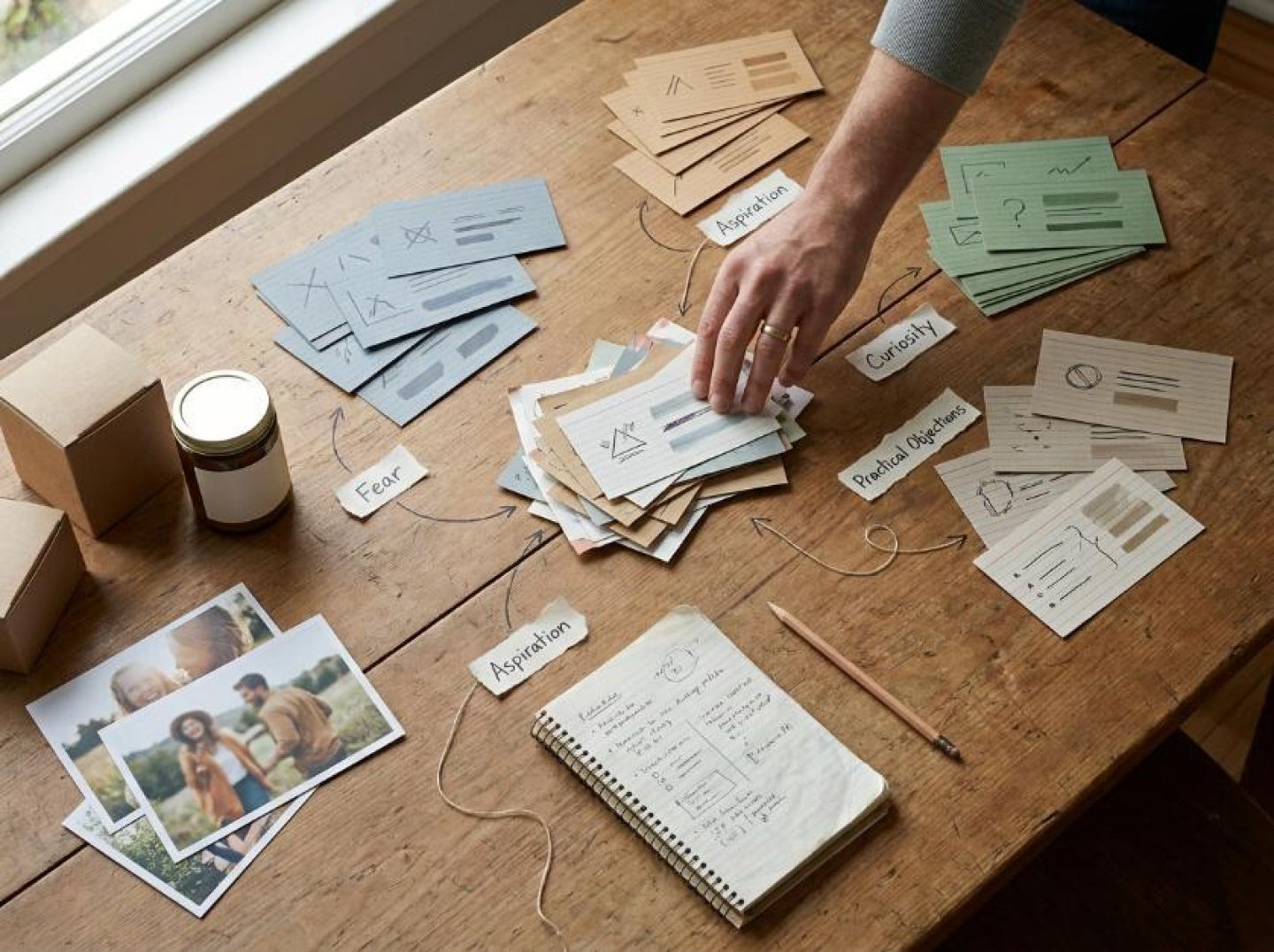
AI answer engines compress entire SERPs into a tidy, overconfident paragraph. Hidden inside that paragraph is a complete pain-point map for your native, push, and TikTok campaigns. Your job isn’t to “improve” the answer. Your job is to mine it.
Start where the arbitrage opportunity actually begins: the query.
If you’re running native on “reverse mortgage” or “Ozempic alternatives,” you already know your broad head terms. Instead of hammering keyword tools, feed those terms directly into an answer engine (ChatGPT, Perplexity, Gemini, Claude) and ask questions the way a human would:
You’re forcing the model to surface the anxieties behind the search — the same anxieties AI-native search will summarize in its overview box. As Neil Patel points out, AI search isn’t replacing content; it’s re-ranking and re-framing it around concrete questions. You’re simply jumping straight to those questions.
Now deconstruct the answer as if it were a customer support transcript. Ignore the “balanced” tone. Underline every clause that implies fear, friction, or skepticism:
Each of these fragments is a discrete pain point. Copy them into a spreadsheet and normalize the language. You’re not looking for copy yet; you’re mapping the emotional terrain:
AI is doing, at scale, what a great qualitative researcher would do manually: aggregating and summarizing objections. But as the team at Orbit Media notes, AI outputs are only the foundation; human strategists still have to filter, prioritize, and align with business objectives. Your filter is brutally simple: “Could this sentence become a scroll-stopper on Taboola or a TikTok hook?”
If yes, keep it. If not, delete it.
Every pain point can spin off multiple money angles across formats:
This is where arbitrage happens. The same answer paragraph that killed organic click-through becomes a creative factory for paid traffic. The internet might be flooded with “good enough” explanations — as Jeff Bullas observes, the supply of synthesized information has gone to infinity — but the supply of sharp, conversion-focused angles is still constrained by human imagination and testing.
To make this repeatable across dozens of offers and geos, standardize the extraction:
You’ve now converted a generic AI answer into a labeled backlog of pain points and angles that can feed weeks of creative testing — without writing a single 3,000-word “SEO guide” destined to be summarized away by AI Overviews.
In a world where, as AdExchanger reports, advertisers are drowning in AI slop and MFA inventory, your edge isn’t producing more content. It’s weaponizing the content AI already produces, turning its sanitized summaries back into raw, market-facing emotion — and then buying against that emotion harder and smarter than the next buyer.
Once you’ve squeezed a pain-point map out of AI answers, the next move is to see which of those angles already make money in the wild. That means getting out of the chat box and into ad libraries—Anstrex for native and push, plus TikTok’s own creative libraries or third-party tools.
Think of AI as your hypothesis engine and ad libraries as your reality check.
Start by turning your AI-derived pain points into a tight list of “angle keywords.” If your AI answer around weight loss keeps circling “men over 40,” “joint pain,” and “slowed metabolism,” those are three distinct angles. Don’t lump them together. Each one becomes a search term you’ll plug into Anstrex and TikTok libraries.
On native and push, Anstrex is your control room. You’re not just looking for any ad that matches your keyword—you’re looking for patterns that suggest a profitable arbitrage:
When you see the same hook structure and benefit framing echoed across different brands, that’s market proof your AI-derived angle has legs. This is the kind of alignment that answer engines now reward as “authoritative, current, and clearly structured,” which is exactly what Neil Patel describes as the new bar for AI-native search visibility. The difference is that you’re not trying to rank—you’re trying to rent that same authority for pennies a click through arbitrage.
On TikTok, you follow a similar process, but the signal you care about is creative structure and first-frame stopping power. TikTok’s own libraries and tools like Content Suite behave like an ad-centric search engine: you plug in a brand, keyword, or category and get back a feed of creatives that the algorithm has already validated. As Social Media Examiner explains, the real value of these tools is seeing what other brands are actively investing in and using that to inform original concepts rather than copying outright.
Take each core pain point from your AI map and run three passes through TikTok’s ad libraries:
Document which angles show up most often in high-spend-looking creatives—polished UGC, multiple variants of the same hook, and consistent branding are all good proxies for budget. Social Media Examiner notes that top-performing TikTok content can effectively be “reverse-engineered” by studying what ranks first in keyword searches, because the platform has already done the performance filtering for you. Treat those top-of-library results as your control group.
The key is discipline. Set a one-hour research sprint per angle. In that hour, you’re not doom-scrolling; you’re tagging:
As you collect these, you’re building a validation grid: rows for AI-derived angles, columns for channels (native, push, TikTok), and cells filled with real ads that prove or disprove each idea. Angles that show up strongly across multiple formats—headline-driven native, push creatives, and TikTok UGC—move to the top of your testing queue. Angles that only exist in AI answers and nowhere in ad libraries might still be worth a shot, but you treat them as speculative, not core.
This is how you transform AI output from “maybe” ideas into a shortlist of angles with demonstrated market demand. By anchoring your creative thinking in what Orbit Media calls “channels-first” reality—where content is shaped by how and where it will be distributed—you avoid building campaigns on theoretical pain points. You build them on proven, money-backed attention.
Take the AI list of pains/angles and treat it like a raw customer-research spreadsheet that just happens to be written in sentences.
The answer engine already did the clustering work for you. It grouped problems, objections, fantasies, and “nice to haves” into a compressed blob. Your job now is to explode that blob back into discrete, testable angles you can ship into native, push, and TikTok.
Start by stripping the answer down to atomic pains. Copy the AI paragraph into a doc and break every implied problem into a separate line:
You’re not looking for poetry; you’re building a lookup table. This is the “answer engine optimization” mindset flipped on its head: instead of trying to be the content the model cites, you’re using what it already says as your targetable emotional map. When Backlinko’s team describes “AI-ready assets” as being structured into clear sections and extractable bullets for LLMs, that’s the exact structure you want to reverse-engineer from the model’s output. If the answer came back as neat subheadings and bullet points, each of those is basically a ready-made angle.
Next, turn each pain into three things:
For “No time for meal prep,” that might look like:
You’re manufacturing the emotional edges that answer engines deliberately sand down. Where AI smooths nuance to sound authoritative, you sharpen it back up into bold, clickable statements.
This is also where you decide which angles are “network friendly.” TikTok, native, and push are not neutral pipes; they reward different emotional textures.
AI answer engines will usually hand you the seed of each of those, but you have to do the translation work. As MarTech’s analysis of AI-native advertising points out, the winners are the brands that show up with “the most useful answers” in the right context. Your AI-derived pains tell you what to answer; your angle work decides how that answer shows up on a thumb-scrolled feed versus a native article widget.
Once you’ve drafted your set of angle variants, tag them with the underlying emotion instead of just the surface topic:
That emotional tagging becomes crucial later when you’re iterating creatives at scale. When Unilever’s giant influencer network started producing AI-assisted content across hundreds of micro-niches, the hard part wasn’t generating videos—it was making sense of which emotional levers were actually working and which just added noise, as Search Engine Journal’s coverage of DAIVID and ADIN.AI makes clear. If you standardize on “this angle is shame,” “this one is novelty,” you can run far cleaner tests across formats and traffic sources.
Finally, separate angles from claims. AI will often blend the two: “Many busy professionals struggle to cook healthy meals, but with quick recipes you can still lose weight.” The angle is “busy professionals think they don’t have time to eat healthy.” The claim is “you can still lose weight with quick recipes.” On native and push, the angle is your hook; the claim is what your lander has to substantiate. Tease the angle aggressively in the ad, then pay off the claim on page.
By the end of this pass, you should have:
You haven’t written a single ad yet—but you’ve built the angle architecture your whole arbitrage play will sit on.
Now you have a page full of AI‑generated pains and angles. The next move is to see which ones the market has already validated by spending real money on them.
This is where spy tools stop being “competitive research” toys and become your second brain.
Start by turning each pain/angle into literal search input. If one of your top pains is “silent prediabetes,” search that exact phrase in Anstrex under Native. Then strip it down and widen: “blood sugar,” “over 40 diabetes,” “doctor won’t tell you.” Do the same by vertical: Health, BizOp, Finance, Beauty, depending on what your AI output gave you.
You’re not just looking for any ad that sort of matches. You’re looking for repeated patterns:
Treat every recurring pattern as proof that an angle is bankable.
On TikTok, you want to think like a media buyer with a search bar. TikTok’s own ad libraries and tools like Creative Center or third‑party suites function almost exactly the way Melissa Laurie describes TikTok’s Content Suite: searchable by keyword, category, objective, and geography. Start narrow:
For each query, scan only what the algorithm has floated to the top. As Michelle Gifford points out about Instagram content research, the pieces that rank for a term are the ideas the platform has already validated as high‑performing. That same logic applies here: top‑visible ads are your proof of demand.
Filter ruthlessly. In native and push tools, sort by:
In TikTok creative tools, filter by:
Now cross‑map what you see to your AI list. Literally create three columns:
Every time you see an ad that directly expresses, dramatizes, or implies one of your AI pains, mark it. Bonus points if the same angle appears in different formats: a Taboola native advertorial, a push notification, and a TikTok UGC ad all telling the same emotional story in slightly different language.
This is your “convergent proof” list. Angles that light up across multiple platforms move to the top of the testing queue. Angles your AI suggested that you can’t find anywhere in live campaigns go in a separate “speculative” bucket for later, cheaper testing.
Don’t stop at obvious keywords. Borrow a page from answer‑engine optimization: Backlinko’s work on AI visibility shows how real prompts and “natural language” phrasing often matter more than exact match keywords. In practice, that means searching your spy tools with the full, conversational phrasing your AI used:
These longer strings will surface creatives that are tuned to the same emotional frequency as your AI copy, even if the final ad text is shorter.
Finally, document everything. Screen‑record scrolls through Anstrex, save TikTok ad links, and paste representative hooks and frames into your working doc. This is the raw clay you’ll use to translate “AI ideas” into real hooks, creatives, and funnels that the arbitrage math can actually support.
Now you’re staring at a spy tool results page full of screenshots and headlines. Most people treat this like a swipe file buffet. You’re going to treat it like a clustering problem in reverse: find the recurring hooks, thumbnails, and lander structures that all map back to the same pain, objection, or fantasy your AI answer engine already surfaced.
Start with hooks. Scroll through Anstrex or your TikTok ad library and ignore colors and fonts for a moment. Read the first three seconds of every headline or opener and tag them by “reason why”:
You’re looking for clusters where totally different creatives are clearly selling the same emotional job. When you see “silent prediabetes,” “blood sugar time bomb,” and “your lab results are lying to you” all dominating a vertical, that’s one underlying fear of “my body is deteriorating and no one told me.” AI answer engines already compressed that into a neat phrase like “silent prediabetes.” Your job is to explode it into multiple ad‑ready hooks that all scratch the same itch in different language.
This is exactly how answer‑engine optimization works in organic: you front‑load clear, extractable claims so AI systems can recognize and group them, then you branch those claims into variations that match different intents, as Neil Patel’s team explains about building content that earns citations across related questions. You’re just doing the paid‑traffic version: same underlying intent cluster, many parallel hooks.
Next, thumbnails. Thumbnails are native and TikTok’s pre‑headline copy. They telegraph the dominant emotion of the angle before a single word gets read. Scroll your spy tool grid and tally:
You’ll notice that “fear” clusters tend to rely on authority props (doctor, lab report, graph trending the wrong way), while “aspiration” clusters lean into lifestyle scenes and conspicuous ease (someone lounging, a full shopping cart, a passport on a table). This isn’t just aesthetic. It’s how the market is visually encoding the same pains and fantasies you already pulled from your AI answers.
Now connect those hooks and thumbs to lander structures. Click through every ad in a cluster and ignore copy details at first. Map the skeleton:
You’ll find that serious health fears, for example, almost always open with “hidden danger” and third‑party authority before introducing the product. Money‑saving offers often invert that: they lead with a big obvious win (“how I slashed my bill by 63%”) and sprinkle in authority later. That mirrors what AI‑native advertising experts describe as the need for “clear positioning, differentiated value props, and accessible, high‑quality information” at the exact decision moment, which MarTech frames as optimizing for answer engines rather than just impressions.
The important move is to label each lander structure with the objection it’s handling:
Now you can take your AI‑generated objection list (“Will this work for my age?”, “Is this safe?”, “Is this legit or a scam?”) and match each one to a proven lander pattern you see running across multiple advertisers.
This is also how you avoid drifting into generic “AI slop.” As AdExchanger noted about low‑effort arbitrage, most made‑for‑ads properties share a high ad‑to‑content ratio and shallow, interchangeable pages. You’re doing the opposite: hand‑curating patterns that demonstrably convert and tying them back to concrete user pains and objections your answer engine surfaced, rather than spamming out random GPT‑written prelanders.
By the end of this pass, each of your AI‑derived clusters shouldn’t just be a phrase on a spreadsheet. It should have:
That bundle is an “angle system” you can now translate into platform‑native campaigns: TikTok hooks and UGC structures, native headlines and widgets, push notifs and prelanders — all coherently tied back to the same pain the answer engine already told you people care about.
Receive top converting landing pages in your inbox every week from us.
Recently Updated
Discover how performance marketers can turn AI-generated answers into profitable creative opportunities for native, push, and TikTok advertising. Learn how to extract customer pain points, validate campaign angles with Anstrex and TikTok ad libraries, and build data-informed creative strategies that stand out from low-quality AI content.
Liam O’Connor
7 minOct 16, 2026
Must Read
Discover how AI-powered media buying can expose advertisers to budget overruns, brand safety issues, and legal risks when autonomous systems operate without clear controls. Learn how to build safer advertising workflows with standardized prompts, mandatory checklists, human oversight, and contractual safeguards that keep AI-driven campaigns accountable.
Dan Smith
7 minOct 15, 2026
How-To
Discover how to reverse-engineer competitors’ ChatGPT advertising strategies by analyzing sponsored cards, conversational entry points, landing pages, and retargeting funnels. Learn how to use native ad and TikTok intelligence to uncover competitor offers, identify cross-channel opportunities, and build higher-converting performance marketing campaigns.
David Kim
7 minOct 14, 2026