7 minAugust 9, 2026

Our spy tools monitor millions of native ads from over 60+ countries and thousands of publishers.
Get StartedThe numbers are no longer projections — they're body counts. Across the publishing industry, the traffic model that sustained digital media for two decades is collapsing under the weight of Google's AI Overviews, and the publishers who built their entire business architecture on the assumption that search would always send them readers are now watching their revenue foundations crack in real time.
Consider the scale of what's already happened. UK news giant Reach saw its digital revenues plunge 11 percent year-over-year in the first half of 2026, driven directly by the ongoing devastation AI overviews and chatbots have inflicted on search referral traffic. Reach's CEO didn't sugarcoat the prognosis, stating bluntly that the company is now operating under the assumption that Google traffic is "unlikely to recover." That's not the language of temporary disruption. That's a publisher eulogizing a revenue channel.
The trajectory only steepens from here. Research from the Association of Online Publishers found that organic Google Search referrals declined by 7.1 percent in a single quarter, leading forecasters to project that publisher traffic from Google will halve by Q3 2027. Given Google's stated intention to make its zero-click AI Mode the centerpiece of its future search experience, those declines are expected to accelerate, not plateau.
This is the structural reality that has turned publisher rhetoric from complaint to existential threat. Conversations about blocking Googlebot — once considered unthinkable heresy — are now happening at the executive level across major media companies. The calculus has shifted: if Google is going to scrape publisher content to generate AI summaries that eliminate the need for users to click through, what exactly is the value of remaining indexed?
The fragility of this arrangement was always there, hiding beneath years of steady organic growth. As Brax has noted, reliance on organic traffic leaves publishers at the mercy of algorithm changes, where traffic numbers can plummet overnight due to a single unexpected update. But what's happening now isn't a mere algorithm fluctuation — it's the platform itself deciding it no longer needs to share its users. The algorithm hasn't changed the rules; Google has changed the game entirely.
Meanwhile, as AdExchanger reported, Google's march toward an agentic search experience has moved the timeline for the end of the pageview era "from gradual to immediate." Publishers who had years to adapt now have months. The era of search and social traffic is ending, and the business models tethered to it — programmatic display monetized through sheer volume, content farms optimized for featured snippets, entire editorial calendars reverse-engineered from keyword research — are disintegrating in parallel.
This isn't a story about publishers needing to diversify. They know that. The story is about what happens in the gap between a dying model and the one that replaces it — and who is positioned to fill the vacuum with dollars while publishers scramble for new footing. That gap is where the opportunity lives, and it's widening by the quarter.
The math is brutally simple: when a publisher's organic traffic drops by double digits, their programmatic ad revenue follows it down the cliff. Fewer pageviews mean fewer impressions, which means less inventory to sell, which means less money coming in the door. And when that revenue contraction hits publishers who were already operating on thin margins — which describes most of digital media in 2026 — the desperation to find alternative income streams becomes palpable. For performance marketers paying attention, this desperation is the opportunity of a decade.
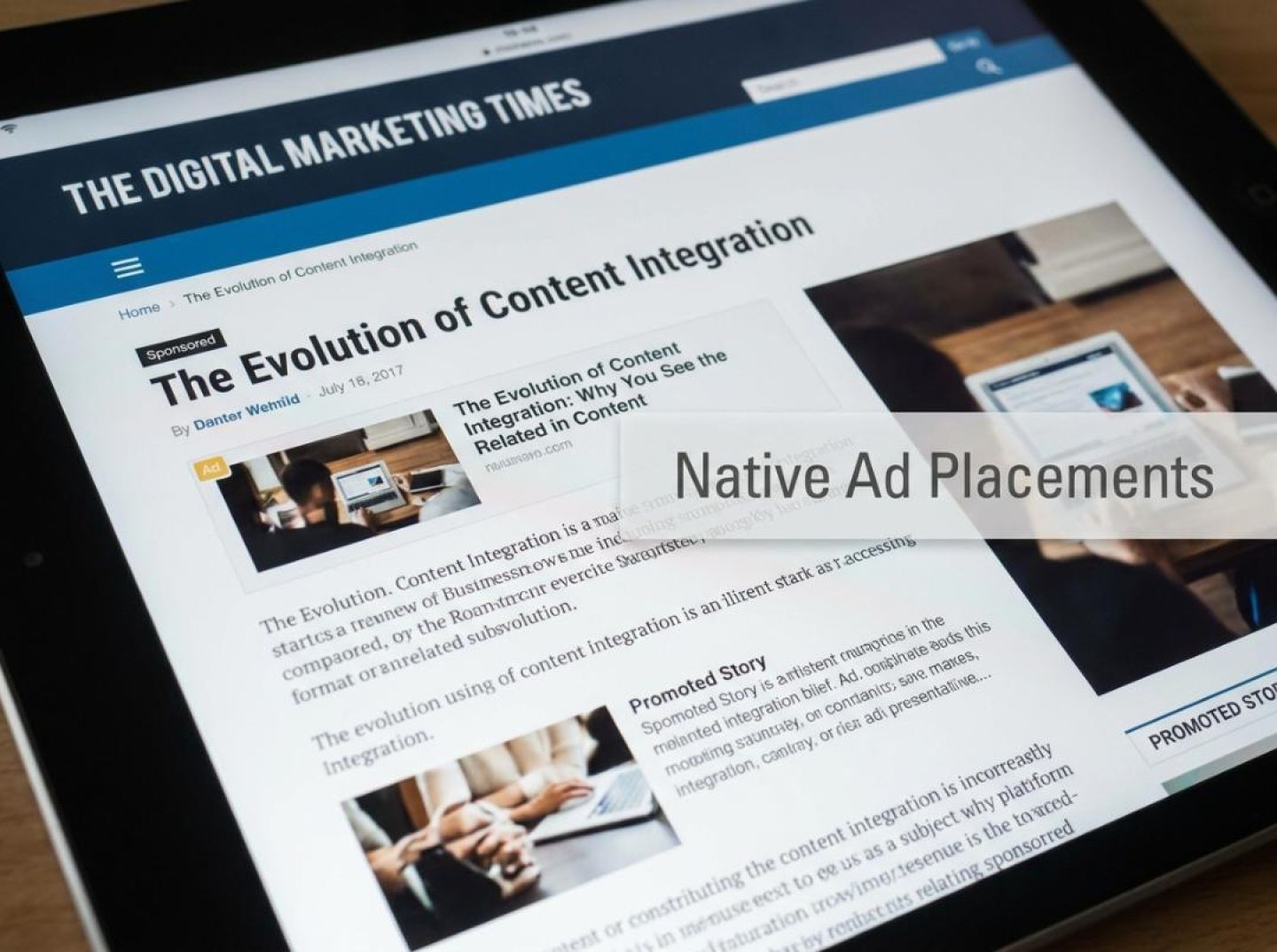
Consider the cascade effect. UK news publisher Reach reported that its digital revenues fell by 11 percent year-over-year in the first half of 2026, driven directly by AI overviews cannibalizing search referrals. Its CEO acknowledged that Google traffic is "unlikely to recover." That's not a temporary dip requiring patience — it's a structural revenue hole that needs to be filled with something else. Multiply that scenario across hundreds of publishers experiencing similar declines, and you begin to see the contours of a genuine buyer's market for native ad placements.
Here's why the power dynamic has shifted so dramatically. In the old landscape, premium publishers could afford to be selective about native partnerships. They set the rates, dictated the terms, and often required minimum commitments that priced out all but the largest advertisers. That posture was sustainable when Google was reliably sending millions of visitors to their pages every month. But when that traffic evaporates, the calculus changes overnight. Publishers who once turned away mid-market advertisers are now actively seeking them out, because their programmatic fill rates have cratered alongside their traffic.
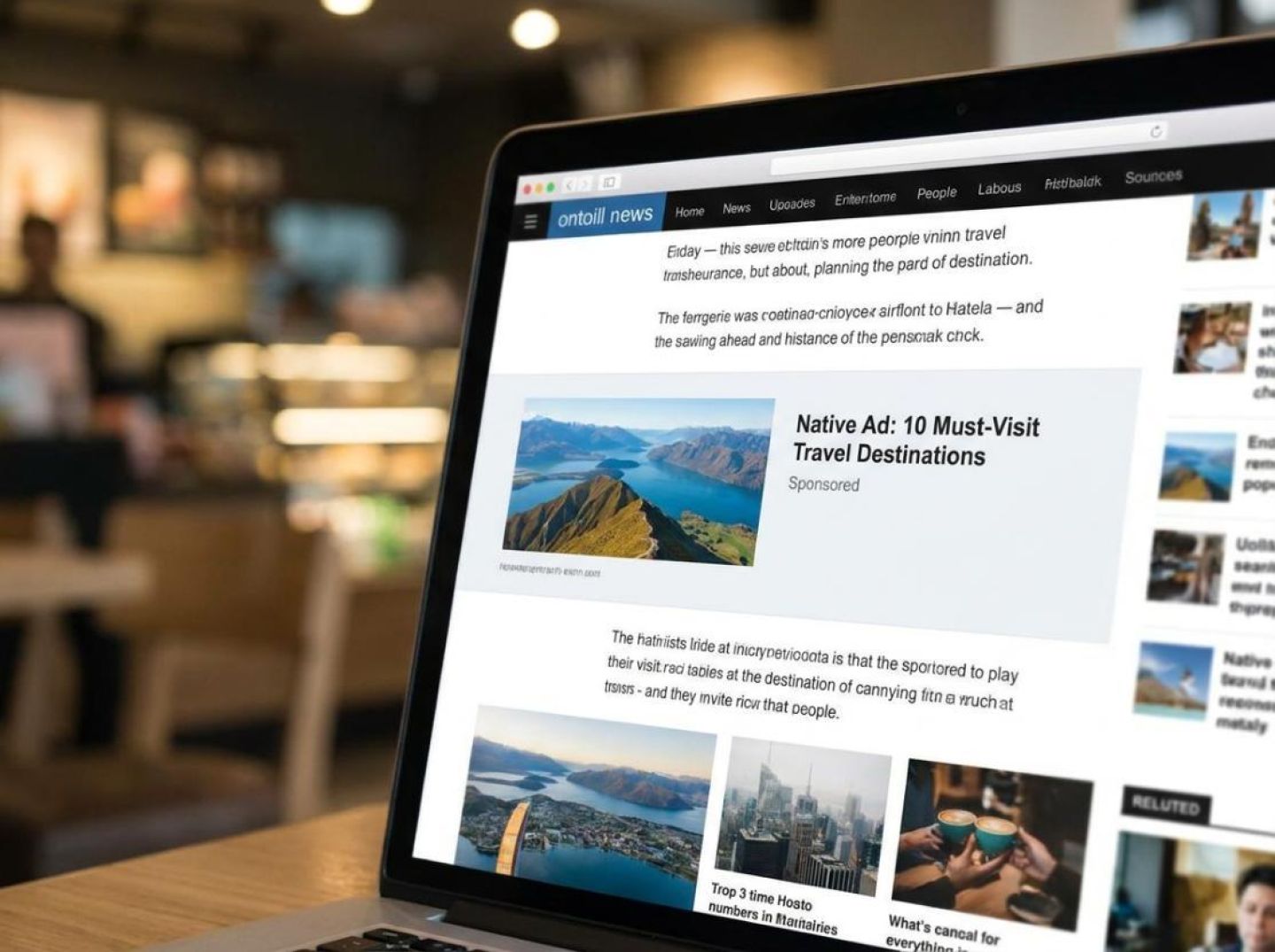
Native advertising is particularly attractive to publishers in this environment because it offers something display ads cannot: a higher foundation of trust with audiences and a lower risk of driving loyal readers away. Unlike aggressive interstitials or autoplay video that erode user experience, native placements integrate into the editorial flow in ways that readers tolerate — and sometimes even appreciate. For publishers trying to protect their remaining direct audiences while simultaneously monetizing them, native ads represent a sustainable revenue channel that doesn't accelerate the exodus.
This creates an asymmetry that savvy performance marketers can exploit. Publishers need native ad revenue more than they have in years, but most advertisers haven't updated their mental model of the market. They're still budgeting based on CPMs and placement costs from 2024, when publisher leverage was stronger and inventory was tighter. The brands and performance teams that recognize this lag — and move now — can lock in premium placements on high-authority sites at rates that would have been laughed out of the room 18 months ago.
The negotiating leverage extends beyond price. Publishers who are scrambling to stabilize revenue are also more willing to offer custom integrations, extended content partnerships, and performance-based pricing structures that align costs with outcomes. Where a publisher might have previously demanded flat-rate sponsorships with no accountability, that same publisher may now agree to CPA-based or hybrid models simply because something is better than the nothing that's replacing their vanishing search traffic.
As Brax has noted, native ads provide a sustainability mechanism that insulates businesses from algorithmic volatility — and that argument applies to both sides of the transaction. Publishers get predictable revenue that doesn't depend on Google's next algorithm update. Advertisers get premium placement in front of engaged, loyal audiences at a fraction of yesterday's cost. The window won't stay open forever — once enough advertisers catch on, competition for these placements will normalize pricing. But right now, the gap between publisher desperation and advertiser awareness is wide, and that gap is where the margin lives.
The question isn't whether advertisers should shift budget away from search — the traffic data has already answered that. The question is where that budget goes. And here, the answer isn't as obvious as most media buyers assume. Display advertising, programmatic pipes, and social platforms all claim to be the natural successor to search-driven discovery. But each carries structural flaws that make them poor candidates for capturing the attention that Google is no longer delivering to publishers.
Start with display. Banner ads have been dying a slow, public death for years, and the core problem hasn't changed: audiences have learned to ignore them. As AdPushup explains, the phenomenon of "banner blindness" means display ads are simply filtered out by readers who have trained themselves to look past anything that resembles a rectangular ad unit. You can optimize creative, test placements, and run sophisticated retargeting sequences, but you're still fighting against a fundamental perceptual habit that decades of intrusive advertising have baked into user behavior. In a post-SEO environment where publishers need every remaining visitor to generate maximum revenue, formats that get ignored are worse than useless — they actively degrade the user experience without delivering returns.
Programmatic advertising faces a different but equally damaging problem: trust erosion. The supply chain is opaque, fraud rates remain stubbornly high, and brand safety concerns have pushed major advertisers to question where their impressions are actually landing. Meanwhile, the third-party cookie infrastructure that powered programmatic targeting is crumbling, and the replacements — contextual signals, cohort-based targeting, publisher first-party data — all favor formats that live inside the editorial experience rather than alongside it.
Social advertising, the other obvious candidate, comes with its own structural trap: platform dependency. You're renting attention on someone else's property, subject to algorithmic changes, rising CPMs, and the constant risk that a policy shift will crater your performance overnight. Brands that poured budget into Facebook and Instagram discovery are now facing cost curves that make customer acquisition economics increasingly difficult to justify.
Native advertising sidesteps all three problems simultaneously. It doesn't interrupt — it integrates. The non-intrusive nature of native formats drives higher eCPMs precisely because readers engage with sponsored content that matches the editorial environment around it, rather than reflexively ignoring or resenting it. That trust advantage compounds over time: publishers who deploy native ads retain loyal audiences rather than driving them away with aggressive monetization tactics.
The scale of advertiser conviction here is already enormous. According to Brax, native ad spending hit $97.46 billion in 2023, representing over 59.7% of all digital display spending in the US. That's not a niche format — it's the majority of display investment, and the share continues to grow as advertisers chase performance in environments where traditional display fails.
Here's the deeper structural argument: native advertising mirrors how post-SEO content discovery actually works. The reader who stopped clicking Google results hasn't stopped consuming content. She's navigating directly to trusted publisher sites, scrolling through recommendation widgets, and following editorial pathways that surface sponsored content alongside the journalism she came for. Native ads are the format that fits this behavior — not because they trick anyone, but because they participate in the same content experience the reader is already engaged in. In a world where discovery has shifted from search queries to editorial browsing, the ad format that functions like content — rather than shouting over it — holds the structural advantage.
Every arbitrage window has a shelf life. The gap between what publishers are willing to accept for native placements and what those placements are actually worth to advertisers will narrow as the market recalibrates. The marketers who profit most won't be the ones who wait for case studies — they'll be the ones running competitive intelligence right now to identify where the dislocation is deepest.
The reconnaissance workflow starts with creative surveillance. Tools like Anstrex let you monitor native ad creatives running across every major network in real time — what headlines are gaining traction, which landing pages they drive to, what verticals are seeing the most activity, and critically, which campaigns have been running longest (a reliable proxy for profitability). When you see a competitor's creative sustaining spend for weeks across health, finance, or news publisher sites, you're looking at a validated funnel worth reverse-engineering. The goal isn't to copy — it's to identify which publisher categories are attracting the heaviest native ad investment and then ask why.
The "why" often traces back to SEO vulnerability. Cross-reference the publisher sites where winning native campaigns appear with SEO visibility tools like Sistrix or SEMrush. You're looking for a specific pattern: publishers whose organic traffic curves have bent sharply downward over the past two quarters. Research shared with Press Gazette projects that Google traffic to publishers will halve by Q3 2027, and that decline isn't distributed evenly. Verticals built on informational queries — recipe sites, how-to publishers, general lifestyle content — are cratering fastest. Those publishers need advertiser revenue desperately, and their CPMs reflect that desperation.
Once you've identified the vulnerable verticals, you need to match them to the right network. Each major native platform has distinct strengths that map to different campaign objectives. As AdPushup's analysis of native ad networks details, Taboola and Outbrain dominate premium publisher inventory and excel at scale across news and editorial sites, while MGID and Revcontent offer access to mid-tier and long-tail publishers where CPMs tend to run significantly lower. If your competitive intelligence shows heavy campaign activity shifting toward a vertical — say, personal finance or wellness — but concentrated on Taboola, there may be underpriced inventory on that same vertical's MGID placements that competitors haven't saturated yet.
This matters because native ad arbitrage is fundamentally a numbers game: the more traffic you can acquire below the revenue it generates, the wider your margin. But volume without targeting precision burns budget fast. The competitive intelligence step isn't optional — it's what separates profitable campaigns from expensive experiments. By monitoring which creatives competitors are running, on which networks, against which publisher categories, you build a map of proven demand before you spend a dollar.
The practical deployment sequence looks like this: first, pull 30 days of native creative data from Anstrex filtered by your target vertical. Second, identify the top-performing creatives by longevity and network distribution. Third, cross-reference the publisher sites hosting those ads against SEO visibility decline data. Fourth, build your campaign targeting the intersection — the publishers losing organic traffic fastest, on the networks where their inventory is most available. Fifth, launch on two or three networks simultaneously to test CPM differentials across Taboola, Outbrain, MGID, and Revcontent for the same audience segments.
The window is real, but it's already narrowing. Every week that publishers adapt their monetization strategies — shifting toward first-party data, subscriptions, and AI licensing deals — the desperation discount on their native inventory shrinks. Move now, or pay full price later.
The spread is the whole game. On one side, publishers watching their Google referral traffic crater — with forecasts suggesting organic search referrals could halve by Q3 2027 — are slashing CPMs on their native inventory to keep fill rates from collapsing. On the other side, advertisers chasing engaged, high-intent audiences are maintaining or increasing what they'll pay to reach them. That gap between acquisition cost and monetization yield is the engine of a native ad arbitrage model, and right now, the engine is running hotter than it has in years.
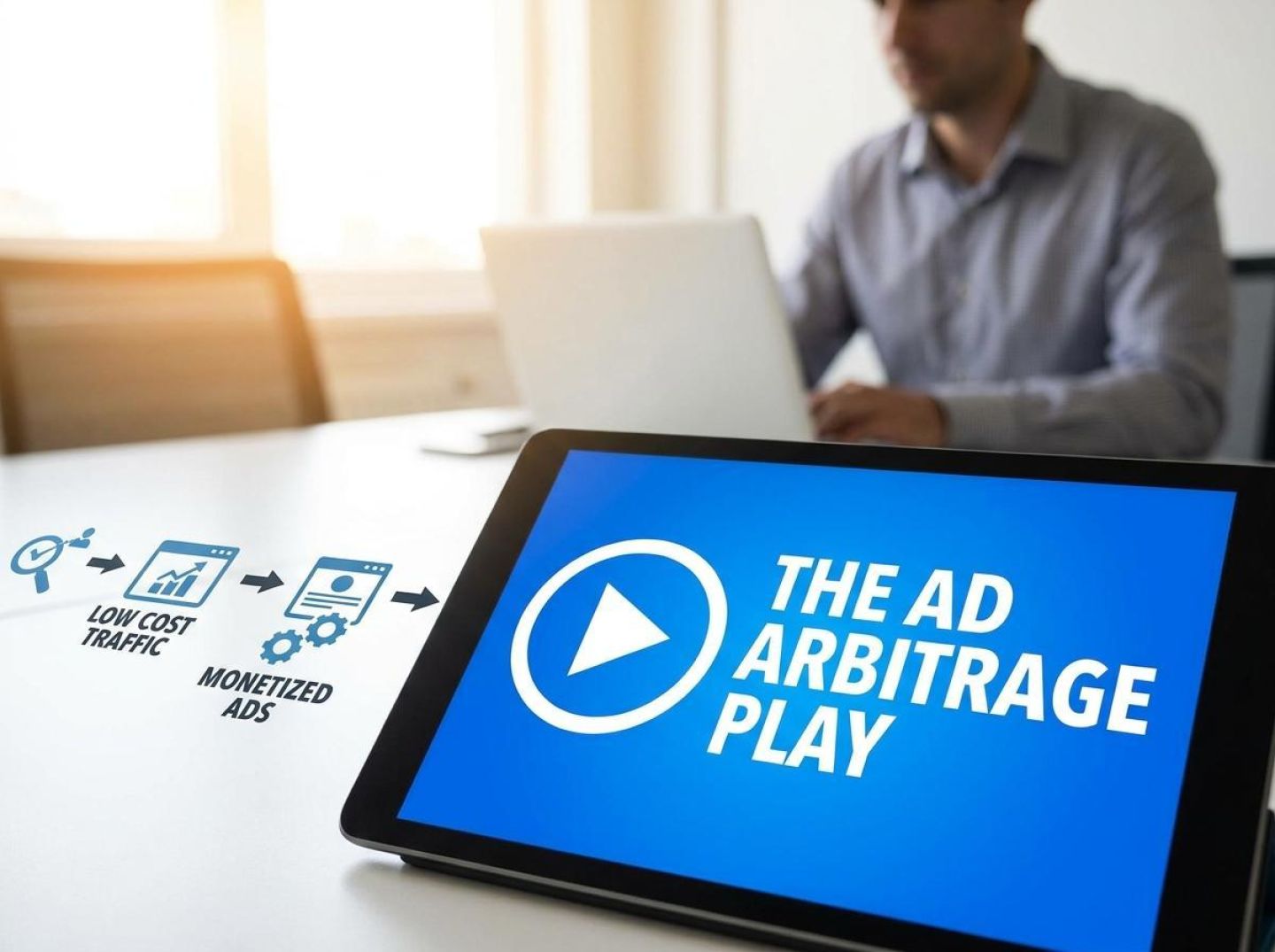
Here's how the system works in practice. You buy native traffic from one network at a low cost-per-click, sending that traffic to content pages you control — articles, listicles, explainers — that are monetized through display ads, other native ad units, or affiliate offers served by a different network. Your profit is the delta between what you paid to acquire the visitor and what that visitor generates in ad revenue on your pages. As Brax outlines in their breakdown of native ad arbitrage mechanics, this model thrives on control and stability: you choose where your ads appear, who sees them, and how you scale, insulating yourself from the algorithmic volatility that makes organic-dependent models so fragile.
But sustainability separates the operators who compound profits from those who burn out in a quarter. Three operational pillars matter most.
Network selection is foundational, not optional. You need at least two networks — one optimized for cheap traffic acquisition, another for high-yield monetization on your content pages. The temptation is to chase the biggest names, but as AdPushup's analysis of native ad networks makes clear, the right network depends on whether you have sufficient traffic volume and budget alignment to justify the partnership. Smaller, vertical-specific networks often deliver better eCPMs on the monetization side because their advertiser pools are competing for narrower audiences. On the acquisition side, networks with heavy publisher inventory — especially those onboarding panicking news sites — will give you the lowest CPCs.
Creative testing is non-negotiable. Native ads live or die on headlines and thumbnail images. The arbitrage math falls apart if your click-through rate drops even half a percentage point. Run at least five headline variations per content piece. Kill underperformers within 48 hours. The operators building durable businesses treat creative iteration as a daily discipline, not a monthly review.
Unit economics must be tracked at the session level, not the campaign level. Know your revenue-per-click on the monetization side and your cost-per-click on the acquisition side in near-real-time. Your target margin should be at least 30 percent after ad spend — anything thinner gets eaten by creative fatigue and CPC fluctuations. When a content vertical consistently clears that threshold, reinvest the margin into scaling traffic to that vertical specifically. When it doesn't, cut it immediately and redirect budget.
The compounding effect comes from reinvestment discipline. Every dollar of margin that goes back into acquiring more cheap native traffic — traffic that is abundant right now because publishers are desperate to monetize audiences they can no longer fill through search — generates another dollar of arbitrage yield. The quality of that native traffic matters as much as the quantity, because visitors who actually engage with your content pages generate more ad impressions per session and higher RPMs. This isn't a smash-and-grab. It's a flywheel, and the current pricing dislocation is the wind at your back. Build the system now, before the spread normalizes and the window closes for good.
Every pricing dislocation corrects. The question isn't whether native ad CPMs will normalize — it's whether you'll have built something durable before they do. The advertisers treating this moment as a one-time arbitrage play will watch their margins evaporate the instant competition catches up. The ones building structural advantages right now will compound returns for years after the window narrows.
The correction is already telegraphing itself. As publishers move further from their dependence on referral traffic — with UK publisher Reach, for instance, operating on the assumption that Google traffic is "unlikely to recover" — they're simultaneously rebuilding their monetization models around first-party audiences, direct sponsorships, and premium inventory packaging. That rebuilding will inevitably push native CPMs upward as publishers gain leverage, segment their audiences more precisely, and demand pricing that reflects the actual value of the attention they deliver.
So what does a durable advantage look like before that happens?
Lock in direct relationships now. The programmatic native market will tighten first, but direct deals struck during the panic carry forward. Publishers desperate for committed revenue today will offer rate locks, preferred placement guarantees, and exclusivity clauses they'd never entertain in a stable market. Every insertion order you sign at today's depressed rates with a six- or twelve-month term is a hedge against the coming correction. More importantly, those relationships give you first-look access to premium inventory that will never hit the open exchange once publishers stabilize.
Build creative and audience data moats. The native ad arbitrage playbook emphasizes that quality traffic — not just volume — drives sustainable profit. Every campaign you run right now generates performance data: which headlines convert in which verticals, which publisher contexts drive downstream action, which audience segments respond to editorial-style creative versus product-forward messaging. That data compounds. Competitors entering six months from now start from zero. You start from thousands of data points that inform every creative decision, bid strategy, and publisher selection.
Invest in first-party audience matching. The smartest play isn't just buying cheap native placements — it's integrating your own first-party data with the publisher's. As AdExchanger has argued, publishers sitting on verified, intent-rich audience databases represent an asset far more valuable than the traffic they've lost. Advertisers who build data-sharing partnerships with those publishers today — matching CRM segments against publisher behavioral signals — create targeting capabilities that programmatic competitors simply cannot replicate through open-market bidding. Those partnerships deepen over time and become switching-cost barriers that persist well beyond the current pricing window.
Scale creative testing while it's cheap. When CPMs are low, every dollar of testing budget buys more learning. Run aggressive multivariate tests across headlines, images, landing page formats, and publisher placements now. The creative playbook you develop at today's rates would cost three or four times as much to build once pricing normalizes. Treat the current moment as a subsidized R&D period.
The window doesn't slam shut overnight — it narrows gradually as more advertisers recognize what's happening and more publishers professionalize their native offerings. But the structural advantages available right now — locked rates, data moats, creative intelligence, and direct publisher relationships — are only available to those willing to move before the opportunity becomes consensus. By the time native advertising pricing reflects its true value to advertisers, the early movers won't just have better margins. They'll have an infrastructure their competitors can't reverse-engineer.
Receive top converting landing pages in your inbox every week from us.
Editor’s Pick
Discover how to turn food, sports, and tech trends into structured creative testing hypotheses instead of one-off ad ideas. Learn how to build vertical-specific blueprints, test them across Native, Push, Pops, and TikTok, and use performance data to continuously improve your creative strategy.
Dan Smith
7 minSep 20, 2026
Guide
Award-winning ads can inspire powerful performance creative, but they need to be rebuilt for the way algorithms, feeds, and users behave across Native and TikTok. This guide shows how to reverse-engineer high-profile creative into scalable hooks, angles, formats, and AI-driven testing systems that can improve performance.
Elena Morales
7 minSep 19, 2026
In-Depth
Discover how city-level ad intelligence can help marketers build campaigns that feel local while scaling globally. Learn how to use Anstrex to uncover geographic, language, creative, and funnel patterns across Native, TikTok, Push, and Pops, then turn those insights into repeatable localized campaigns.
Elena Morales
7 minSep 16, 2026