7 minJuly 5, 2026

Our spy tools monitor millions of native ads from over 60+ countries and thousands of publishers.
Get StartedLet's start with a definition so there's no ambiguity about what we're discussing. A zero-click search occurs when a user finds their answer directly on the search engine results page — through AI Overviews, featured snippets, knowledge panels, or People Also Ask boxes — without ever clicking through to any website. The query gets resolved on Google's turf. The publisher who researched, wrote, and optimized the content that feeds that answer gets nothing. No visit, no session, no conversion opportunity.
This isn't a glitch. It's the business model working exactly as intended.
As Semrush explains, the search engine's own incentive structure rewards keeping users on the SERP because more time on-page means more ad exposure and deeper engagement with Google's ecosystem. Every answer Google can deliver without sending the user elsewhere is a query it can monetize more effectively. Layer on the rise of conversational AI platforms — ChatGPT, Perplexity, Claude, Gemini — that synthesize answers from across the web into single responses, and you have an entire information architecture designed to make the click obsolete.
Now look at the numbers, because they tell you this is not a temporary algorithm fluctuation you can ride out with better meta descriptions.
Organic search traffic to editorial and informational content declined an average of 18–64% across major content categories following Google's AI Overview rollout in 2024, with informational queries — the exact queries most content marketers have built their funnels around — absorbing the worst damage. Neil Patel's analysis of Chartbeat data tracking over 2,500 news sites globally tells an even starker story: Google search referrals declined 33 percent in 2025, and smaller publishers with fewer than 10,000 daily page views saw drops of 60 percent over two years. That is not a dip. That is a directional change in how audiences find and consume content online.
Meanwhile, the supply side has gone vertical. The volume of AI-generated content on the web has grown by more than 1,000% since 2022, with AI-powered publishing platforms auto-generating thousands of articles per day. There are now more pieces published daily than any human could read in a lifetime. The signal-to-noise ratio hasn't just degraded — it has inverted.
Here's the part the "adapt and optimize" crowd keeps missing: these two forces — collapsing demand for clicks and infinite supply of synthetic content — are not independent trends you can address with separate tactics. They are the same structural repricing event. When the supply of "good enough" information goes to infinity and the marginal cost goes to zero, the market reprices the commodity fast and permanently. The traditional blogger, the SEO-optimized educator, the generalist content creator who explains and summarizes — their value proposition collapsed alongside the click.
This is the part most SEO-dependent marketers refuse to internalize. They look at the zero-click trend and see a content marketing problem they can optimize their way out of with better structured data or more authoritative backlinks. They are misreading the board entirely. Google isn't accidentally suppressing organic clicks while it figures out AI Overviews. It is deliberately rebuilding search around a model that keeps attention — and ad revenue — on its own real estate. The trend will only accelerate because the incentives demand it. And that acceleration, counterintuitively, is precisely where the opportunity for performance advertisers begins.
Here's the uncomfortable truth hiding in plain sight: the zero-click problem is almost certainly worse than your dashboards suggest. Not because the data is wrong, but because the entire measurement infrastructure most marketing teams rely on was architected for a world where search value flowed through clicks. When clicks vanish, the system doesn't sound an alarm — it just goes quiet, and the silence gets mistaken for stability.
Think about how most organizations evaluate SEO performance. They look at organic sessions, click-through rates, keyword rankings, and last-touch attributed conversions. Every one of those metrics assumes a user clicked something. But when AI Overviews synthesize your content, surface your brand name, and resolve the query without generating a single session, none of that influence registers in your reporting. The brand exposure happened. The trust signal fired. The user may even search your brand name directly ten minutes later. But your analytics platform credits that downstream conversion to "direct" or "branded paid search," and the original organic touchpoint — the one that actually shaped the decision — disappears into a measurement black hole.
This is what DAC's measurement framework calls the gap between click-based dashboards and actual AI-search influence. When your boss asks for SEO revenue impact and your dashboard shows clicks, you're not just dealing with imprecise attribution — you're building strategy on a foundation of vanishing data. And because the numbers look like a slow, manageable decline rather than a crisis, leadership doesn't fund the pivot. Budget stays parked in a channel whose measurable returns are eroding quarter over quarter, while the unmeasurable influence that is still happening gets no credit and no investment.
The proxy metrics that have emerged to fill this void are better than nothing, but they remain imperfect substitutes. Semrush notes that zero-click searches can still help a business grow by boosting visibility and brand awareness when a brand appears in features like AI Overviews — but tracking that value requires an entirely different lens. Branded search volume growth, share of voice in AI-generated answers, citation frequency across platforms like ChatGPT and Perplexity — these are directional signals, not the clean conversion paths that CFOs and CMOs are accustomed to reviewing. They require new frameworks, new tooling, and frankly, a new level of organizational trust in leading indicators over trailing ones.
This measurement fog creates a compounding strategic problem. When organic's contribution becomes invisible to the reporting stack, it's not just undervalued — it actively subsidizes inaction. Teams keep optimizing for clicks that are structurally declining, pouring resources into content strategies whose real-world impact they can no longer verify. Meanwhile, channels with clearer, more direct performance signals — paid search, paid social, programmatic — sit right there on the same dashboard with crisp cost-per-acquisition numbers and transparent return calculations.
That contrast isn't an accident. Performance advertising was built from the ground up to be measurable. Every impression, click, and conversion has a traceable lineage. And in an environment where organic search's measurability is collapsing alongside its click volume, that clarity becomes an enormous strategic advantage — one that forward-thinking performance advertisers are already beginning to exploit.
Every channel threatened by zero-click behavior shares a single architectural dependency: the search query. A user types a question into Google, and before they can reach any website, an AI Overview intercepts the intent, synthesizes an answer from multiple sources, and resolves the query on the results page itself. As Semrush details, these AI-powered search features synthesize information from multiple sources and display complete answers directly on SERPs, eliminating the need for a click entirely. The entire zero-click threat — every percentage point of lost traffic, every vanished referral — flows through this single chokepoint. Remove the chokepoint, and the threat disappears.
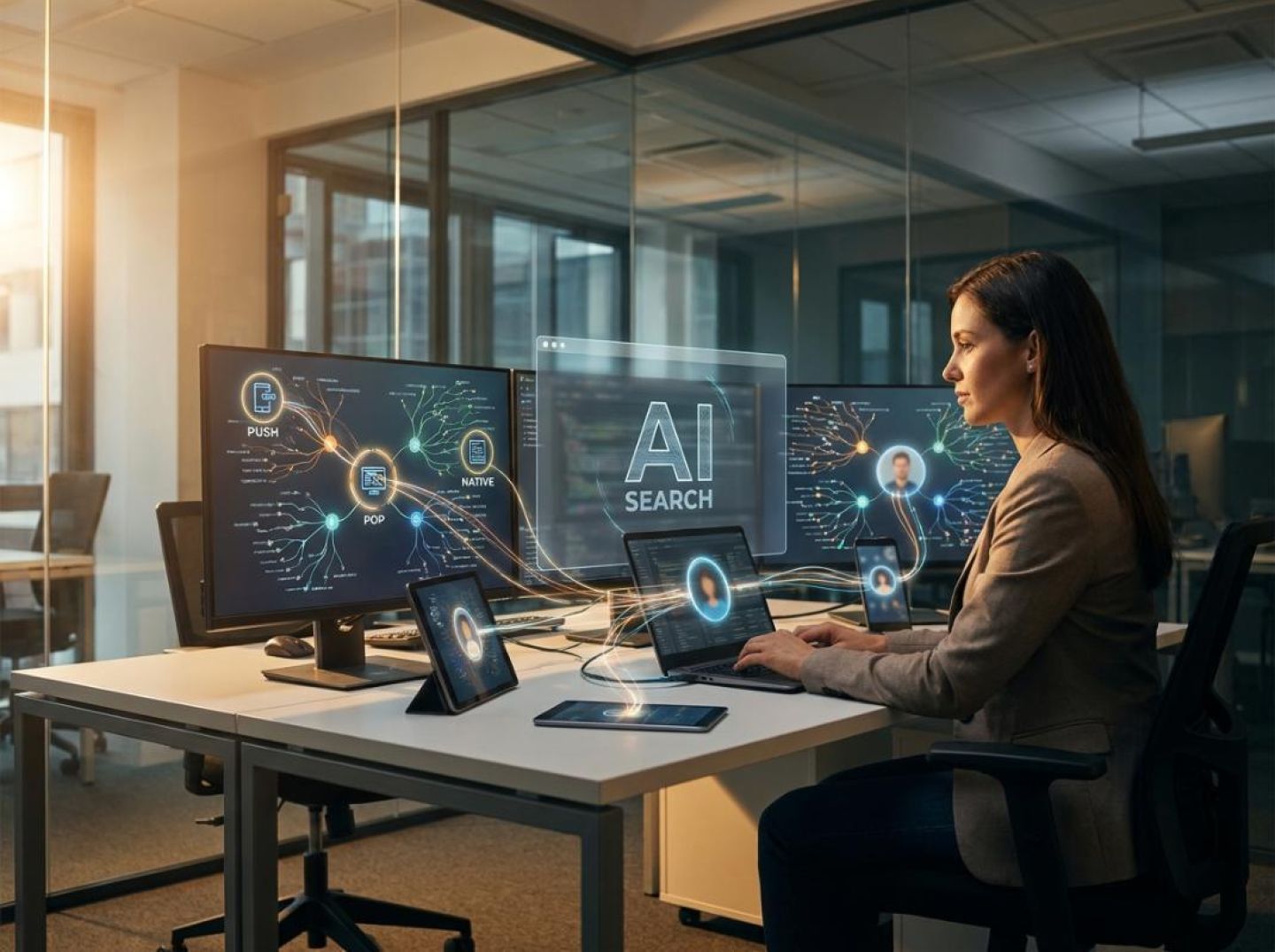
This is exactly what direct-delivery advertising channels do. Native ads served within content on publisher sites, push notifications delivered to opted-in devices, pop and popunder traffic triggered by user engagement with a publisher page — none of these formats require a user to type a query into a search engine. There is no SERP to summarize. There is no query for an AI Overview to intercept. There is no intermediary standing between the ad impression and the landing page. The user sees the ad, engages with it, and arrives directly on the advertiser's page. The mechanical path is advertiser-to-publisher-to-user, with no Google arbitration layer inserted in the middle.
Consider the contrast. An organic content strategy depends on Google surfacing your page in response to a query — a process now compromised at its foundation. But a native ad placed on a technology blog or a lifestyle site reaches the user while they're already consuming content. A push notification arrives on a device where the user has already granted permission. A popunder opens a landing page triggered by publisher-side engagement, completely independent of any search behavior. In every case, traffic acquisition happens outside the search ecosystem entirely.
The strategic implications become clearer when you examine what Jeff Bullas describes as a structural market shift — the permanent collapse of the discovery-through-search model for informational content. When organic search traffic to editorial content has declined by as much as 64 percent depending on query type, the channels that never depended on that discovery model don't just survive the disruption. They become relatively more valuable because the competing attention channel — organic search — is hemorrhaging volume.
Think of it in simple economic terms. If the total pool of reachable attention remains roughly constant but one major source of that attention (search-driven organic traffic) is contracting, then every other channel capable of delivering users to a landing page absorbs a greater share of strategic importance. Performance advertisers who already operate in native, push, and pop traffic aren't pivoting away from a broken model. They're operating in a model that was never exposed to the break in the first place.
This isn't an argument that search advertising is dead or that SEO has no future utility. It's a more precise claim: the zero-click phenomenon is structurally confined to the search layer. Channels that acquire users through direct ad delivery — placing an offer in front of a user on a content site, a device notification, or a browser-level trigger — sidestep the entire AI interception mechanism by design. No query means no interception. No SERP means no summary. No intermediary means the click belongs entirely to the advertiser.
For performance marketers who have spent years building expertise in these direct-delivery channels, the zero-click era doesn't represent a crisis. It represents a structural tailwind.
Celebration without action is just complacency. Knowing that direct-delivery channels are structurally immune to AI interception means nothing if you're still guessing which offers to run, which geos to target, and which creatives to test. The real edge belongs to performance advertisers who treat competitive ad intelligence with the same analytical rigor that enterprise SEO teams are now scrambling to apply to AI visibility measurement — except with the decisive advantage that paid channels offer far cleaner attribution than the murky proxy metrics of zero-click brand exposure.
Here's the practical framework. Think of it as a four-step intelligence loop: scan, decode, validate, and scale.
Step one: Scan for budget migration signals. Ad spy tools — platforms like Anstrex, AdPlexity, SpyPush, and similar competitive intelligence services — let you filter by ad format (native, push, pop), vertical, geo, and date range. What you're looking for isn't just what's running right now. You're looking for acceleration: creatives that appeared recently and are still live weeks later, campaigns that have expanded from one geo to several, and landing page variations that keep multiplying. Longevity and expansion are the clearest signals that a campaign is profitable. When you see sophisticated advertisers scaling spend in direct-delivery channels, you're watching real-time evidence of budget reallocation away from strategies vulnerable to the kind of structural traffic declines that have hit publishers by as much as 60 percent over the past two years.
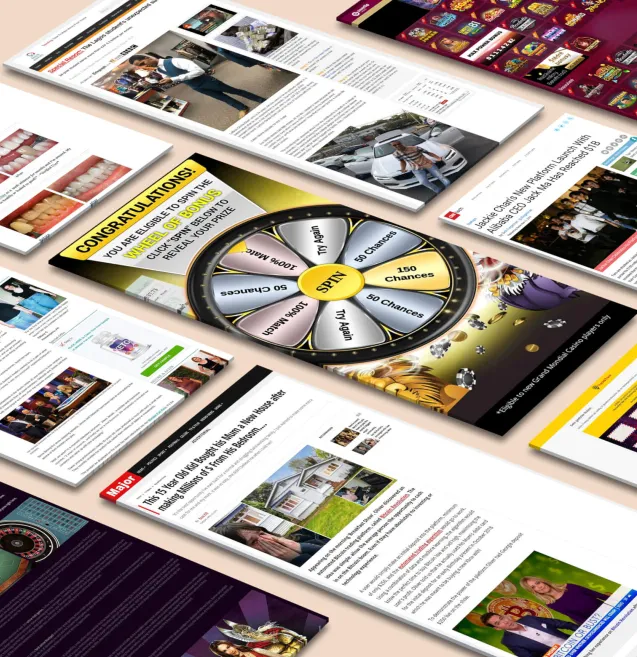
Step two: Decode the creative and funnel architecture. Once you've identified verticals and geos showing increased investment, reverse-engineer what's working. Catalog the dominant creative angles — are they curiosity-driven, fear-based, aspirational? Document the landing page structures: are top performers using advertorials, listicles, quizzes, or direct response pages? Note the offer types and monetization models. This isn't about copying; it's about understanding the demand architecture that converts when you bypass the search query entirely and deliver directly to a user's device.
Step three: Validate with small-budget tests. Intelligence without execution is just entertainment. Take your decoded insights and run controlled tests across two or three traffic sources simultaneously. Match creative angles to the patterns you've observed, but introduce your own variations. Measure cost per acquisition, not vanity engagement metrics. The beauty of paid performance channels is that you get definitive ROI data within days, not the months-long ambiguity of waiting to see whether an AI Overview might mention your brand.
Step four: Scale what survives. Kill what doesn't convert. Double down on what does. Expand winning combinations into adjacent geos and traffic sources. Then restart the scan, because competitive landscapes shift fast.
This intelligence-driven approach reflects a broader principle that Semrush emphasizes: tracking where visibility and investment are shifting is a strategic necessity, not an optional exercise. The difference is that in the organic world, visibility increasingly means appearing in an AI Overview that may never generate a click. In performance advertising, visibility means your ad appeared, your landing page loaded, and your attribution pixel fired. Every dollar is traceable to an outcome.
The advertisers who will dominate the next phase aren't the ones with the biggest budgets. They're the ones running the tightest intelligence loops — spotting migration patterns before they become obvious, decoding what converts before competitors catch on, and deploying capital with the confidence that comes from clean, unambiguous data.
Let's be honest about something before we go further: zero-click search isn't entirely worthless. Dismissing it completely would be just as strategically blind as clinging to it as your primary growth channel. As Semrush explains, when your brand appears in zero-click search features like AI Overviews, you become part of the conversation your audience is already having — and that ambient exposure carries real value. The user who sees your brand mentioned in a synthesized answer may not click today, but they've filed your name away in a mental category. They've been primed. The mistake most marketers make is treating that priming as the end goal instead of recognizing it as the first layer of a two-layer strategy that neither pure SEO practitioners nor pure performance advertisers are currently executing well.
Here's the synthesis move: let zero-click features do what they now do best — build ambient brand familiarity at zero marginal cost to you — and then deploy direct-delivery paid channels to harvest that familiarity into actual clicks, leads, and sales. The first layer is passive. You optimize your content for AI discoverability so that your brand gets cited, mentioned, and recommended inside AI Overviews, Perplexity answers, and ChatGPT responses. You're not paying for those impressions, and you're not getting clicks from them, but you are seeding recognition. The second layer is active. You run native ads, push notification campaigns, and pop traffic that intercepts those same users after they've already encountered your brand in a zero-click context. When someone who vaguely remembers seeing your product recommended by an AI assistant then encounters your offer through a push notification or a native placement on a content site they trust, the conversion friction drops dramatically. They're not clicking on a cold offer from an unknown brand — they're clicking on something that already feels familiar.
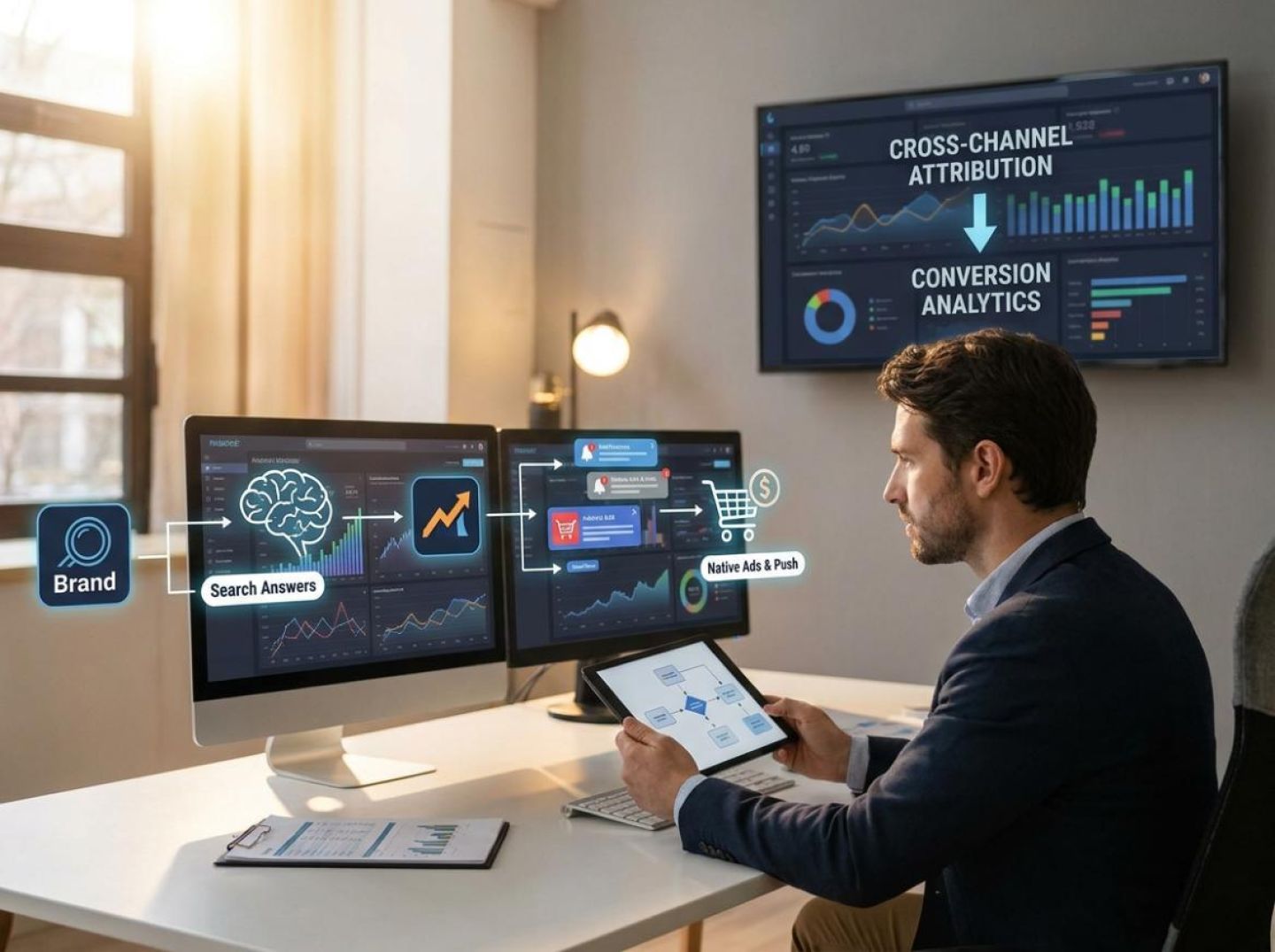
The challenge, of course, is measurement. Traditional channel-level reporting was never designed to capture this kind of cross-channel influence, and click-based attribution models are particularly useless for quantifying the impact of a brand mention that generated zero clicks by design. This is exactly the problem that DAC's measurement framework addresses, connecting AI visibility signals — citations, brand mentions, recommendations — directly to media performance and revenue outcomes through incrementality testing, marketing mix modeling, and cross-channel insights. Without this connective tissue, you're running two separate strategies and hoping they reinforce each other. With it, you can actually prove that your AI Overview presence is lifting conversion rates on your direct-delivery campaigns.
Practically, this means your SEO team and your performance buying team need to stop operating in silos. The SEO team's job is no longer driving organic clicks — it's maximizing brand citation frequency across AI answer engines. Track branded search volume growth as your proxy metric for whether that ambient awareness is building, since as Semrush notes, zero-click searches can still help your business grow by boosting visibility and brand awareness even without driving direct traffic. Meanwhile, your performance team segments campaigns by audience familiarity, running different creatives and bid strategies for users who've demonstrated brand awareness versus those encountering you cold. The advertiser who connects these two layers — who understands that AI visibility is the new top-of-funnel impression and direct-delivery channels are the new click — doesn't just survive the zero-click era. They build a compounding advantage that gets stronger as competitors continue fighting over a shrinking pool of organic clicks that AI is never going to give back.
Receive top converting landing pages in your inbox every week from us.
In-Depth
Explore what Pure Leaf’s “Break Conference” reveals about the gap between polished brand marketing and measurable performance. This guide breaks down how Native, Push, TikTok, and affiliate-style funnels use creative testing, clear offers, first-party data, and hard performance metrics to turn cultural moments into revenue.
Rachel Thompson
7 minOct 1, 2026
Must Read
Explore why traditional OOH experience is no longer enough as out-of-home advertising becomes more data-driven, measurable, and connected to digital channels. This guide outlines the cross-channel, measurement, AI, and competitive-intelligence skills modern OOH employers and candidates need.
David Kim
7 minSep 25, 2026
How-To
Learn how to measure whether sports-star and celebrity advertising actually delivers efficient CPC, CPA, search lift, and downstream conversions. This guide shows how to test celebrity creative against creator alternatives and use competitive intelligence and measurement to turn expensive star power into a measurable performance asset.
Elena Morales
7 minSep 25, 2026