9 minJuly 24, 2026

Our spy tools monitor millions of TikTok ads from over 55+ countries. Biggest TikTok Ad Library in E-commerce and Mobile Apps!
Try It FREEThe marketing teams inside the largest technology companies are quietly hollowing out, and the pace is more dramatic than most advertisers realize. According to SignalFire's State of Talent Report, marketing hiring across twelve major tech companies — a group that includes Alphabet and Microsoft — has plummeted by 36 percent. Engineering hiring, by contrast, declined just 11 percent over the same period. That gap isn't a rounding error. It's a deliberate reallocation of resources toward AI infrastructure and product development, and it's coming at the direct expense of the people who plan, create, and optimize advertising campaigns.
What makes the picture even starker is that this isn't simply a story about companies pausing their hiring. It's a two-front contraction. The attrition rate for marketing roles sits at 12.2 percent, meaningfully higher than the 9.2 percent attrition rate for engineering. In other words, marketing professionals are leaving at a faster clip while far fewer replacements are walking in the door. Design teams are being hit even harder — a 48 percent hiring decline paired with a 12.6 percent attrition rate — but marketing's erosion is arguably more consequential for the advertising ecosystem because these are the teams responsible for managing platform relationships, steering media budgets, and producing the creative output that fuels revenue on platforms like TikTok, Meta, and YouTube.
The report's authors are careful to note that engineering's relatively resilient hiring numbers don't reflect a boom so much as they reflect the severity of cuts everywhere else. Product management hiring fell 39 percent. Support roles saw elevated departures even as companies stopped backfilling them. The net effect is that major tech organizations are concentrating their remaining headcount in code and infrastructure while treating marketing as an area where automation and efficiency tools can absorb the gap. Whether that bet pays off remains to be seen, but the immediate consequence is clear: there are fewer experienced humans managing campaigns at the enterprise level.
This matters enormously for independent advertisers because it's happening at exactly the moment TikTok is becoming impossible to ignore. The platform generated $33.1 billion in global advertising revenue in 2025, a 43 percent year-over-year surge, yet only 26 percent of marketers currently run campaigns there. Meanwhile, as Digiday has reported, TikTok is increasingly showing up as a named channel with a committed budget in brand RFPs — something that was virtually unheard of even a year ago. Enterprise brands with over $30 million in annual revenue saw 97 percent year-over-year growth on TikTok Shop, and transaction volume climbed nearly 80 percent.
So here's the structural tension: the companies with the biggest budgets and the deepest platform relationships are thinning out the very teams that would normally capture this opportunity. When a brand like a Fortune 500 retailer has fewer in-house marketers managing a rapidly expanding TikTok presence, the execution quality drops, response times lengthen, and creative testing slows to a crawl. That operational drag creates white space — a gap between the scale of the opportunity and the capacity of big players to exploit it. For independent advertisers and smaller agencies, that gap is the opening. The talent drain at the top of the market isn't a temporary freeze driven by a single rough quarter. It's a structural rebalancing that is reshaping who can actually compete for attention on the fastest-growing advertising platform in the world.
While big tech companies are trimming the very teams responsible for platform expertise and creative execution, TikTok itself is accelerating at a pace that makes the staffing mismatch almost absurd. The platform generated an estimated $33.1 billion in global advertising revenue in 2024, a 43 percent year-over-year increase that puts it on a trajectory rivaling platforms that have had a decade-long head start. TikTok Shop, the platform's native commerce engine, hit $15.82 billion in U.S. gross merchandise value — a staggering 108 percent increase from the prior year. These aren't projections from bullish analysts; they're real transaction volumes flowing through a platform that most enterprise marketing teams still treat as experimental.
The commerce momentum is especially pronounced among larger sellers. As AdExchanger reported, brands with $30 million or more in annual revenue saw 97 percent year-over-year growth on TikTok Shop, accompanied by a nearly 80 percent increase in transaction volume. These are not niche DTC brands testing a side channel — they are established companies discovering that TikTok's algorithm-driven shopping experience converts at rates that justify serious budget allocation. Lower CPMs compared to other social platforms, combined with access to a younger, purchase-intent audience, are drawing media dollars that would have previously flowed to Meta or Amazon without question.
Perhaps the most telling indicator of TikTok's maturation is what's happening in the RFP process. Over the past year, TikTok has gained traction as a named channel with a committed budget in formal requests for proposals, putting it alongside retail media giants like Amazon and Walmart. Acadia, an agency managing marketplace strategies for mid-market and enterprise brands, has fielded three RFPs in the past six months that specifically name TikTok Shop — something that had never happened before. "This is the start of a signal," says Acadia CEO Jared Belsky, and the signal is clear: procurement teams and CMOs are no longer treating TikTok as a line item they might add later. They're building it into their plans from day one.
Yet despite this momentum, only about 26 percent of marketers currently run TikTok campaigns. That gap between platform opportunity and advertiser adoption is widening for a reason directly tied to the talent story covered in the previous section. TikTok demands a fundamentally different creative cadence than legacy platforms. The algorithm rewards volume, novelty, and cultural responsiveness — the kind of output that requires dedicated teams producing dozens of variations per week, monitoring trend cycles that turn over in days, and testing hooks in near real-time. TikTok is even building infrastructure to support this velocity, having recently launched Symphony Agent, an agentic AI system that helps advertisers generate video content, create campaign briefs, and match with creators across its advertising suite.
The platform is scaling its tools. It is scaling its commerce infrastructure. It is scaling its share of media budgets. What isn't scaling — at least not inside large organizations — is the human capacity to run it well. Marketing teams that have been cut by more than a third cannot simultaneously manage existing channel responsibilities and spin up the high-frequency creative operations TikTok requires. The result is a structural mismatch: the fastest-growing advertising and commerce channel in the world is being underserved by the brands with the biggest budgets to spend on it. For independent advertisers and lean agencies, that mismatch isn't a problem — it's a wide-open door.
TikTok isn't just growing its ad revenue — it's rebuilding the infrastructure underneath it in ways that systematically favor lean, fast-moving teams over sprawling corporate departments. The platform's recent product launches read like a deliberate playbook for closing the gap between what a solo media buyer can execute and what used to require an entire creative agency.
The most significant move is Symphony Agent, an agentic AI system that works across TikTok's Symphony Creative Studio, Content Suite, and TikTok One. Advertisers can use it to generate video content from text prompts, images, and video references, create full campaign briefs, and — perhaps most consequentially — match with creators whose audiences align with their target market. What used to require separate workflows across influencer platforms, creative production tools, and media planning software now lives inside a single AI-driven interface. Andy Yang, TikTok's Global Head of Creative and Brand Products, framed the vision as building tools that "help marketers unlock the full potential of creativity powered by technology." That language is telling. It signals a platform actively engineering away the resource advantages that large advertisers have historically relied on.
Symphony Creative Studio takes the automation further with daily auto-generated video variations customized to your brand and product catalog based on past campaign activity. Each day, the system produces fresh ad creative, evaluates performance, cycles out underperformers, and scales winners — essentially replicating the work of a dedicated creative optimization team. For independent advertisers, this is transformative. The single biggest bottleneck in TikTok advertising has always been creative fatigue: the platform's algorithm burns through ad variations faster than most small teams can produce them. A system that generates and self-optimizes daily effectively removes that constraint.
On the discovery side, TikTok's new Search Hubs give advertisers paid placement at the top of TikTok search results, combining videos, banners, and creator content into a branded search experience. As TikTok continues its push into social search — a behavior already deeply embedded among Gen Z users — Search Hubs offer smaller brands a way to own category-level queries without the massive organic following that traditionally commands that kind of visibility.
Then there are the premium ad formats. As Neil Patel's blog details, Pulse Premiere delivers up to three sequential ads to the same user within a fifteen-minute window, bringing a storytelling capability that was historically exclusive to television buys. TopReach bundles the first ad users see when opening the app with the first in-feed placement on their For You page into a single purchase. Pulse Mentions places brands adjacent to organic conversations already happening in their category, while Pulse Tastemakers aligns ads with specific creator communities. These formats don't just expand the inventory available to advertisers — they create sophisticated, context-aware placements that any advertiser can buy, not just those with dedicated platform teams negotiating custom deals.
The throughline across every one of these launches is compression. TikTok is compressing the creative production cycle, the creator discovery process, the search visibility strategy, and the premium placement negotiation into tools that a single skilled operator can manage. The platform itself is compensating for the staffing gap that big tech's hiring pullback has created — and independent advertisers who adopt these tools before their larger competitors reorganize will build a compounding advantage that becomes increasingly difficult to reverse.
The enterprise slowdown isn't just a staffing story — it's a creative velocity story. When marketing teams lose headcount and backfills stall, the bottleneck doesn't show up in dashboards right away. It shows up in the approval chain. Briefs sit longer. Rounds of revision multiply as fewer people carry more oversight responsibility. Creative cycles that already took weeks now stretch further, and on a platform where ad fatigue sets in after days, that delay is lethal. For independent advertisers paying attention, this is the single most exploitable asymmetry in digital advertising right now.
The advantage isn't budget. It never was on TikTok. As Neil Patel has noted, the platform's algorithm rewards content quality over account size, meaning a sharp three-second hook from a one-person operation can outperform a polished spot from a Fortune 500 brand if the creative resonates. What matters is how quickly you can identify what's working, produce variations, and get them into rotation before the trend window closes. Big brands with 36 percent fewer marketing hires aren't just producing less content — they're producing slower content, staler content, and running far fewer tests per cycle. The creative vacuum isn't empty shelf space. It's a speed gap.
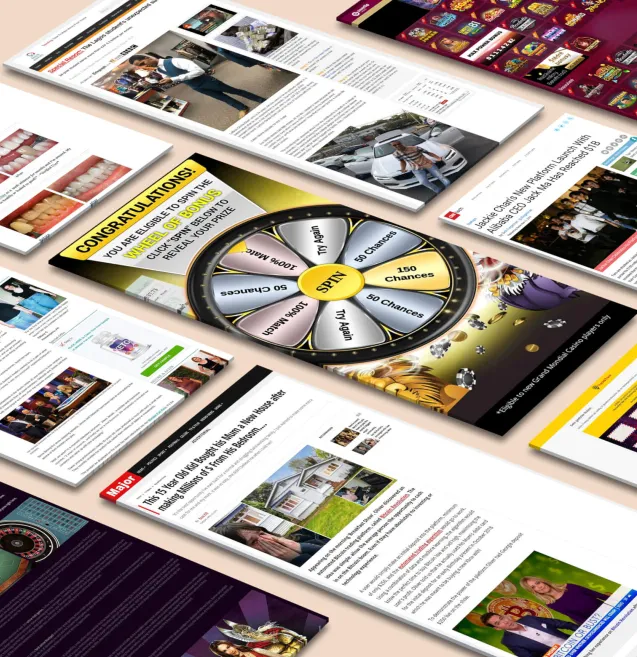
This is where competitive intelligence becomes a structural advantage rather than a nice-to-have. The practical workflow is straightforward but demands discipline. First, you identify winning patterns — hooks, formats, visual treatments, caption structures — by studying what's already performing in paid placements across TikTok. Tools like Anstrex Instream make this possible by surfacing trending ad creatives across verticals in real time, letting you filter by engagement signals, run duration, and format type. You're not guessing what might work. You're reverse-engineering what already does.
Second, you produce variations. Not copies — variations. Take the structural DNA of a winning hook (a pattern interrupt in the first frame, a text overlay posing a question, a creator speaking directly to camera with a specific cadence) and adapt it to your product, your angle, your audience. A lean operator with a phone and a basic editor can turn out five to ten variations in an afternoon. An enterprise team with a depleted bench might not clear a single concept through legal review in the same window.
Third, you test at low spend. TikTok's auction dynamics and Smart+ automation tools make it possible to run meaningful creative tests with modest budgets, identifying winners within 48 to 72 hours. The key, as Social Media Examiner has explored, is creative cycling — continuously rotating fresh variations, shutting down underperformers, and scaling the creatives that earn their way forward based on actual performance data rather than internal opinions.
Fourth, you scale the winners aggressively while the window holds, knowing you'll need to repeat the cycle within days as audience fatigue sets in.
This spot-produce-test-scale loop compresses the insight-to-execution cycle from the weeks that enterprise teams now require down to hours. And the compression matters more than any single creative insight because TikTok rewards volume of iteration, not volume of spend. Every day an understaffed brand team spends waiting on approvals is a day their cost-per-acquisition creeps higher and their share of voice erodes to faster competitors. Independent advertisers who build this workflow into a repeatable system aren't just filling a gap — they're building a moat made of speed, and right now, no amount of enterprise budget can buy that back.
The counterargument writes itself: enterprise brands will eventually re-staff, agencies will adapt, and TikTok's own AI tools — like Symphony's daily auto-generated video variations — will eventually democratize creative production so thoroughly that any structural advantage disappears. All of that is probably true. But "eventually" is doing an enormous amount of heavy lifting in that sentence, and the advertisers who wait for the competitive landscape to normalize will have already surrendered the most valuable months of arbitrage this platform is likely to offer.
Start with the economics. TikTok Shop currently offers lower CPMs than competing social platforms, according to AdExchanger, with brands exceeding $30 million in annual revenue seeing 97 percent year-over-year growth on the channel and nearly 80 percent increases in transaction volume. That combination — cheaper impressions plus accelerating buyer intent — is the textbook definition of an underpriced channel. It won't stay underpriced. As more RFPs explicitly name TikTok Shop as a committed budget line, demand for premium placements will rise, auction density will increase, and the CPM advantage will compress. The question isn't whether that compression happens. It's whether you've already built the creative library, the pixel data, and the algorithmic trust to maintain performance when it does.
This is where the compounding effect matters most. TikTok's recommendation engine rewards accounts that feed it consistent creative signal. Every ad variation you test teaches the algorithm more about your ideal customer — which hooks land, which product angles convert, which creator styles hold attention past the three-second mark. That learning isn't transferable. A competitor who enters the auction six months from now starts from zero, bidding into a more crowded field with no historical performance data to guide delivery optimization. You, meanwhile, have months of compounded learnings informing every new creative brief.
The marketing hiring data from SignalFire that Search Engine Journal covered reinforces the timeline. With marketing roles at major tech companies down 36 percent and attrition running at 12.2 percent — well above the 9.2 percent rate for engineering — the enterprise recovery won't be a light switch. Rebuilding teams takes quarters, not weeks. Job requisitions need budget approval, candidates need sourcing, new hires need onboarding, and institutional knowledge lost to attrition doesn't regenerate on its own. Even companies that pivot aggressively toward AI-augmented workflows still need humans to set strategy, interpret results, and manage the creative judgment that algorithms can't yet replicate.
None of this means independent advertisers have a permanent advantage. They don't. When enterprise budgets return in force and AI creative tools mature further, the playing field will level. But the advertisers who spent the intervening months building robust creative testing frameworks, accumulating first-party purchase data through TikTok Shop, and establishing algorithmic credibility will have built something their slower-moving competitors cannot easily replicate: a durable performance moat grounded in historical signal, not just budget size.
The cost of waiting isn't simply missed revenue during a low-CPM window. It's ceding first-mover positioning to competitors who acted while the biggest brands in your category were still navigating headcount freezes, reorganizations, and the slow bureaucratic process of figuring out which team even owns TikTok Shop. That organizational confusion is your structural advantage — but only if you use it before it resolves.
Receive top converting landing pages in your inbox every week from us.
Must Read
Learn how to build a responsible competitive ad intelligence workflow for an advertising landscape increasingly shaped by AI-generated creatives, disclosure labels, and digital watermarks. Discover how to analyze competitors’ AI usage, identify creative patterns, and develop ethical guardrails that support transparent, compliant, and differentiated campaigns.
Dan Smith
7 minOct 23, 2026
Most Read
Discover how performance marketers can build cross-channel verification journeys that turn skeptical prospects into confident buyers across TikTok, native, push, and pop advertising. Learn how to coordinate creative messaging, reinforce trust at every touchpoint, and measure the hidden influence of fragmented customer journeys using competitive ad intelligence.
Elena Morales
7 minOct 20, 2026
Recently Updated
Discover how creepy out-of-home advertising, TikTok micro-stories, and AI-powered creative tools can turn isolated ads into high-performing serialized campaigns. Learn how to map competitor ad sequences with Anstrex, build story-driven funnels, measure performance across multiple touchpoints, and optimize creative for stronger conversions and ROI.
Samantha Reed
7 minOct 18, 2026