
12 minAugust 20, 2026

Our spy tools monitor millions of native ads from over 60+ countries and thousands of publishers.
Get StartedEvery marketing conference deck worth its lanyard eventually arrives at the same seductive thesis: stop selling and start building community. The logic is compelling. When people organize their identity around a brand, they evangelize without being asked, defend without being prompted, and spend without being incentivized. The problem is that the playbook for getting there reads like a letter addressed to someone else.
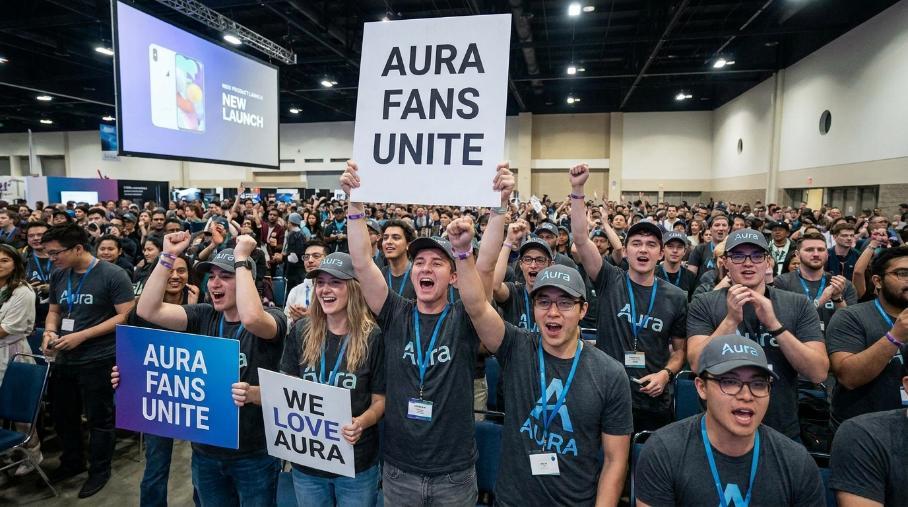
The emerging framework of brand fandom, as Branding Strategy Insider lays it out, rests on five principles: make the community the hero rather than the brand, build rituals instead of campaigns, invite co-creation over passive response, develop genuine cultural fluency, and treat community as an integrated business strategy rather than a social media tactic. Each of these rules is genuinely powerful. Each also assumes you already have an audience that identifies with you — people who care enough to participate in rituals, contribute original content, and organize their social identity around what you sell. Mattel can invite fans to create identity through Barbie because Barbie has been a cultural artifact for six decades. A DTC skincare brand running paid social to hit a monthly ROAS target operates in a fundamentally different universe.
Performance marketers face a structurally distinct reality. Their feedback loops are measured in days, not quarters. They often have no existing community to activate, only a rolling cohort of anonymous clickers. And their margin pressure punishes anything that can't demonstrate immediate, measurable return — which is precisely the kind of spending that fandom requires. The advice to "build rituals, not campaigns" sounds inspired until your CFO needs to see how last week's spend moved the needle.
The cruel irony is that the efficiency-obsessed alternative isn't working either. IPA research covered by VideoWeek confirms that the relentless push for efficiency has actually destroyed profits, with incremental profit generated falling by eleven percent in real terms since Covid even as ROI figures ticked up by four percent. The report is blunt: short-termism is "killing our industry." Meanwhile, fifty-six percent of firms target a smaller part of the market than they should, treating broad reach as wasteful when the evidence says the opposite. Small brands are caught in what the researchers call a trap of trying to "do more with less," which in practice means doing less with less.
Performance marketers are therefore squeezed from both directions. On one side, the fandom frameworks that produce durable competitive advantage are designed for brands with existing cultural gravity and the patience to let community compound over years. On the other, the demand-capture machinery they rely on daily is producing diminishing returns — even the best optimization eventually stalls without demand creation feeding the top of the funnel.
This creates a strategic vacuum. You can't afford to play the long game of traditional brand fandom, and you can't squeeze more juice from the short game of hyper-targeted performance. What's missing is a third path — one that borrows the psychological mechanics that make fandom so powerful and adapts them to the constraints that performance marketers actually live with: limited budgets, no pre-built audience, and a mandate to show results before the next board meeting. That path exists, but it requires treating fandom not as a destination you arrive at after years of brand-building, but as a set of tactical principles you can deploy right now, inside the campaigns you're already running.
Performance marketing's greatest achievement — its ability to measure everything — has quietly become the cage it can't escape. The logic is now familiar enough to feel like consensus: when every dollar is optimized for last-click efficiency, you eventually exhaust the pool of people already searching for what you sell. As WARC's research into the "doom loop" describes it, brands optimize based on faulty metrics, shift budget to performance formats, watch the payback plateau, and then optimize against the same faulty metrics again — a cycle that never ends. Retargeting pools shrink. Cost per click climbs. Conversion rates flatten. The instinct is always to optimize harder within the same channels rather than recognize that the brand has been starving its own future demand for years.
The diagnosis is sound. The prescribed cure, however, has a accessibility problem.
When John Solomon reframes the conversation from "brand vs. performance" to "demand creation vs. demand capture," the elegance is undeniable. It gives CMOs a vocabulary that PE stakeholders can actually metabolize — creation sounds like investment, capture sounds like harvesting, and suddenly the budget conversation shifts from defending a squishy brand line item to explaining the economic logic of planting before you pick. Solomon's broader argument — that cutting brand spend rather than performance spend is the counterintuitive move that allows retailers to thrive — is persuasive when you're sitting across from a board that controls eight- and nine-figure budgets.
But for the performance marketer managing five- or six-figure monthly spend, "invest more in demand creation" lands like being told the solution to your apartment's broken radiator is to buy a house with better insulation. The advice is technically correct and practically useless. You don't have a brand budget to protect because you never had one. You don't have a celebrity collaboration pipeline, an in-house creative studio, or two decades of cultural equity to draw on. You have a media buyer, a creative strategist, and a Slack channel where everyone argues about hook rates.
This is where the industry's conversation has a blind spot behind its blind spot. The first blind spot — that performance marketing without brand investment eventually stalls — is now well-documented. But the second, deeper blind spot is the assumption that the only way to benefit from brand equity is to build it yourself. That assumption ignores a crucial reality: brand equity doesn't stay locked inside the brands that built it. It leaks. It leaks into the cultural associations consumers carry into every search query, every scroll session, every purchase consideration. And most importantly for performance marketers, it leaks into ad creative.
When a competitor with deep fandom runs a campaign, the emotional architecture that makes it work — the identity triggers, the community language, the aspiration framing — doesn't vanish after the impression is served. Those patterns show up as observable outputs: high-performing ad structures, landing page hierarchies that prioritize belonging over features, offer framings that activate identity rather than urgency. The Branding Strategy Insider's articulation of fans as people who turn brands into "flags of their identity" isn't just a philosophical observation — it's a description of a mechanical advantage that expresses itself in creative performance data every single day.
The opportunity, then, isn't to somehow conjure a brand budget from nothing. It's to recognize that someone else has already done the expensive, slow, difficult work of demand creation — and that the residue of that work is readable, analyzable, and adaptable if you know where to look. The blind spot isn't that brand matters. Everyone knows that now. The blind spot is that brand equity is an extractable resource, and the extraction tools are already sitting in your competitive intelligence stack.
Every fandom-driven brand leaves a creative fingerprint in its advertising, and those fingerprints are hiding in plain sight. The practical challenge for performance marketers isn't learning abstract branding theory — it's developing a systematic method for spotting the emotional architectures that make fandom work, then transplanting those structures into direct-response campaigns. The good news: competitive intelligence tools you're probably already using — Meta Ad Library, TikTok Creative Center, landing page analyzers, ad spy platforms — contain everything you need. You just have to know what patterns to look for.
Start with the framework. Branding Strategy Insider has outlined five rules that define how modern fandoms operate: community as hero, rituals over campaigns, co-creation, cultural fluency, and identity signaling. Each of these rules produces observable, repeatable creative patterns that show up across paid media if you know how to categorize them. "Community as hero" manifests as UGC-style ads where customers — not the brand — occupy the frame, and as testimonial-driven landing pages where social proof isn't a sidebar widget but the entire narrative structure. "Rituals over campaigns" reveals itself through countdown timers, drop-culture mechanics, and limited-access offers that train audiences to anticipate and participate on a schedule. "Co-creation" surfaces in quiz funnels, build-your-own product flows, and customization-led offers that give people authorship over their purchase. And "cultural fluency" — perhaps the hardest to replicate but the easiest to spot — shows up in tonal choices, meme-native formats, and the kind of insider language that makes an audience feel seen rather than targeted.
Here's the critical filter when you're scanning competitive libraries: sort by longevity. Ads with unusually long run times — particularly those that lean on identity and belonging rather than pure feature-benefit copy — are almost always the ones sustaining performance. They endure because they've tapped into something more durable than a promotional hook. When you find those ads, deconstruct them layer by layer. What's the visual hierarchy prioritizing — the product or the person? Is the copy speaking to what the buyer gets, or who the buyer becomes? Does the landing page invite a transaction or initiate a relationship? These distinctions are the difference between a conversion-optimized ad and a fandom-engineered one.
There's a counterintuitive advantage buried here that most performance teams miss. As AdExchanger has noted, the relentless pursuit of hyper-personalization — one-to-one messages tailored to individual behavioral profiles — can actually undermine the shared cultural signal that fandom depends on. The most effective fandom-driven ads aren't narrowcast to micro-segments; they're designed to resonate across populations, because belonging is inherently a group phenomenon. This means the ads you're looking for will often be broad-targeting creatives with emotional universality, not the hyper-segmented variants that performance teams typically build. They're actually easier to identify in competitive research precisely because they aren't buried in thousands of micro-variations.
This matters operationally. IPA research has shown that tight targeting is increasingly mistaken for efficiency when it actually reduces effectiveness — that broad-reach campaigns outperform narrow ones over time. Fandom-driven creative aligns perfectly with this finding: it works because it speaks to a shared identity rather than an individual data point. When you reverse-engineer a competitor's fandom ad, you're not just stealing a creative concept. You're extracting a psychological structure — belonging, ritual, co-ownership — that performs precisely because it resists the personalization instinct that has become performance marketing's default setting.
Build a swipe file organized not by industry or format, but by emotional trigger. Tag every saved ad with its fandom rule. Over weeks, you'll start seeing which triggers dominate in your category, which ones competitors have overlooked entirely, and where the whitespace sits for your own creative testing.
Let's address the obvious objection head-on: isn't everything described so far just intellectual theft with extra steps? The short answer is no, but the distinction requires more precision than most marketers bother with. There's a meaningful difference between plagiarizing a brand's creative assets — lifting visual identity, copying taglines, counterfeiting the emotional shorthand that a company spent millions building — and extracting the transferable psychological principles that make those assets resonate in the first place. The first is lazy and potentially litigious. The second is just good marketing strategy.
The key insight comes from understanding who actually owns the emotional architecture of a fandom. As Branding Strategy Insider explains, the Pareto Principle holds that 80 percent of a brand's sales and profits come from 20 percent of its most devoted fans — and the instrument of that fan-level relationship "reaches beyond the product you sell and into the lives people are trying to create." That's the critical reframe. Established brands have already done the expensive, time-intensive work of identifying what those fans care about at an identity level. They've pressure-tested messaging across millions of impressions. They've surfaced the emotional triggers that convert casual interest into devotion. Performance marketers aren't stealing the brand when they study those patterns; they're studying the fan. You're not copying Nike's swoosh — you're recognizing that a specific audience responds to identity-transformation messaging about "becoming the person you train to be," and you're applying that hook to your own product with your own creative language.
This distinction gets clearer when you consider the nature of fandom itself. Fans don't experience their emotional connection as something the brand invented and owns. They experience it as something shared, something cultural, something that belongs to a community. The same source describes fans as people who treat brands as "flags of their identity" — which means the underlying desires (belonging, self-expression, transformation, status) are cultural property, not brand property. No company owns the human need to feel like part of something greater than yourself. Brands merely channel that need through specific aesthetics and narratives.
This framing also solves a practical problem that WARC's "doom loop" research identified: when brands hyper-optimize for personalization and last-click performance, they eventually destroy the macro-cultural signals that created demand in the first place. Fandom works precisely because it's shared at scale — because thousands or millions of people recognize the same identity trigger simultaneously. That shared recognition is what makes the emotional pattern transferable. It exists in culture, not in a trademark filing.
So what does legitimate adjacency look like in practice? Three vehicles stand out. First, comparison landing pages — "best alternative to X" content — that legitimately reference an established brand while redirecting purchase intent toward your offer. Second, category-education content that positions your product within the same aspirational framework a beloved brand has popularized, without pretending to be that brand. Third, affiliate-style angles that explicitly acknowledge the fandom ("love Peloton but want something for your garage gym?") and use the established emotional vocabulary to qualify buyers who share the identity trigger but not the brand loyalty.
The mechanic is always the same three-step sequence: identify the fandom, decode the identity trigger that holds it together, then reframe that trigger around your own offer with your own creative execution. You're borrowing the cultural momentum. You're not borrowing the logo.
Receive top converting landing pages in your inbox every week from us.
Guide
Learn how Pure Leaf’s Amanda Anisimova “Break Conference” can be reverse-engineered into a performance marketing framework for Native, Push, and TikTok advertising. This guide breaks down cultural storytelling, narrative hooks, celebrity-style targeting, format mimicry, and zero-click content to build high-CTR funnels that move audiences toward conversion.
Dan Smith
7 minOct 2, 2026
Recently Updated
Learn how Pure Leaf’s “Break Conference” transformed a celebrity sports moment into a scalable native advertising story. This guide shows performance marketers how to turn brand storytelling into measurable Native, Push, Pop, Affiliate, and TikTok campaigns using ad spy intelligence and narrative-driven creative.
Marcus Chen
7 minSep 29, 2026
Featured
Explore how creative operators and managing directors are shaping modern media buying by connecting creative strategy, AI, channel allocation, experimentation, and governance. This guide examines how leadership decisions influence Native, In-Stream, Creator, and Push campaigns, as well as the contracts and systems that determine how media teams operate.
Dan Smith
7 minSep 29, 2026









)