11 minAugust 25, 2026

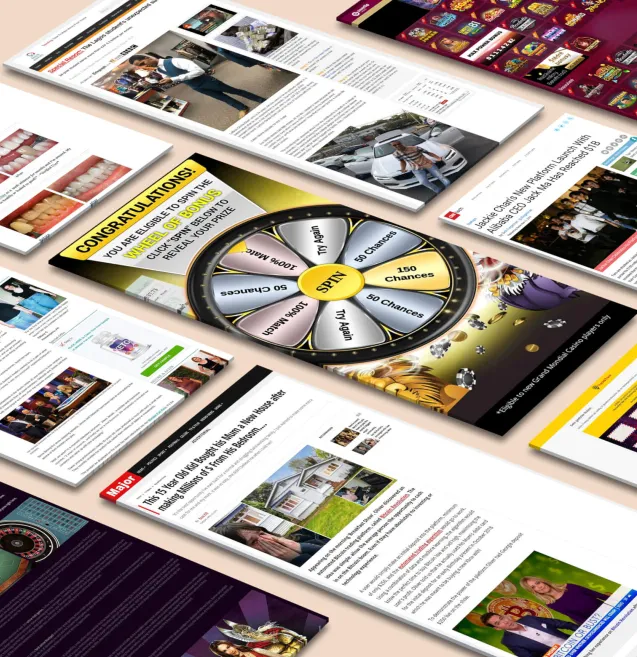
Our spy tools monitor millions of native ads from over 60+ countries and thousands of publishers.
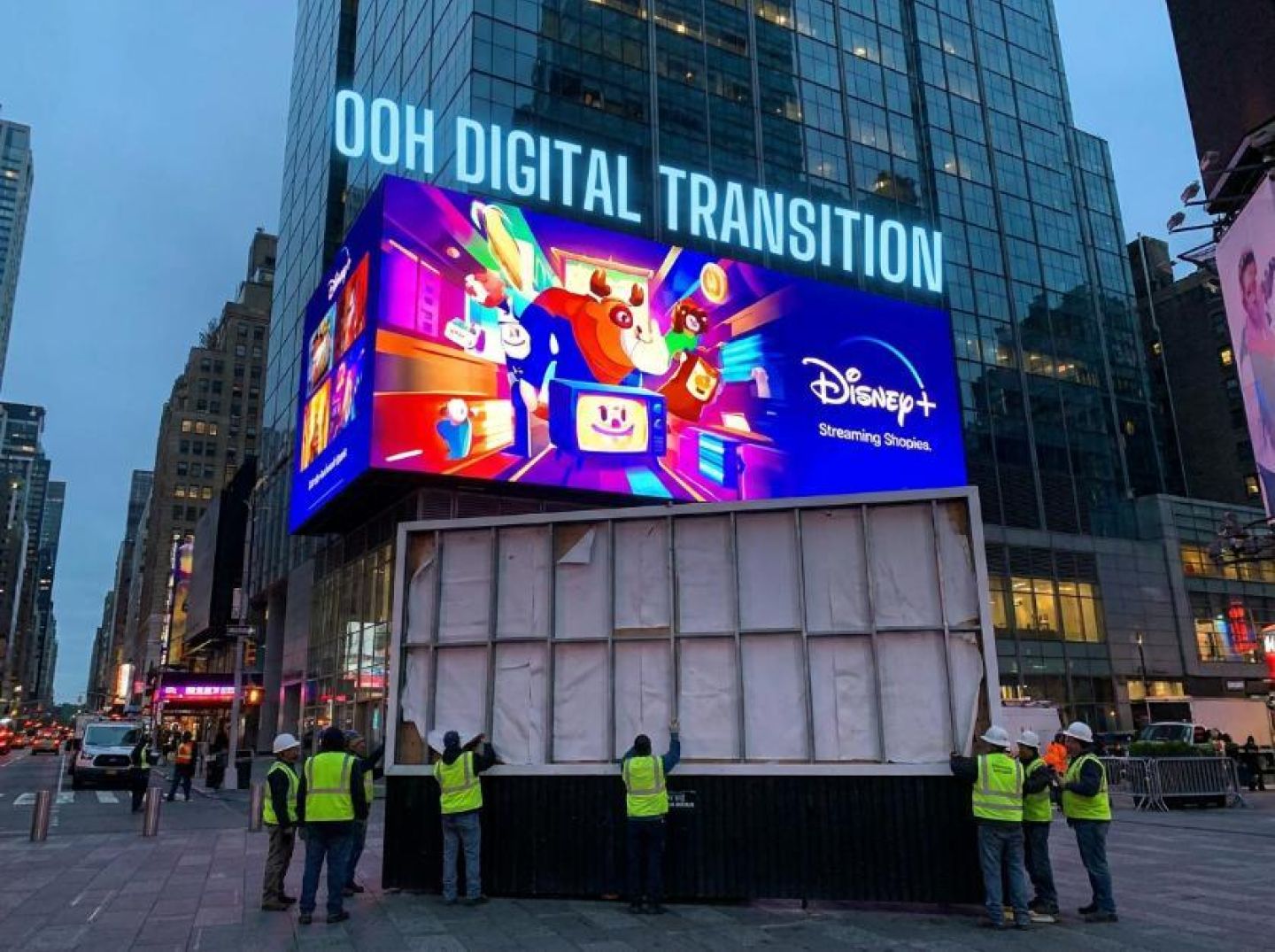
Get StartedOut-of-home advertising is having a paradoxical moment. Revenue is climbing, optimism is real, and yet the industry's share of total ad spend continues to shrink relative to digital's relentless expansion. It's the kind of slow-motion identity crisis that doesn't show up in celebratory press releases but is impossible to ignore on the conference circuit — or in the LinkedIn job updates of people who used to sell billboard space and now carry titles like "programmatic strategist" or "native content lead." This isn't an exodus. It's an evolution, and it's producing a generation of digital advertisers with an unusual and powerful set of instincts.
The tension at the heart of the migration is straightforward. As OOH Today has pointed out, recent industry reports celebrated revenue gains — and every dollar matters — but if those gains merely keep pace with inflation, the industry hasn't truly advanced. It has simply become comfortable celebrating numbers without interrogating what they really mean. When you're growing in absolute terms but losing ground in relative share, the smartest people in the room start looking at where the budgets are actually heading. And increasingly, those budgets are flowing toward native advertising, push notifications, programmatic display, and the sprawling ecosystem of formats that live where consumers scroll rather than where they drive.
What makes the shift more complicated — and more interesting — is that the boundary between OOH and digital isn't just blurring; in some cases, it has disappeared entirely. Consider the rise of retail media networks. As one OOH Today analysis observed, a digital screen inside a grocery store, a display network inside a convenience store, or a media platform inside a home improvement center shares more DNA with out-of-home than many people care to admit. The aisles become avenues, the checkout lane becomes Main Street, and the end cap becomes premium inventory. When Walmart and Kroger are effectively operating as media companies with physical footprints, the old categories — outdoor versus digital, physical versus programmatic — stop meaning very much.
This convergence is reshaping not just the industry's structure but the career trajectories of the people inside it. Talented OOH professionals who once orchestrated high-impact campaigns across transit systems, airports, and urban wallscapes are discovering that the skills they honed — contextual placement, environmental storytelling, capturing attention without the luxury of a click — translate remarkably well into digital formats that demand the same discipline. Native advertising, in particular, rewards the ability to create messages that feel organic to their surroundings, which is precisely what a good OOH campaign has always done with physical space.
Meanwhile, the programmatic infrastructure that once made digital feel like a separate universe is now merging with native ad formats at scale, with even established industry players accelerating the shift from manual placement to automated buying across in-feed, content recommendation, and promoted listing inventory. For an OOH professional already fluent in location data, audience measurement, and the art of high-frequency impression delivery, the leap into programmatic native isn't as wide as it might appear from the outside.
The professionals making this transition aren't abandoning their instincts — they're carrying them into new territory. They understand something that digital-native marketers often have to learn the hard way: attention earned in context is fundamentally different from attention interrupted. That principle holds whether you're placing a mural on a building in SoHo or a sponsored article in a premium publisher's feed. And it's exactly why the next wave of standout native advertisers won't come from a performance marketing boot camp. They'll come from the people who spent years mastering the physics of real-world attention — and realized the same laws apply everywhere else.
The most valuable skill an OOH marketer carries into native advertising isn't a technical one — it's a philosophical orientation that most digital-native advertisers have never been forced to develop. It's the discipline of starting with the brand's problem instead of the media plan.
As OOH Today recently argued, the OOH industry's next competitive advantage may not be another digital display or another measurement tool — it may be "rediscovering the art of listening by reconnecting with brands, understanding their objectives, solving their unique challenges and then recommending the right solution." The piece poses a deceptively simple reframe: instead of asking a client how many locations they want, ask them what success looks like 24 months from now. That shift — from inventory-first to outcome-first thinking — changes every downstream decision, from creative strategy to placement to measurement.
This is exactly the instinct native advertising rewards and digital advertising often punishes. The digital ecosystem was built on a transactional logic: impressions, clicks, conversions, retargeting loops. Practitioners raised in that system learn to optimize for signals, not stories. They become extraordinarily good at squeezing incremental performance out of existing funnels but rarely question whether the funnel itself is solving the right problem. OOH-trained marketers, by contrast, have spent their careers in environments where you can't A/B test a billboard in real time. You have to get the message right before it goes up, because it's staying up. That constraint breeds a creative rigor — a habit of asking why this message, in this place, for this audience — that translates directly into the contextual sensitivity native advertising demands.
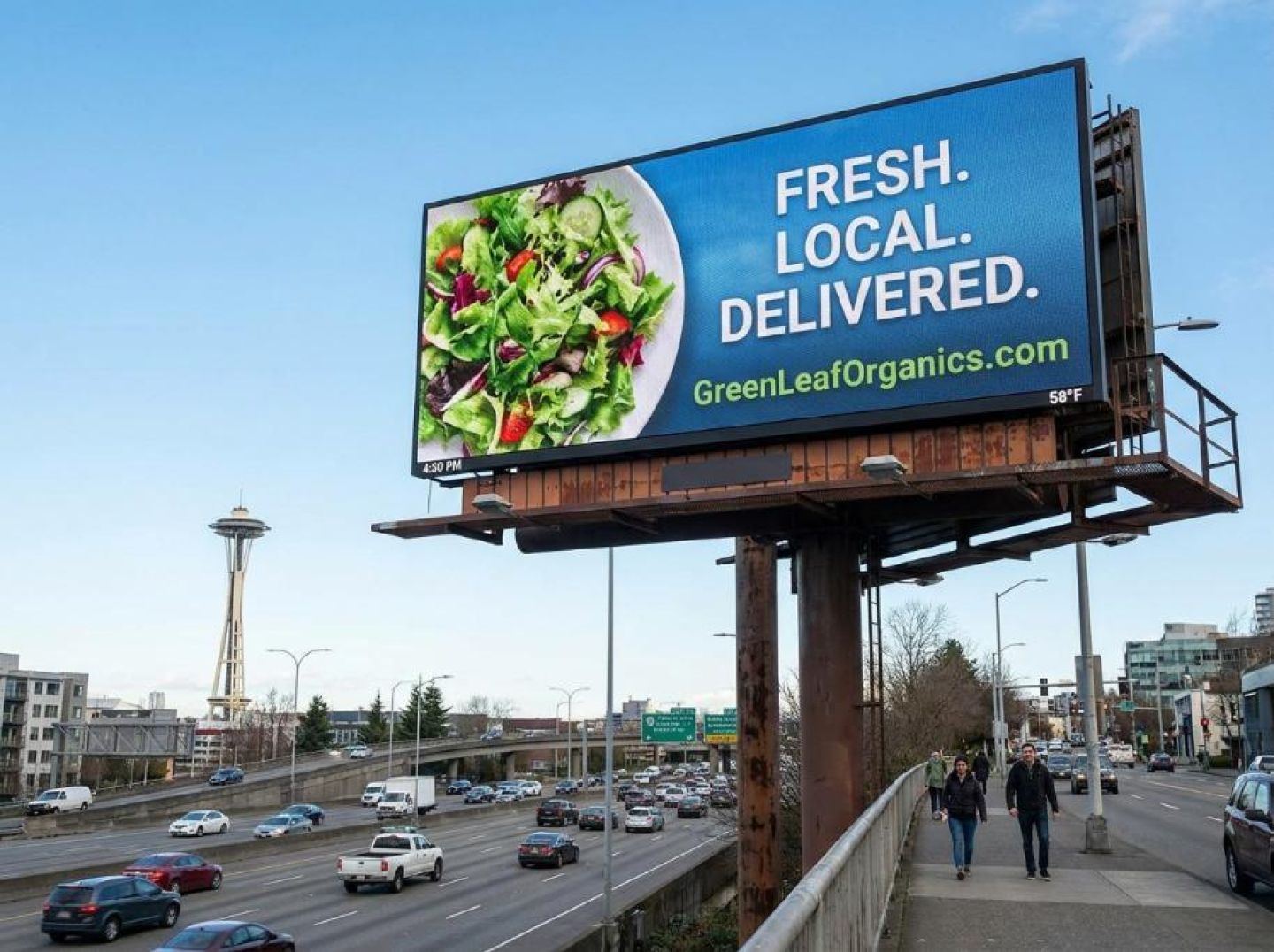
Consider the physical-world awareness OOH professionals internalize. They think constantly about where a consumer is, what they're doing, what mindset they're in, and how a message can earn attention without demanding it. A highway billboard operates on a two-second window. A transit shelter ad competes with a commuter's phone. A place-based screen inside a retail environment has to feel like it belongs there or it becomes visual clutter. These are the same dynamics governing a sponsored article in a publisher's feed or a branded content card nestled between editorial recommendations — environments where blending in authentically is the entire game.
There's also a subtler advantage worth naming: OOH professionals understand the value of unmediated attention. As the AdQuick blog has noted, with AI agents increasingly filtering emails, summarizing content, and curating feeds, out-of-home remains one of the only advertising channels that reaches people directly, without algorithmic intermediation. That sensibility — a respect for unfiltered human attention and the responsibility that comes with earning it — is precisely what separates great native advertising from the forgettable kind. Native ads that feel like interruptions get scrolled past. Native ads that feel like they belong, that offer genuine value within the context where they appear, get read, shared, and remembered.
Where digital-native advertisers have been trained to optimize for clicks, OOH-trained marketers optimize for resonance. They know how to tell a brand story in seconds with minimal real estate. They understand that context isn't a targeting parameter — it's a creative input. And they've spent years operating in environments where there's no skip button, no close box, no option to force engagement. Every impression had to be earned through relevance, craft, and restraint.
That combination of outcome-oriented strategy, contextual intuition, and creative discipline is surprisingly rare in digital advertising. It's also exactly what native advertising needs more of — and it's walking through the door every time an OOH veteran makes the jump.
For all the strategic advantages OOH professionals carry into digital channels, there's a critical weakness that can undo them the moment they try to compete in native advertising: they come from a world where market intelligence was something you developed over decades of relationships and pattern recognition, not something you pulled from a dashboard. As AdQuick has articulated plainly, OOH planning has "traditionally relied on intuition and 'gut feel'" — and while experience matters, it's no longer enough in a landscape that demands granular, real-time data to drive competitive advantage. That gap between instinct and infrastructure is manageable when you're negotiating billboard placements in markets you've worked for fifteen years. It becomes a serious liability when you're trying to compete against native advertisers who are A/B testing headlines every four hours.
The problem isn't that OOH professionals lack analytical thinking. It's that the analytical frameworks they've relied on were never designed for the speed and transparency of digital competition. In the OOH world, you might know which locations perform well because you've sold them for years. You might sense that a particular format resonates with a category because you've watched RFPs come in seasonally. But that knowledge lives in spreadsheets, in institutional memory, in the gut of a veteran sales director — not in systems that model demand, predict behavior, and surface competitive patterns in real time.
Even within OOH itself, this intelligence deficit is becoming untenable. As OOH Today reported in its coverage of Trillboards' integration of hellOOH's machine learning platform, the core constraint for most OOH organizations "is no longer infrastructure execution but intelligence asymmetry." That phrase — intelligence asymmetry — perfectly describes what happens when OOH marketers step into native advertising without competitive analysis tools. In native, every serious player is monitoring what competitors are running, which creatives are gaining traction, which landing page structures are converting, and which traffic sources are delivering volume. They're watching these signals daily, adjusting bids and creative variations in response. An OOH professional entering this environment with strong creative instincts but no visibility into competitor behavior is essentially trying to navigate a city without a map, relying on the assumption that their sense of direction will compensate.
It won't — because the terrain changes overnight. Native advertising is an environment of perpetual iteration. The ad creative that performed last Tuesday may be dead by Friday. The angle that seemed saturated can open up again when a competitor pauses spend. The landing page strategy that drove conversions for a finance brand might collapse when applied to a wellness vertical. Seeing these dynamics requires tooling that most OOH professionals have never had reason to use, because their previous world simply didn't operate this way.
What makes this gap particularly frustrating is that it's not a reflection of capability. The OOH marketer who spent years understanding audience movement patterns and contextual placement has exactly the right strategic instincts for native advertising. The Trillboards-hellOOH integration points toward a future where OOH itself transitions "from human-interpreted market understanding to machine-modeled demand intelligence," and that same transition needs to happen for OOH professionals moving into digital channels. The missing piece isn't the ability to think strategically about audiences, context, and creative impact. It's competitive visibility — the ability to see what others are running, understand what's working, and identify where the white space exists before committing budget. Without that layer of intelligence, even the most talented OOH marketer is making decisions in the dark.
The parallel is almost too clean to ignore. Consider the scenario that OOH Today laid out: a regional marketing manager searches for outdoor advertising options, clicks three operator websites, sends inquiries to two of them — and the third company, the one with more inventory, a stronger market position, and a decade of local experience, never even knows the deal existed because their website was buried on page three. They didn't lose the deal. They never saw it. That exact dynamic — invisible competition, opportunities forfeited in silence — is what awaits every OOH-trained marketer who enters native advertising without competitor intelligence tools.
In native, push, and pop advertising, the competitive landscape moves at a velocity that makes OOH look glacial. Creatives rotate hourly. Angles saturate within days. Networks that were underpriced last week become overrun this week. Without a platform that reveals what competitors are running, on which networks, with which creatives and landing pages, you are the operator on page three: perfectly capable of winning the business, structurally unable to see that the business exists.
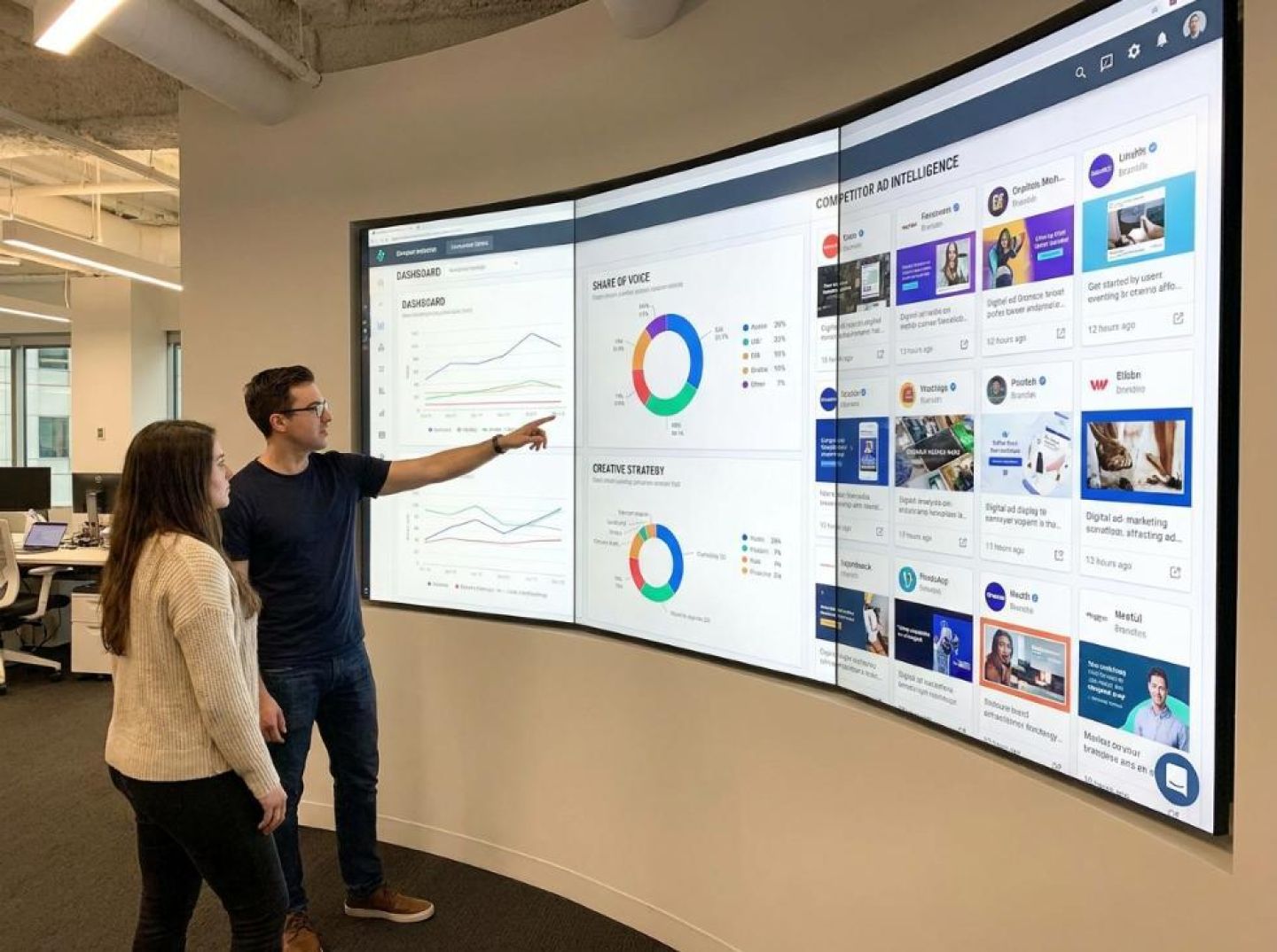
This is where competitor ad intelligence platforms become not just useful but existentially important for OOH marketers making the transition. These tools — platforms that let you spy on competitors' native campaigns, dissect their creative approaches, identify which ads are scaling and which are being killed — function as the native advertising equivalent of what hellOOH represents for the OOH industry. When Trillboards integrated hellOOH, the value proposition wasn't simply better data. It was the transition from human-interpreted market understanding to machine-modeled demand intelligence — a shift that lets organizations "see the market earlier than everyone else." Competitor ad spy tools do the same thing for native advertisers. They collapse the information asymmetry that otherwise punishes newcomers, no matter how talented those newcomers are.
But here's the critical distinction, and it's where the OOH background becomes a genuine superpower rather than a liability: these tools don't replace creative instinct. They arm it. A digital-native media buyer looking at competitor intelligence data sees click-through rates, spend estimates, and duration metrics. An OOH-trained marketer looking at the same data sees something richer — they see contextual gaps, audience resonance patterns, and creative territories that are either overcrowded or completely unoccupied. The same instinct that told them a specific billboard placement would outperform because of the commuter mindset at that particular interchange now tells them which native creative angle will cut through because every competitor is zigging the same direction.
When you can see which creatives competitors are scaling, which angles are saturated, and which networks remain underutilized, the OOH marketer's trained intuition for context and resonance transforms from an educated guess into a precision weapon. The shift mirrors what AdQuick has described as moving an entire channel "from a world of intuition to a future defined by precision and performance." The intuition doesn't disappear — it gets calibrated by data, sharpened by competitive context, and deployed with the kind of specificity that pure data analysts can rarely match because they never learned to think about audience psychology the way someone trained in physical media placement does.
This is the critical bridge. Not more training in programmatic buying. Not a crash course in bid optimization. The single most important capability for an OOH marketer entering native advertising is the ability to see the battlefield clearly — to know what's working, what's dying, and where the white space lives — before committing a single dollar of spend. Everything else they already know how to do.
Think of this as a translation exercise, not a reinvention. The OOH professional who has spent years orchestrating campaign lifecycles — from site selection to creative approval to post-campaign reporting — already possesses the structural thinking that native advertising demands. The gap isn't strategic aptitude. It's tooling, tempo, and the specific categories of intelligence that separate someone who understands performance marketing from someone who can execute it profitably across native, push, and pop channels.
Here's the framework, mapped to what you already know.
Skill Layer 1: Competitor Ad Intelligence — From Relationship Knowledge to Dashboard Intelligence
In OOH, competitive awareness has traditionally been observational. You drive routes, note which brands occupy which boards, and develop an instinct for market saturation over time. In native advertising, that instinct needs a technological accelerant. Competitor ad intelligence tools — platforms that surface live campaigns across native networks, reveal which traffic sources competitors are buying, deconstruct their landing pages, and catalog every creative variation in rotation — are the single most important category for an OOH professional to master first. They replace years of accumulated local knowledge with real-time, global visibility. You can identify which angles are oversaturated before you spend a dollar, spot emerging verticals before they become crowded, and reverse-engineer the funnels of advertisers who are clearly scaling. This is the intelligence asymmetry problem that OOH Today has identified within the outdoor industry itself — the recognition that organizations operating with better models of demand "do not just sell more efficiently; they see the market earlier than everyone else." The same principle applies tenfold in native, where campaign lifespans are measured in days rather than months.
Skill Layer 2: Performance Analytics Fluency — From Post-Campaign Reports to Real-Time Optimization Loops
OOH measurement has historically been retrospective: impressions estimated after the fact, brand lift studies delivered weeks later. The transition to native requires collapsing that feedback loop from weeks into minutes. The model worth studying is how AdQuick has brought OOH "into parity with modern performance channels" by delivering daily, granular insights that flow directly into multichannel attribution models. Native advertising operates on that same logic, but at even greater speed. You need fluency in real-time dashboards where cost-per-click, conversion rates, and return on ad spend update continuously — and you need the discipline to act on that data mid-campaign, pausing underperformers and reallocating budget to winners without waiting for a post-mortem.
Skill Layer 3: Creative Iteration at Speed — From One Perfect Frame to Dozens of Testable Variations
This is where OOH experience becomes a genuine superpower, but only if it's properly adapted. The billboard professional knows how to compress a message into a single, high-impact visual — a skill that most digital-native marketers never develop. But as the native advertising landscape demands increasingly innovative formats, that single-frame mastery must be multiplied. Instead of one perfect headline, you need fifteen variations. Instead of one hero image, you need a matrix of thumbnails tested against different audience segments. The craft stays the same — clarity, emotional resonance, instant comprehension — but the workflow shifts from deliberate perfection to rapid iteration, where the market tells you which version of your instinct was right.
Master these three layers and the OOH professional doesn't just close the gap. They arrive at native advertising with a structural advantage most digital-first competitors never had: the ability to think in campaigns, not just clicks.
Receive top converting landing pages in your inbox every week from us.
Guide
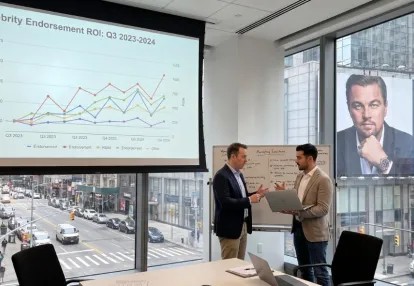
Discover why celebrity endorsements and global intellectual property don’t automatically translate into advertising success. This guide uses ad spy intelligence to explore how audience relevance, placement context, creative testing, and post-click performance help advertisers build high-ROI campaigns without expensive celebrity partnerships.
Elena Morales
7 minOct 9, 2026
Guide
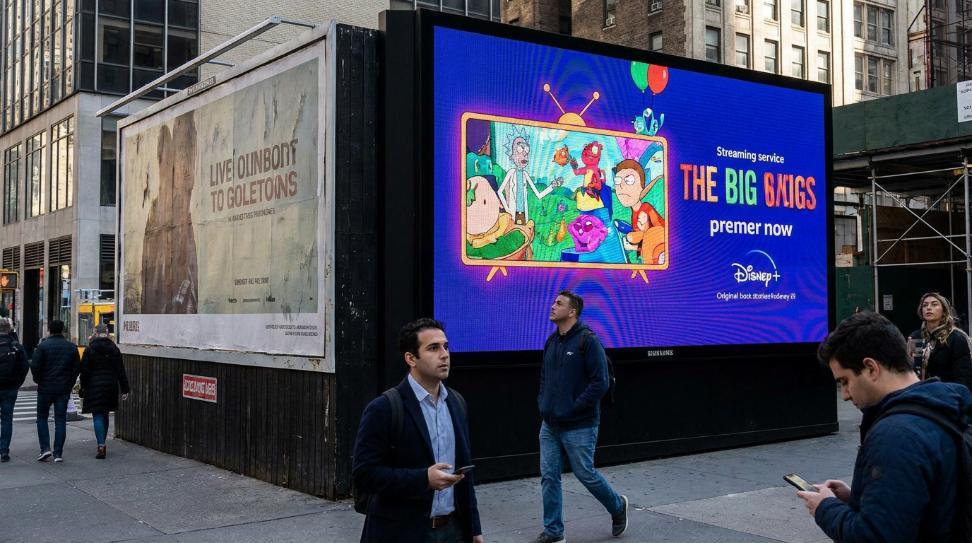
Discover how native advertisers can turn the psychology behind big brand stunts like “Break Conference” and “World Menu Heist” into measurable performance campaigns. Learn how to use scarcity, owned IP, fandom, participation, and cross-channel funnels to build native and TikTok campaigns that generate attention and conversions.
Marcus Chen
7 minOct 8, 2026
Most Read
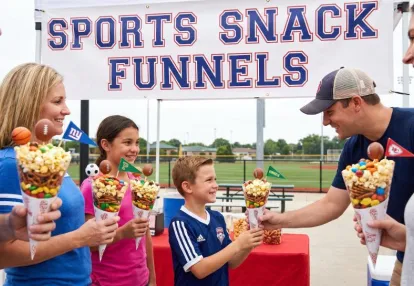
Learn how to turn sports, snacks, creator trends, and pop culture moments into high-ROI advertising funnels without relying on big budgets. This guide shows how to use Anstrex Native, Instream, and Push intelligence to identify emerging cultural angles, analyze ad duration and gravity, and adapt proven concepts to lower-cost placements.
Rachel Thompson
7 minOct 7, 2026