11 minMay 26, 2026

Our spy tools monitor millions of native ads from over 60+ countries and thousands of publishers.
Get StartedWhen the 2026 FIFA World Cup kicks off on June 11, it won't just be the biggest sporting event of the year — it will be the largest single audience-attention event the digital advertising ecosystem has ever tried to absorb. This is the first 48-team tournament in World Cup history, the first hosted across three countries, and, as Marketing Dive reported, arguably the first time major marketers have activated around the World Cup in such a significant way, with some making their largest investments in soccer to date. The sheer scale of what's coming should make every performance marketer sit up and recalibrate their Q2–Q3 media plans.
Consider the audience. More than four in ten global adults are likely to follow the tournament, with fans skewing younger, male, and higher income — a demographic profile that reads like a targeting wishlist for betting, gaming, sweepstakes, and finance verticals. In certain markets, more than four in five fans say they view sponsors more favorably, with sponsorship directly increasing brand trust, relevance, and purchase likelihood. Nicole Pike, global head of YouGov Sport, called it "a cultural event with a gravitational pull that touches sport, music, travel, and identity," noting that early movers are already seeing real returns well ahead of the opening whistle.
Yet most affiliate marketers and media buyers will sit this out. They'll look at the official sponsor price tags, see brands like Coca-Cola and Adidas dominating the narrative, and conclude the World Cup is a "brand play" — something for Fortune 500 companies with eight-figure budgets. That conclusion is a strategic error, and here's why.
The structural shift happening underneath these tentpole events has fundamentally changed who can profit from them. According to IAB projections covered by VideoWeek, digital video will account for 61 percent of all TV and video ad spend in the US this year — a share that continues to grow even during cyclical events like the World Cup that have historically anchored spend in linear television. The IAB specifically noted that major events are "becoming more widely available programmatically on streaming platforms," into digital channels. This matters enormously for performance marketers because programmatic availability means the traffic these brands generate doesn't stay locked inside a TV broadcast. It spills across connected devices, social feeds, publisher sites, and ad networks — the exact inventory pools where native, push, and pop campaigns run.
Here's the mental model that matters: the Fortune 500 brands aren't your competition. They're your upstream dam. When they spend hundreds of millions driving awareness, they generate a downstream flood of search volume, social engagement, and content consumption that inflates traffic across every adjacent channel. Match-day traffic surges don't stay on ESPN.com. They ripple through sports blogs, news aggregators, fan forums, and gambling portals — exactly the placements where performance campaigns thrive.
The brands are coming, and they're dragging billions of impressions and attention-hours with them. Your job isn't to outspend them. It's to be positioned in the current when the floodgates open, armed with the intelligence to know exactly which creatives, angles, and offers are converting in real time. The 2026 World Cup isn't a branding event you watch from the sidelines. It's a performance marketing supercycle — if you know where to look.
The World Cup isn't a single spike on a media buyer's dashboard — it's a rolling five-week wave with distinct phases, each carrying its own cost dynamics, audience behavior, and competitive intensity. Understanding this timeline isn't optional; it's the difference between buying traffic at a discount and drowning in a bidding war you can't win.
Think of the CPM curve as three distinct zones. The first — the pre-tournament window stretching from now through early June — is where costs remain moderate, audiences are warming up, and the smartest advertisers are already at work. The second phase hits when the group stage begins on June 11 and casual fans flood digital platforms, driving impressions skyward and pulling CPMs up with them. The third phase, the knockout rounds, is where costs peak violently: fewer games mean concentrated attention, every remaining match carries elimination stakes, and advertisers who haven't already optimized their funnels will hemorrhage budget competing against those who have.
The counterintuitive truth is that the weeks before June 11 are where the real money is made. This is your testing laboratory. Creatives can be A/B tested at a fraction of tournament-week costs. Audience segments can be built and refined. Landing pages can be optimized for conversion before traffic volumes make iteration expensive and slow. Affiliates who wait to launch campaigns during the group stage are stepping onto the field cold, competing against media buyers who've already identified their top-performing hooks, eliminated underperforming angles, and built retargeting pools of warm prospects.
This principle — that early adaptation pays compounding dividends — is backed by the latest performance data. As Pepe Hernandez, a senior director of optimization strategy at LocaliQ, noted, the industry is "seeing an overall drop in cost per lead for the first time since before 2020," a signal that advertisers who adapted early to platform changes are now reaping more stable, predictable results. The same dynamic applies to tentpole events: those who use the pre-tournament window to learn AI-driven tools like Performance Max and dial in their creative libraries will enter the tournament with structurally lower acquisition costs. Meanwhile, Brett McHale, Founder of Empiric Marketing, reinforced that AI-driven campaign types have made it "a lot easier to generate leads at a lower cost" — but only for advertisers willing to feed those systems data before the competitive surge begins.
The operational dimension matters just as much as the financial one. As OOH Today outlined, the World Cup demands a fundamentally different operating model than a traditional tentpole event because "attention is not concentrated into one day" but "evolves over multiple weeks as storylines shift, teams advance, and audience momentum changes." Campaigns need enough structure to scale but enough flexibility to pivot as the tournament unfolds — and that flexibility, they argue, "has to be built in before the campaign" rather than improvised once games begin.
This is the architectural work that separates profitable World Cup campaigns from expensive ones. Building a tested creative library, establishing baseline conversion metrics, training algorithms on early engagement data, and locking in favorable placements all happen in the weeks most advertisers are still debating whether to run a World Cup campaign at all. With the average Google Ads click-through rate sitting at 6.64% across industries, there's a proven performance baseline to beat — but only if you give yourself the runway to iterate before the starting whistle blows and CPMs leave the atmosphere.
The real World Cup campaign starts now. June 11 is just when it goes live.
The difference between a performance marketer who profits from the World Cup and one who burns budget chasing it comes down to a single variable: information asymmetry. You either know what's already converting before you spend your first dollar, or you're guessing. Ad intelligence tools — Anstrex, AdPlexity, SpyPush, and their competitors — exist to eliminate the guessing. Think of them as the performance marketer's Bloomberg terminal: you're not cheating, you're simply refusing to trade blind.
Here's the step-by-step process for turning these tools into your pre-tournament scouting report.
Step 1: Define Your Verticals and Filter Ruthlessly. The World Cup drives traffic across a predictable cluster of verticals: betting and gambling, sweepstakes, streaming and IPTV services, VPN offers, and sports merchandise. Open your spy tool and set vertical filters accordingly. You're not browsing — you're hunting. Search for creatives containing keywords like "World Cup," "match," "live stream," country names, and team-specific terms. Filter by ad format — native, push, and pop each tell different stories about what's working for different audience intents.
Step 2: Slice by Geography, Not by Tournament. This is where most media buyers get lazy and run one global campaign. That's a mistake. As brands without official sponsorships are already getting in the game, demonstrating how massive the halo effect is, the World Cup-adjacent advertising ecosystem is already live and detectable across dozens of markets. But what converts in São Paulo won't necessarily convert in Toronto. Filter your spy tool results by specific GEOs — start with the host nations (US, Mexico, Canada), then expand into soccer-passionate markets like Brazil, the UK, Germany, Argentina, and Nigeria. The World Cup isn't a single global audience but a collection of hyper-local moments happening simultaneously, which means spy tool filtering by geography isn't a nice-to-have — it's the entire strategy.
Step 3: Read the Signals That Separate Winners from Tests. Not every ad you find is worth studying. The intelligence is in distinguishing validated campaigns from abandoned experiments. Three signals mark a winner: longevity (any creative running for 10+ days is paying for itself), multiple creatives in rotation (the advertiser is actively optimizing, not just setting and forgetting), and consistent landing page iterations (they're split-testing the funnel, which means volume is high enough to warrant the effort). Conversely, a creative that appeared once three days ago and vanished was a test that got killed. Ignore it.
When you spot a betting offer running the same push notification creative — soccer-ball emoji, "Watch [Country] Live — Claim Your Bonus" angle — for 14 days straight across three GEOs, that's not a guess. That's validated market data. You now know the hook, the format, the geography, and the approximate durability of the offer.
Step 4: Build a Swipe File Organized by GEO and Vertical. Screenshot everything. Catalog winning creatives, landing page structures, and call-to-action patterns by country and vertical. This swipe file becomes your creative brief. You're not copying — you're compressing months of split-testing into days of research. With digital video projected to claim 61 percent of US TV and video ad spend this year even as major cyclical events like the World Cup historically anchor budgets in linear, the creatives migrating to programmatic and push channels represent the real frontier — and the spy tools are your telescope.
The goal isn't imitation. It's intelligence-driven speed. Every day you spend testing from scratch is a day your competitor — who already knows what's converting — is scaling.
Not every vertical benefits equally from a World Cup traffic surge. The smart play is identifying the categories where consumer intent naturally aligns with tournament energy — then positioning your campaigns, creatives, and funnels before the competition bids up inventory. Here are the five verticals primed for 2026 and how to attack each one.
Sports Betting and Gambling
This is the apex predator of World Cup verticals, and 2026 is a watershed moment. With the tournament hosted across the US, Canada, and Mexico for the first time, American bettors will have home-team emotional investment layered on top of an expanding patchwork of newly regulated state markets. The audience couldn't be more aligned: fans skew younger, male, and higher income — the exact demographic profile that over-indexes for mobile sportsbook adoption. Winning creatives in this vertical almost always feature real-time odds, "bet now" urgency overlays, and match-specific parlays. Landing pages are short, single-CTA registration funnels with sign-up bonus callouts. Traffic sources that perform best include push notifications timed to match kickoffs, native ads on sports news sites, and short-form video pre-rolls on YouTube and TikTok.
Sweepstakes and Prize-Based Offers
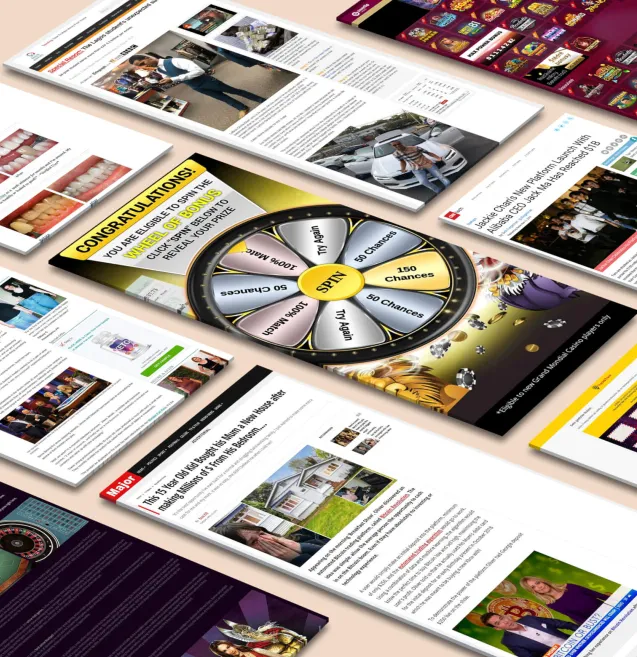
When fans are already riding an emotional high, low-friction conversion offers explode. Sweepstakes — "predict the score and win a PS5" or "pick the group stage winners for a chance at $10,000" — require minimal commitment and convert at rates that make performance marketers weep with joy. The creative pattern here is gamification: bracket-style visuals, countdown timers, and national flag imagery that taps into tribal loyalty. Landing pages typically feature a simple email-or-phone opt-in with a spinning wheel or instant-reveal mechanic. Social traffic — particularly Facebook and Instagram Reels, which now account for 50 percent of Meta's ad revenue — drives the highest volume for these offers because shareability compounds reach organically.
Streaming and IPTV
The cord-cutting trend has collided head-on with live sports, and the 2026 World Cup sits squarely at the intersection. According to IAB projections reported by VideoWeek, digital video will capture 61 percent of US TV and video ad spend this year, a foundational shift accelerated by the fact that major events are increasingly available programmatically on streaming platforms. Creatives that convert lean into FOMO: "Don't miss a single match," multi-device viewing imagery, and free-trial CTAs. Search and display campaigns targeting queries like "how to watch World Cup 2026" and "World Cup streaming free" will see search volume spikes that dwarf off-cycle baselines.
VPN Offers
Wherever there are geo-restrictions, there's VPN demand. Fans traveling between host countries, expats watching from abroad, and viewers in regions with limited broadcast rights all need solutions. The creative formula is straightforward: a world map with a "locked" icon, a one-click unlock metaphor, and pricing anchored to the tournament window ("Protect your connection for the entire World Cup — $2.99/month"). Push notifications and pop-under traffic on sports streaming sites are the highest-intent sources.
Sports Merchandise and E-Commerce
Jersey replicas, scarves, and novelty items follow a predictable demand curve that spikes with every upset and elimination. Winning creatives showcase authentic-looking gear with fast-shipping guarantees. Dynamic product ads on Meta and Google Shopping, retargeted to users who visited match-recap content, consistently outperform static catalog campaigns. The key is speed: whoever can spin up creatives featuring a breakout player within 24 hours of a standout performance captures the impulse-buy window before it closes.
Receive top converting landing pages in your inbox every week from us.
In-Depth
Explore what Pure Leaf’s “Break Conference” reveals about the gap between polished brand marketing and measurable performance. This guide breaks down how Native, Push, TikTok, and affiliate-style funnels use creative testing, clear offers, first-party data, and hard performance metrics to turn cultural moments into revenue.
Rachel Thompson
7 minOct 1, 2026
Must Read
Explore why traditional OOH experience is no longer enough as out-of-home advertising becomes more data-driven, measurable, and connected to digital channels. This guide outlines the cross-channel, measurement, AI, and competitive-intelligence skills modern OOH employers and candidates need.
David Kim
7 minSep 25, 2026
How-To
Learn how to measure whether sports-star and celebrity advertising actually delivers efficient CPC, CPA, search lift, and downstream conversions. This guide shows how to test celebrity creative against creator alternatives and use competitive intelligence and measurement to turn expensive star power into a measurable performance asset.
Elena Morales
7 minSep 25, 2026