9 minAugust 27, 2026

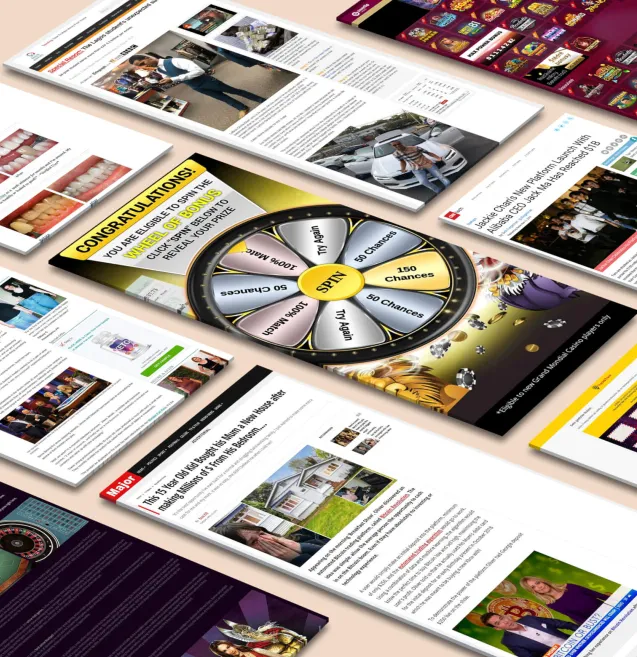
Our spy tools monitor millions of native ads from over 60+ countries and thousands of publishers.
Get StartedFor years, the competitive moat around major advertising agencies wasn't just talent or relationships — it was information. They had access to proprietary creative scoring tools, real-time optimization dashboards, and competitive benchmarking data that independent media buyers and affiliate marketers could only dream about. That asymmetry defined the industry. If you wanted to know which creative concepts would resonate before you spent a dollar, you needed a team at a holding company running the analysis. If you wanted to understand how a competitor's campaign was structured across channels, you needed someone with a six-figure platform subscription pulling the data.
That era is ending faster than most people realize.
The infrastructure that once lived exclusively behind agency walls is being productized and, in many cases, democratized. Consider what's happening on the enterprise side: DAIVID and ADIN.AI have built what Search Engine Journal described as a "live loop between creative intelligence and media execution" — a system that scores creative effectiveness before launch, reallocates budget toward high-performing assets during a campaign, and feeds historical performance data back into future planning. DAIVID's CEO Ian Forrester put it bluntly: creative has been "measured in isolation, disconnected from media results" for too long. What his company is building with ADIN.AI closes that gap at enterprise scale.
Here's the part that should make every solo media buyer sit up: you don't need to license that exact platform to replicate the logic behind it. The same conceptual loop — pre-launch creative analysis, real-time performance monitoring, post-campaign pattern cataloging — is available to anyone disciplined enough to systematically study what's already running at scale across ad networks and spy tools. The scoring may be manual rather than algorithmic, and the data set may be smaller, but the methodology is identical. You watch what's winning. You hypothesize why. You test your hypothesis with your own spend. You catalog results. You iterate.
The structural shift in how consumers behave makes this approach even more viable for nimble operators. As Digitas' Liane Nadeau argued at Cannes Lions 2026, the traditional awareness-consideration-conversion funnel hasn't disappeared — it's compressed. People discover, consider, and purchase in an instant, across platforms that refuse to respect tidy channel definitions. Nadeau's core thesis is that channel planning — the siloed TV budget, the search budget, the programmatic line item — no longer reflects how consumers actually move through the world. She called programmatic "a mechanism, not a channel," a distinction that reframes the entire media-buying landscape.
This fluid funnel era, paradoxically, advantages the solo operator. Large agencies are burdened by organizational structures built around channel silos. Shifting budget from display to short-form video to native in a single afternoon requires approvals, revised insertion orders, and cross-team coordination. You, working alone or with a small team, can do it before lunch. You can spot a creative pattern working on Meta, adapt it for YouTube pre-roll, and test a variation on programmatic native — all in the same day, using the same core insight you reverse-engineered from publicly visible campaigns.
The intelligence gap hasn't just narrowed. For the media buyer who treats competitive analysis as a daily discipline rather than a quarterly report, it has functionally closed. The tools are accessible, the data is visible, and the funnel rewards speed over scale. What follows in this guide is the systematic process for exploiting that advantage.
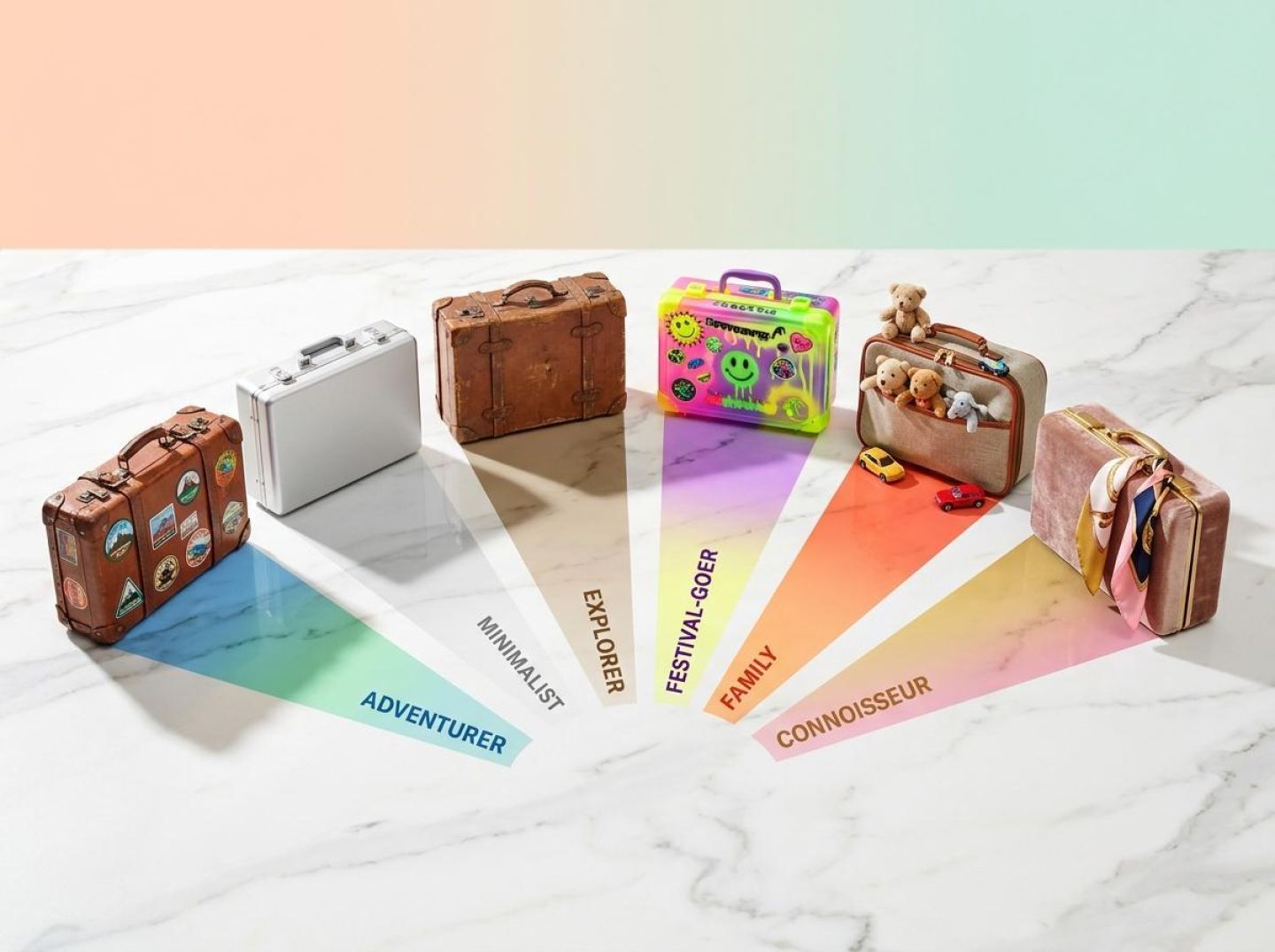
Before you open a single spy tool, ad library, or competitor's landing page, you need a sorting system — or you'll drown in a sea of screenshots with no framework for understanding why any of them work. The most useful classification lens I've found comes from a set of six traveler personas that SilverPush identified based on what audiences actually watch, how they engage, and what they ultimately book. While originally developed as a YouTube targeting taxonomy, these archetypes function as a universal decoder ring for reverse-engineering any travel or lifestyle ad you encounter in the wild — regardless of channel.
Here's the framework. The Culture Seeker is watching documentaries and local history vlogs; they aren't motivated by price but by curiosity about specific places. The Food Traveler found their next destination through a street food channel, not a travel brand — they're emotionally sold on a place before they've looked at a single hotel. The Adventurer is researching gear, routes, and physical challenges; leisure isn't the point, exploration is. The Budget Traveler is deeply engaged with content about keeping costs down, often gravitating toward domestic travel and family-friendly destinations. The Luxury Seeker decides based on a feeling and what's trending in premium circles, responding best to splashy, high-production creative on big screens. And The Family Traveler is the most deliberate buyer in the market — they research longer, compare harder, and prioritize safety and accessibility above everything else.
Why does this matter for competitive research? Because each persona doesn't just dictate who the ad targets — it dictates the creative format, the emotional trigger, the content adjacency, and the offer positioning. A native ad sitting next to a street food listicle is built for a fundamentally different psychological moment than a push notification promoting a five-star resort. The Food Traveler ad earns attention through sensory specificity — close-up shots of a steaming bowl, a specific dish name in the headline, a destination framed as an eating experience. The Luxury Seeker ad earns attention through aspiration and social proof — cinematic visuals, influencer endorsement, and a price point that functions as a feature rather than a barrier.
This distinction between content environments is exactly what separates sophisticated campaign design from guesswork. Consider how Deutsche Bahn's programmatic native campaign targeted travel enthusiasts by juxtaposing real-time international flight costs against cheap 19-euro fares to German lookalike destinations. That campaign was engineered for the Budget Traveler persona — someone whose emotional trigger is the thrill of a deal, whose content environment is trip-planning research, and whose conversion is accelerated by direct price comparison. The creative format (dynamic, personalized native ads), the emotional hook (you can have the experience without the expense), and the offer structure (a specific low fare) all flow from the persona, not from a generic "travel audience" brief.
When you start cataloging competitor ads in later sections of this guide, resist the instinct to ask "what does this ad look like?" first. Instead, ask: which of these six personas is this ad built for, and what content environment was it designed to live inside? The Culture Seeker's ad will appear alongside historical content and lean on storytelling. The Adventurer's ad will surface near outdoor and extreme sports videos and lean on adrenaline. The Family Traveler's ad will show up in parenting content and lead with safety, convenience, and shared experiences. As SilverPush noted, the Family Traveler is also one of the highest-value segments for brands willing to meet them with the right message at the right moment — which means you'll often find the most sophisticated creative and funnel architecture targeting this group.
Pin this framework to the wall. Every ad you screenshot, every landing page you dissect, every funnel you map in the sections ahead should be tagged with a persona first. That single habit will transform a chaotic folder of competitive intelligence into a structured playbook you can actually act on.
Every scaled travel campaign you'll encounter in a spy tool — whether it's running on Taboola, Outbrain, MGID, or a push network — relies on one or more of five structural patterns. Once you learn to recognize them, you stop seeing individual ads and start seeing systems. Here's how to spot each one and, more importantly, how to steal the logic without the budget.
1. Early-Season Activation Before CPM Spikes
The biggest travel brands launch campaigns weeks or even months before peak booking windows, when inventory is cheap and competition is thin. As SilverPush has documented, savvy travel advertisers time their creative pushes to coincide with the earliest intent signals — search trends for "summer vacation ideas" that begin ramping in February, or winter getaway queries that surface in September. Your methodology: set up free Google Trends alerts for your destination vertical, then cross-reference with a tool like SpyFu or Anstrex to see when the first wave of competitors' creatives appear. The gap between rising search interest and the flood of competitor ads is your window of arbitrage.
2. Non-Travel Content Adjacency
This is the pattern most solo buyers miss entirely. Travel intent doesn't begin on travel websites — it builds inside food vlogs, fitness content, parenting forums, and gear-review channels. Someone watching a Thai street-food video is already emotionally primed for Bangkok before any airline has served them an ad. The targeting implication is profound: CPMs on lifestyle and food-adjacent placements are dramatically lower than on travel-specific inventory, yet the audience is often further along the emotional journey. To spot this pattern, use Facebook Ad Library or native spy tools to filter travel offers appearing on non-travel publisher domains. When you see a resort ad running on a recipe site, you've found someone exploiting this adjacency deliberately.
3. Dynamic Personalized Creative at Scale
This is the pattern that looks impossible to replicate on a small budget — until you understand the underlying logic. The Deutsche Bahn campaign that Basis highlighted generated close to 10,000 unique personalized native ads by algorithmically matching the real-time cost of flying to an iconic international destination against a cheap €19 fare to a visually similar German location. The campaign produced an 850% lift in click-through rate and sold two million tickets in two-thirds of the usual timeframe. But strip away the scale, and the structural logic is simple: one template, two variables (dream destination and affordable alternative), dynamically populated. Any affiliate running native ads can replicate this with a spreadsheet of destination pairs and a platform like Outbrain's dynamic creative tools or even basic ad-level A/B testing across 20–30 headline variations.
4. Emotional Anchoring Before Price Reveal
Winning travel creatives almost never lead with the price. They lead with an image or scenario that triggers longing, nostalgia, or aspiration — then introduce the offer as the resolution to that emotional tension. In your spy-tool sessions, tag every travel ad you save as either "emotion-first" or "price-first." You'll quickly notice that the ads with the longest observed run dates (a reliable proxy for profitability) overwhelmingly anchor on emotion before revealing cost.
5. Lookalike Destination Angles
Deutsche Bahn's campaign wasn't just personalized — it was built on a specific algorithmic insight about visual similarity between destinations. The brand identified German locations that resembled iconic international landmarks people were already researching. This "you don't have to fly to Santorini — this spot looks identical" angle converts because it resolves desire without requiring sacrifice. To find your own lookalike angles, search Pinterest or Instagram for terms like "places that look like Bali" or "Europe's hidden beaches," then build creatives around the comparison. The emotional mechanism — aspiration validated by affordability — does the selling for you.
Treat these five patterns as a literal checklist the next time you sit down with your spy tool. Tag every saved ad against them. Within an hour, you'll see that campaigns you assumed were creative genius are actually modular systems — and systems can be rebuilt at any budget.
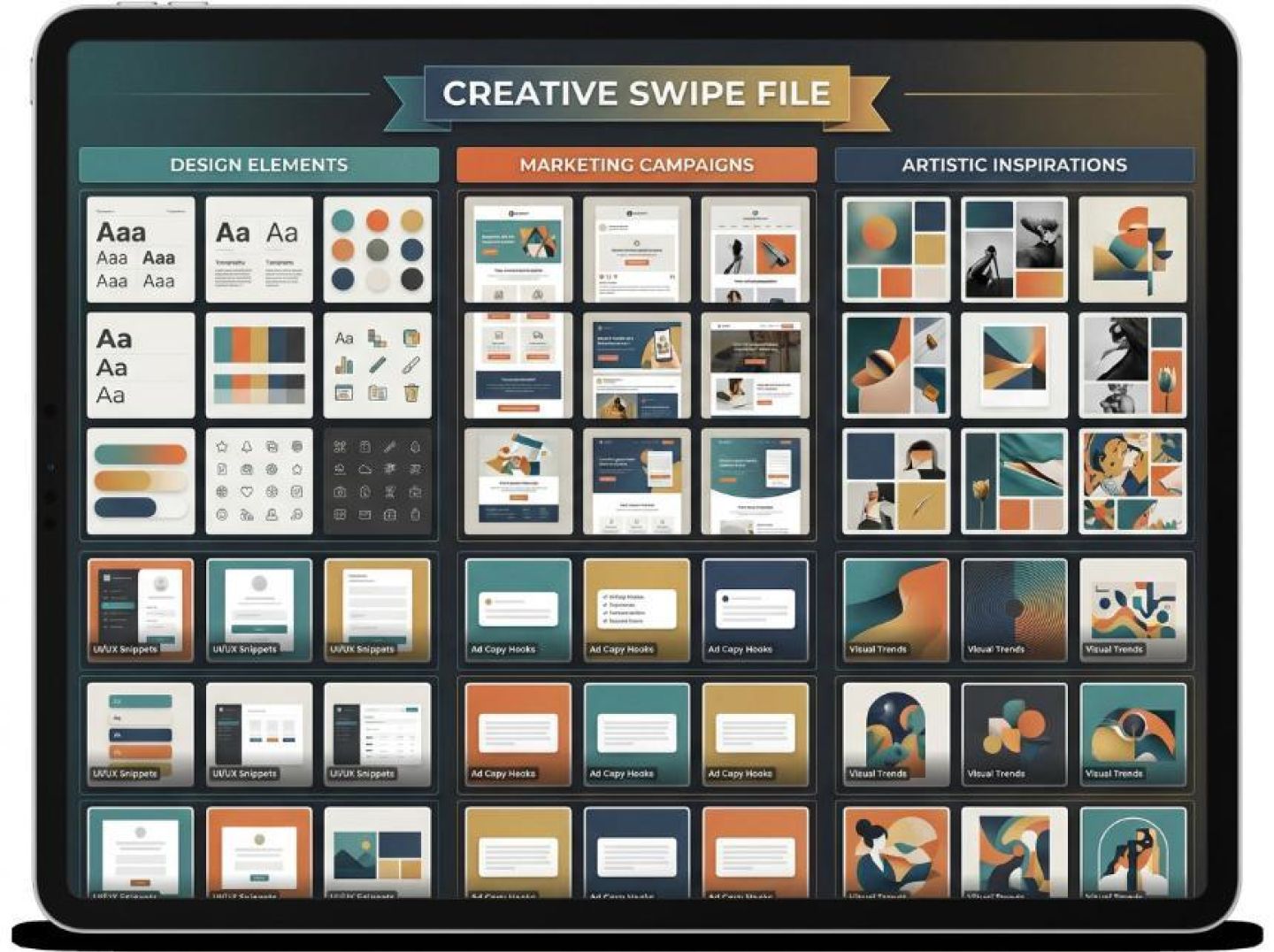
Most media buyers treat their swipe files like junk drawers — screenshots dumped into a folder, maybe organized by platform if they're feeling ambitious, then never opened again. The ads sit there inert, stripped of the context that made them worth saving in the first place. What was the landing page? Who was the ad targeting? What emotional lever was it pulling? Without those annotations, you're collecting artifacts instead of intelligence.
The reason enterprise-grade systems actually work is that they close the loop between creative attributes and performance outcomes. The partnership between DAIVID and ADIN.AI, as Search Engine Journal reported, embeds creative effectiveness scoring directly into media execution — so before a campaign even launches, marketers can identify which creative is most likely to succeed and allocate budget accordingly. After campaigns end, historical performance data becomes benchmarks that guide future planning. You don't have that infrastructure. But you can simulate its logic manually with a tagging taxonomy and a simple spreadsheet.
Here's the workflow. For every travel or lifestyle ad you capture, record it across these seven columns:
1. Persona type. Use the traveler personas from your earlier classification work — budget explorer, luxury seeker, adventure traveler, family planner, cultural enthusiast, or spontaneous booker. If the ad doesn't map cleanly to one, note which two it straddles and why.
2. Funnel stage. Is this ad designed for awareness, consideration, or conversion? A dreamy drone shot of Santorini with no price point is awareness. A retargeting carousel showing specific hotel rooms with dates is conversion. Don't guess — look at the CTA and the landing page architecture to confirm. As the Stream Companies blog laid out in their media audit framework, a channel with a higher cost-per-acquisition might still be valuable if it plays a critical role earlier in the journey, so correctly identifying funnel stage prevents you from comparing awareness creative against conversion benchmarks.
3. Content adjacency. Where did the ad appear? Next to a packing-list article, a flight-deal aggregator, a travel vlog, a lifestyle magazine homepage? This tells you what mindset the advertiser was trying to intercept.
4. Emotional hook. Tag each ad with its primary emotional lever: curiosity, FOMO, aspiration, savings, social proof, or nostalgia. Most travel ads pull from two — note both, but identify which one leads.
5. CTA structure. Is the ad driving to a landing page, generating a lead via form fill, pushing a direct booking, or initiating a messenger conversation? The conversion mechanism reveals the business model behind the campaign.
6. Landing page architecture. Click through. Does the page match the ad's promise? Is it a long-form editorial lander, a product page, a quiz, a booking engine? Screenshot it and note whether it uses urgency elements, testimonials, or pricing anchors.
7. Creative format and hook timing. For video ads, note when the hook hits — first three seconds, first five, or a slow build. For static, note whether the image or the headline carries the weight.
Start collecting. By the time you reach fifty tagged entries, you'll notice that the same persona-funnel-emotion combinations keep surfacing in scaled campaigns. By one hundred entries, you'll have a benchmarking dataset that reveals which creative structures dominate at each funnel stage — pattern recognition that no spy tool dashboard will surface on its own because spy tools show you what is running, not why it was built that way. The spreadsheet becomes your private competitive intelligence layer, and every ad you encounter from that point forward sharpens it.
Reverse-engineering is only valuable if it changes what you build. By now you have a swipe file annotated with structural patterns, persona signals, and timing cues. The temptation is to mimic the surface — the same sunset hero image, the same "you won't believe this hidden beach" headline. Resist it. You're not copying ads; you're copying structures, and the difference determines whether your campaign looks derivative or genuinely competitive on a fraction of the budget.
Start with headline formulas. Look across your annotated swipe file and you'll notice that high-performing travel and lifestyle native ads almost always follow one of three scaffolds: the curiosity gap ("The Italian village most tourists never find"), the aspirational comparison ("Why budget travelers are choosing this over Cancún"), or the urgency nudge ("Fares to Lisbon just dropped — here's the window"). Each scaffold maps to a different persona. The curiosity gap speaks to culture seekers watching documentaries and history vlogs, while the urgency nudge resonates with budget travelers who, as SilverPush has documented, are deeply engaged with content that helps them plan and keep costs down. Write three to five headline variants per scaffold, swap in your destination or product, and you have a testable headline matrix without a creative agency.
Image selection follows a similar structural logic. The pattern you'll find in top-performing native creatives is not "beautiful photo" — it's tension between familiarity and surprise. A table set for dinner on a cliffside works because the viewer recognizes the meal but not the setting. A hiker silhouetted against an unfamiliar ridge works because the activity is ordinary but the environment is not. Pull that principle into your own asset selection: pair a recognizable human action with an unexpected backdrop, and you replicate the scroll-stopping mechanic without licensing the same stock photography everyone else uses.
For targeting, translate your persona insights into content-adjacency plays on native and programmatic platforms. Instead of targeting broad interest categories like "travel enthusiasts," build content-adjacency segments around the actual video and article topics your personas consume. The food traveler persona, for instance, is already emotionally committed to a destination before they've searched a single hotel — so your native placement belongs next to street food roundups and regional recipe content, not next to generic travel guides.
Timing and dayparting deserve the same structural treatment. Travel intent builds well before booking peaks, and brands that activate early reach the same audiences at materially lower cost before CPMs spike heading into summer. Map your campaign calendar against the content consumption patterns you observed in your swipe file: if the aspirational dreaming content surges in January and February, that's when your awareness creative should run, not in May when everyone else floods the auction.
Finally, build a real-time optimization loop into your media plan from day one. The old model of setting a channel budget and revisiting it quarterly is obsolete. As Digitas' Liane Nadeau has argued, consumers discover, consider, and buy in an instant across platforms that don't respect channel definitions — which means your plan needs networked experiences optimized in real time, not rigid line items. In practice, that means checking performance daily during the first week, shifting spend toward whichever headline-image-persona combination is clearing your cost-per-click target, and killing underperformers before they consume budget. Even a spreadsheet-based daily review beats the set-and-forget approach that burns most small budgets alive.
The entire translation process comes down to one discipline: extract the structural principle, discard the specific execution, and rebuild with your own assets, audiences, and timing. Do that consistently and you're not borrowing someone else's campaign — you're engineering your own.
Receive top converting landing pages in your inbox every week from us.
Guide
Discover why celebrity endorsements and global intellectual property don’t automatically translate into advertising success. This guide uses ad spy intelligence to explore how audience relevance, placement context, creative testing, and post-click performance help advertisers build high-ROI campaigns without expensive celebrity partnerships.
Elena Morales
7 minOct 9, 2026
Guide
Discover how native advertisers can turn the psychology behind big brand stunts like “Break Conference” and “World Menu Heist” into measurable performance campaigns. Learn how to use scarcity, owned IP, fandom, participation, and cross-channel funnels to build native and TikTok campaigns that generate attention and conversions.
Marcus Chen
7 minOct 8, 2026
Most Read
Learn how to turn sports, snacks, creator trends, and pop culture moments into high-ROI advertising funnels without relying on big budgets. This guide shows how to use Anstrex Native, Instream, and Push intelligence to identify emerging cultural angles, analyze ad duration and gravity, and adapt proven concepts to lower-cost placements.
Rachel Thompson
7 minOct 7, 2026