10 minJune 25, 2020

Our tools monitor millions of native, push, pop, and TikTok advertising campaigns.
Get StartedPush notifications ad format has been making waves ever since it launched a couple of years back. Many stipulated that it will immediately die out soon, especially since Google announced that it will be using ad blockers and will get rid of Android apps that send push messages with ads.
Still, this format came out strong and remains to be one of the top traffic choices today. Instead of slowing down, push messages are gaining even more traction, and there’s a new format in town: in-page push notifications.
One might think that this is a new type of push notification ad because of its name. The truth is that it may look like a push ad, but that’s as far as the similarity goes. It is, in fact, a banner ad.
The ad itself needs the following:
If you’ve run push notification ads before, setting up in-page messaging ads won’t be difficult for you. They basically look the same, after all.
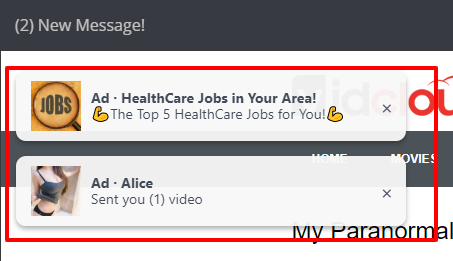
How is it different from typical banner ads? Let’s point out its characteristics.
Well, for one, it looks like native push notification, allowing it to leverage on the trust that such messages have garnered. Many users already have banner ad blindness, so this new design allows advertisers to market to users that are wary of banners.
While push ads are shown on the user’s device without the need to open a browser, in-page push notifications are displayed on the website itself. It could be displayed at any of the four corners of the webpage (for desktop) but is usually shown at the bottom of the screen for mobiles. It is a sticky message that stays on the area it is displayed on, even when the user scrolls up or down.
As mentioned above, the biggest threat with push messaging ads is that Google keeps rolling out updates that hinder push ads from being displayed. Since this is not an actual push notification, it won’t be bothered by such ad blocking concerns.
Aside from appearing only within the website’s page, in-page push notifications do not require the user to subscribe to receive notifications. I can be shown to anyone visiting the webpage.
The biggest hindrance with push notifications is that it can’t be displayed on iOS devices. Since in-page push ads are actually banner ads, they can appear on any operating system.
They are banner ads, after all!
Like the original push ads, in-page notifications utilizes the CPC model, which means advertisers will only have to pay for every click their ad receives.
Since it is fairly new, there is not much data yet. However, a few verticals have been showing promise based on tests done by pro affiliates, and these are:
Loans, improve credit scores, mortgage -- these offers are showing high returns, especially when coupled with landing pages that have already been proven to work using push notification ads.
As always, sweepstakes perform well for fresh audiences, so jump at the opportunity now while people are still on the fence about trying this ad format.
Because these notifications look native to the website, people instinctively trust it. If you are an affiliate of well-known brands, offering discounts and promotions on your ad can easily entice your viewers and encourage them to complete a purchase.
This vertical has been known to convert by enticing visitors to a quick profit. Matching dollar deposits or bonus offers are a hit for this niche when using in-page push ads.
With all these characteristics, the in-page push notification ad is definitely a winning ad format. You should try it now while the market is still hot. But if you want to see what kind of ad creatives and landing pages and performing well before diving in, then you’re in luck. This ad format will soon be available in Anstrex Push Spy Tool!
Receive top converting landing pages in your inbox every week from us.
Must Read
This article examines the fundamental measurement gap between out-of-home (OOH) advertising and performance-driven digital channels. While OOH continues to rely on probabilistic attribution models such as store visit tracking, web lift studies, and geographic correlation analysis, native and push advertising were built with measurement as a native capability. The article challenges the industry's "honest measurement" narrative, arguing that deterministic tracking, direct attribution paths, and competitive intelligence tools give native and push advertisers a structural advantage that OOH cannot replicate. It also explores why marketers continue to romanticize billboards despite these limitations and explains how prestige, visibility, and brand perception often influence media decisions more than measurable business outcomes.
Dan Smith
7 minJun 11, 2026
Most Read
This article explores the "tracking gap" that prevents marketers from seeing the competitive strategies driving success outside their own analytics platforms. While tools like Google Analytics excel at measuring on-site behavior and campaign performance, they offer little visibility into competitors' creative testing, placement strategies, and optimization workflows across native advertising, push notifications, and other alternative traffic channels. The article distinguishes between "that" data (what happened in your campaigns) and "why" data (why competitors are succeeding), showing how dedicated ad intelligence tools can bridge the gap. It also outlines a practical competitive intelligence framework that combines internal performance data with external market signals to help marketers move beyond reactive optimization and build strategies informed by real-world competitive activity.
Rachel Thompson
7 minJun 11, 2026
Must Read
This article explores the growing disconnect between award-winning advertising and performance-driven marketing. It argues that creative accolades often reward originality, artistic execution, and cultural impact, while performance marketers are judged by measurable business outcomes such as conversions, ROAS, and customer acquisition costs. The piece examines the hidden world of native, push, and pop advertising, where relentless testing and optimization consistently outperform creative prestige. It also highlights how competitive ad intelligence tools like Anstrex help marketers study proven market winners, replacing creative guesswork with data-backed insights that drive profitable campaigns.
Liam O’Connor
7 minJun 10, 2026