Big-brand campaign launches are more than industry news—they can serve as valuable research triggers for performance marketers. By tracking how major brands translate high-budget campaigns into native ads, push campaigns, landing pages, audience segments, and creative variations, advertisers can uncover tested messaging and funnel strategies. The key is using ad spy data systematically to observe what survives testing, adapt the underlying strategy, and build campaigns based on real market signals.

Our spy tools monitor millions of TikTok ads from over 55+ countries. Biggest TikTok Ad Library in E-commerce and Mobile Apps!
When AI gives every advertiser the ability to produce endless creative variations, production itself stops being a competitive advantage. The real edge shifts to competitive intelligence: identifying which ads, hooks, landing pages, and creative patterns are actually surviving in the market. By using tools like Anstrex as a signal detector rather than simply relying on AI as a content factory, marketers can make smarter creative decisions before spending their own budget.
AI agents are becoming a new gatekeeper in the purchase journey, evaluating products through structured information before a human ever sees an ad. This makes product feeds, explicit claims, pricing, availability, and machine-readable landing pages increasingly important. Performance marketers now need a dual-audience strategy: creative that captures human attention while providing the clear, verifiable information AI systems need to evaluate and recommend an offer.
AI has made ad production faster and cheaper, but that abundance has made competitive research harder. The strongest signal is no longer how many ads a competitor creates—it is which ads survive sustained spend. By tracking creative longevity, evolution, and landing-page patterns, marketers can separate validated campaigns from short-lived tests and use those insights to build smarter campaigns of their own.
Consumers are becoming more willing to accept advertising when it provides clear value, but tolerance does not equal attention. For native and push advertisers, the opportunity is to turn that growing tolerance into engagement through relevance, trustworthy creative, competitive intelligence, and rigorous measurement. The advertisers that understand what already works—and continuously validate it against their own data—can reduce wasted impressions and build stronger campaigns.
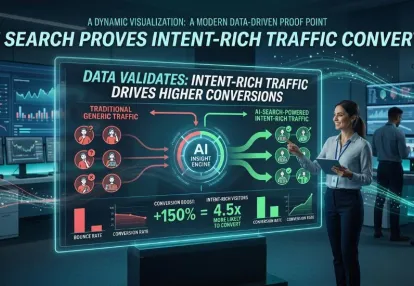
AI search is proving what push and native advertisers have understood for years: intent matters more than impressions. AI-referred visitors arrive after researching, comparing, and narrowing their options, producing smaller but higher-value audiences. The same principles—specificity, credibility, strong message-to-landing-page alignment, and competitive intelligence—can help marketers improve both paid campaigns and AI visibility.
Google's growing use of its own properties in AI results is reducing the visibility and traffic available to external publishers and brands. As AI Mode reshapes search discovery, performance marketers can reduce their dependence on Google by exploring push, pop, and TikTok in-stream advertising—using competitive ad intelligence to identify proven campaigns and enter alternative channels before costs rise.
TikTok's crackdown on AI-generated spam is reshaping the performance marketing landscape, especially in health, finance, and other high-value verticals. While many advertisers will lose access to profitable traffic, agile marketers can capitalize by studying disappearing TikTok campaigns, extracting proven creative insights, and adapting those winning angles for native and push advertising before the opportunity narrows.
AI systems don't just index websites—they build probabilistic models of brands from signals across the web. By analyzing competitors' advertising through ad spy tools, marketers can uncover the brand associations, authority signals, and messaging patterns competitors are reinforcing, then use those insights to strengthen their own AI visibility strategy before those perceptions become entrenched.
As AI makes ad creation nearly effortless, the real competitive advantage is no longer the model—it's the data behind it. Performance marketers who feed AI with structured competitive intelligence, campaign longevity, and proven creative patterns will generate better ads, faster decisions, and a compounding advantage that generic AI workflows simply can't match.
AI has made it possible for advertisers to generate thousands of ad variations in days instead of weeks—but more creative doesn't automatically produce better results. The real competitive advantage comes from using ad intelligence to identify which creatives survived testing, scaled across networks, and received sustained investment, giving marketers strategic direction before using AI to accelerate execution.
AI visibility scores fluctuate because large language models generate probabilistic answers, making citations and brand mentions inherently unstable. Performance marketers should prioritize real-time competitive ad creative intelligence—headlines, visuals, offers, and landing pages backed by actual ad spend—as a more reliable foundation for campaign decisions, using AI visibility only as a supplementary signal.
As contextual targeting becomes more important in a privacy-first advertising landscape, affiliate marketers running native and push ads can gain a competitive edge by optimizing for content environments instead of audience profiles. By combining competitor placement intelligence, creative alignment, and dynamic whitelists, affiliates can build campaigns that achieve stronger engagement, better conversions, and more sustainable performance.