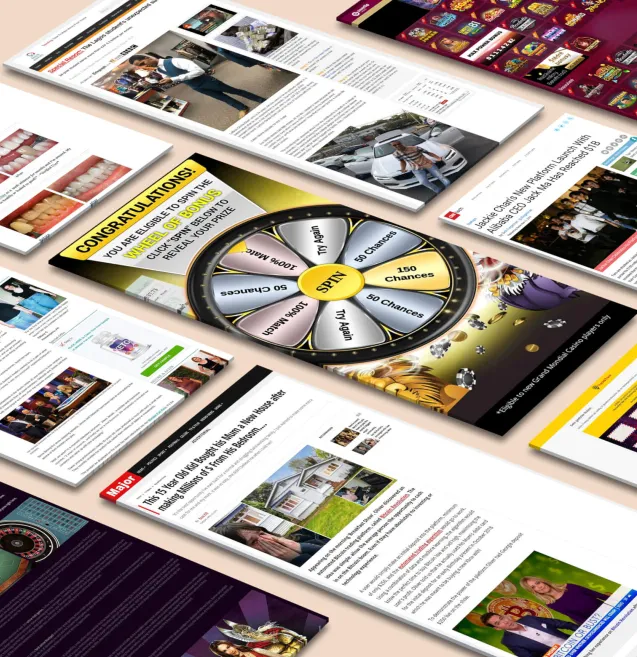

Our spy tools monitor millions of push notification ads from over 90+ countries and thousands of publishers.
Get StartedEvery push and pop marketer has the same morning ritual: open the dashboard, scan impressions, check clicks, glance at conversions, and decide what to scale or kill. It feels productive. It feels data-driven. But what it actually produces is a dangerously narrow view of reality — one that tells you precisely what already happened and almost nothing about what's about to change.
Impressions and clicks are the lingua franca of performance advertising, and for good reason. As Brax's framework makes clear, impressions represent "potential opportunities" to engage your target market, while clicks serve as "strong indicators of potential customers who have shown interest." That distinction is operationally useful. You need impressions to understand reach and clicks to gauge intent. Without them, you can't manage bids, evaluate creatives, or run basic A/B tests. They are table stakes — the minimum cost of sitting at the game.
But table stakes are not an edge, and here is where the trap springs shut.
When a push notification creative delivers a 1.2% CTR, you know users clicked. You do not know whether three competitors launched nearly identical angles last Tuesday. You do not know whether that audience segment is already exhibiting fatigue signals that will crater performance by Friday. You do not know whether the GEO you're scaling into just saw a bid spike because a rival affiliate team dumped budget into the same traffic source overnight. The metric answered a question — "Did people click?" — while leaving every strategically important question unanswered.
This is not a problem unique to push and pop, but the format's speed and volatility make it especially acute. Campaign lifespans are measured in days, not quarters. Creatives burn out fast. Traffic sources shift inventory allocation without warning. In this environment, optimizing purely on historical click and conversion data is like driving by staring at the rearview mirror — you can see where you've been, but you're blind to the curve ahead.
The deeper issue, as MarTech has reported, is that marketers are not suffering from a lack of data — they are suffering from a lack of connection between the data they already have. Disconnected metrics pile up: impressions in one tab, clicks in another, conversion postbacks in a tracker, revenue in a network dashboard. Each number is accurate in isolation and misleading in combination. You can see activity everywhere but struggle to connect it to the forces actually shaping your outcomes — competitor behavior, audience saturation, creative lifecycle decay, and shifting bid dynamics across traffic sources.
And the problem is accelerating. AI-driven campaign creation tools are making it faster than ever to launch and iterate, which means more creatives, more split tests, and more data flooding into dashboards that were already overwhelming. The volume of signals grows while the ability to interpret them stagnates.
So what does this mean for the push and pop media buyer who lives and dies by daily ROI? It means that the marketer next to you — running the same offers, bidding on the same GEOs, using the same spy tools to rip creatives — has access to the exact same vanity metrics you do. Impressions, clicks, and surface-level conversion rates are shared knowledge. They are the scoreboard, not the scouting report. They tell every player in the game the same story at the same time.
The competitive advantage lies not in collecting more of these metrics but in seeing what they cannot show you: the hidden data about market dynamics, competitor saturation, and creative fatigue that separates media buyers who react from those who anticipate. The rest of this article is about finding it.
There's a layer of competitive data in push and pop advertising that no tracker records, no dashboard visualizes, and no CSV export captures. It lives entirely in the creatives themselves — the headlines, the images, the emotional triggers, the urgency language, the landing page structures your competitors deploy every single day. Call it creative intelligence: the systematic observation and interpretation of competitor ad creatives as a strategic signal, not just inspiration for your next split test.
Most affiliates treat spy tools the way tourists treat museums — they walk through, snap a few screenshots, borrow a headline angle that looks promising, and move on. But as MarTech argues in its breakdown of AI-powered competitive intelligence, "watching competitors and understanding what their moves mean are two different jobs." That distinction is the fault line separating media buyers who react from those who anticipate. In push and pop campaigns specifically, where creative fatigue is relentless and angles burn out in days rather than weeks, the ability to read strategic intent from creative patterns becomes an outsized advantage.
Consider what it actually means when a competitor who has been running curiosity-gap push notifications — "You won't believe what this doctor found…" — suddenly pivots to fear-based urgency copy: "Warning: Your account may be compromised. Act now." That shift isn't random. It's a signal that fear-based emotional triggers are outperforming curiosity in that vertical, on those traffic sources, for that geo. When three competing affiliates simultaneously adopt the same funnel architecture — say, a fake article presell page funneling into an offer page with a countdown timer — that's not coincidence. It's convergent evidence about what funnel economics are currently viable. The presell page is surviving compliance checks, the editorial angle is generating enough trust to sustain click-through, and the economics of that extra page load are justified by higher conversion rates downstream.
None of this shows up in your tracker. Platforms like Voluum do excellent work recording ad views, clicks, landing page interactions, and conversions, but they only capture your funnel data. Your competitor's creative evolution — the sequence of tests they ran, the angles they abandoned, the copy frameworks they doubled down on — exists in a completely separate data universe that has to be manually observed and interpreted.
This is the dark data of push and pop competitive strategy. It's dark not because it's hidden, but because it's invisible to anyone who isn't deliberately looking for patterns over time. A single screenshot of a competitor's push notification tells you almost nothing. But a chronological archive of their creatives across thirty days tells you what they tested, what survived, what scaled, and — critically — what they killed. The creatives that disappear are often more informative than the ones that persist, because a killed creative represents a validated negative: the market rejected that angle, that emotional register, that visual approach.
The challenge, as Brax notes when distinguishing between impressions and clicks, is that each metric only captures a single dimension of user engagement — seeing versus acting. Creative intelligence adds a third dimension that neither metric addresses: why users are engaging. When you analyze the emotional architecture of high-performing competitor creatives, you're reverse-engineering the psychological triggers that drive action in a specific market at a specific moment. That's not a vanity metric. It's not even a performance metric. It's a strategic signal that compounds in value the more systematically you collect and interpret it — and it's one your competitors almost certainly aren't tracking with any rigor at all.
Every competitor landing page you encounter in a push or pop campaign is a fossil record — a compressed artifact of dozens, sometimes hundreds, of split tests that someone else paid for. You're not just looking at a page. You're looking at the survivor, the variant that outlasted every other version in a ruthless optimization process you never had to fund.
This is the insight most affiliates miss when they spy on competitors. They screenshot the page, clone the layout, and move on. But the real intelligence isn't in the surface design — it's in the structural decisions the page reveals about what that competitor has learned about the audience. As MarTech has noted, landing pages sit close to conversion and often serve as a source of truth for campaign performance, yet they rarely explain what influenced visitors before they arrived. Flip that observation around: when you're the one studying a competitor's landing page from the outside, you're actually reading backward from conversion to intent. Every element on that page is an answer to a question the competitor asked through testing — and the page that's still running is the answer that won.
In push and pop campaigns, this forensic analysis becomes even more valuable because the traffic is fundamentally interruptive. Nobody typed a query. Nobody expressed intent. The visitor was pulled from another activity by a notification or a popunder, which means the landing page has to solve the cold-traffic engagement problem immediately — or the campaign dies. That constraint forces competitors into revealing structural choices that map directly to strategic insight.
Here's a framework for reading those choices systematically.
Page structure signals funnel maturity. A competitor running a single-page, direct-to-offer layout with one CTA is either brand new or operating on razor-thin margins where every redirect costs measurable conversion loss. A competitor using a multi-step presell — an advertorial that warms the visitor, then passes them to an offer page — has invested in funnel depth, which signals they've tested enough volume to know that unqualified clicks waste budget. When you notice that a competitor has moved from short listicles to long-form presell pages, you're watching them respond to declining conversion rates on cold traffic in real time. As Brax explains, tracking clicks alongside conversion rates provides comprehensive insights into campaign performance, allowing marketers to identify trends and make necessary improvements. The competitor's page structure is the visible residue of exactly that benchmarking exercise.
Copy density signals audience sophistication. If a competitor's page uses minimal text, large images, and a single bold claim, they're targeting an audience that converts on impulse — low sophistication, high emotional reactivity. If the page features detailed comparison tables, ingredient breakdowns, or technical specifications, the competitor has learned that this audience needs education before commitment. The amount of copy isn't a stylistic preference; it's a data-driven response to what their tracker told them about scroll depth and engagement.
Trust element placement signals compliance pressure. Watch where competitors position badges, testimonials, disclaimers, and guarantee seals. When trust elements appear above the fold — before the visitor has even read the pitch — it usually means the competitor is battling high bounce rates from skeptical or ad-fatigued traffic. When disclaimers are buried at the bottom, the competitor is prioritizing emotional momentum over risk mitigation, suggesting their traffic sources or geos have lower compliance scrutiny.
Finally, pay attention to redirect chains. Voluum's documentation on tracking describes how redirect-based setups allow advertisers to dynamically switch destinations through a tracking domain, enabling real-time A/B testing of landing pages. When you detect multiple redirects in a competitor's flow, you're seeing active testing infrastructure — proof that the page you ultimately land on is being evaluated against alternatives right now. A clean, direct path to a single page means the competitor has already made their decision. Both signals tell you something different about where they are in their optimization cycle — and how soon their approach might shift.
Most affiliates treat competitive intelligence like a pre-launch ritual. They fire up a spy tool, screenshot a few creatives, rip a couple of landing pages, and move on. By the time they check again — if they ever do — the competitive landscape has shifted beneath them, and they're left wondering why a proven angle suddenly tanked. The problem isn't a lack of data. It's a lack of continuity.
The real advantage in push and pop campaigns comes from longitudinal tracking: observing competitor creatives, landing pages, and GEO targeting not once, but systematically over weeks and months. As MarTech frames it, the fundamental shift in competitive intelligence is moving "from looking backward to looking ahead" — tracking messaging shifts, positioning gaps, and content strategy changes at a scale that reveals patterns invisible in any single snapshot. Applied to push and pop, this means your competitive monitoring shouldn't be a homework assignment you complete before campaign launch. It should be a recurring workflow that runs in parallel with your campaigns, continuously feeding you signals about what's changing in the market and why.
Consider what you can extract from consistent observation that a one-time spy session will never reveal. When you track a competitor's creative rotation frequency over time, you're effectively measuring their testing velocity. An affiliate swapping creatives every 48 hours is operating with a very different budget and optimization philosophy than one running the same push notification for three weeks straight. More importantly, when you track which angles they kill quickly versus which ones they scale, you're seeing the output of their split tests without spending a dollar. The creatives that survive are the profitable ones. The ones that vanish after two days were losers — and knowing what failed for someone else is nearly as valuable as knowing what worked.
Geographic movement tells an even richer story. When a competitor suddenly enters a new GEO, they've likely secured a fresh offer or found inventory at favorable CPMs. When they abruptly exit, it usually signals cap exhaustion, offer cancellation, or a compliance crackdown. If you're only checking once a month, you miss these windows entirely. But if you're tracking weekly, you can anticipate GEO opportunities days before the broader market catches on.
Seasonal patterns compound these insights further. Analyzing impressions over time can uncover peak activity windows and demographic hotspots that repeat predictably — information that transforms your media buying from reactive bidding to strategic positioning. In push and pop specifically, this means identifying when competitors ramp spend (typically around paydays, holidays, and major sporting events in specific GEOs) and when they pull back, leaving cheaper inventory for anyone paying attention.
The practical implementation doesn't require sophisticated AI tooling, though it certainly benefits from it. A simple spreadsheet tracking competitor creative themes, landing page structures, active GEOs, and estimated volume on a weekly cadence will, within 60 days, produce a pattern map that no one-time research session can match. You'll start seeing strategic pivots — a competitor shifting from fear-based push copy to curiosity-driven angles, or migrating from single-page advertorials to multi-step quiz funnels — weeks before the downstream effects ripple into your own CTR and conversion rates.
The affiliates who treat competitive creative monitoring as an ongoing discipline rather than a sporadic chore aren't just better informed. They're operating on a different timeline — one where competitor moves become predictable inputs rather than unwelcome surprises.
Data collection is the comfort zone. It feels productive — the screenshots, the spreadsheets, the bookmarked landing pages. But as MarTech's framework for AI-powered competitive intelligence makes painfully clear, "tracking competitors is the easy part." The work that actually moves the business is interpretation. For push and pop marketers operating in fast-cycling verticals where creative fatigue hits in days rather than weeks, raw competitive observations are worthless unless you can extract strategic direction from them. That requires discipline — specifically, a three-question framework applied every single time you sit down with spy data.
Question One: "What does this creative or landing page tell me about what's converting right now?"
This is about reading the market signal, not admiring the creative. When you see a competitor's push notification using urgency-based copy ("Your device may be at risk") paired with a clean, single-CTA landing page, the insight isn't the specific headline. The insight is that fear-driven, low-friction funnels are surviving the optimization gauntlet in that geo and vertical right now. Remember what we established earlier: a landing page that's been running for weeks is a survivor of ruthless split testing. Your job isn't to copy it — it's to decode what consumer psychology it's exploiting and ask whether your own campaigns are aligned with that same behavioral current. As the Voluum Blog emphasizes, when analyzing campaign performance, "you want to start big" — and reading the macro signal behind a creative before fixating on its micro-elements is exactly what starting big looks like.
Question Two: "What gap does this reveal in my own campaigns?"
If three competitors in the same sweepstakes vertical are all running pre-landers with social proof elements — comment sections, testimonial blocks, "winners" counters — and you're sending traffic straight to a bare-bones opt-in form, that's not just an observation. It's a diagnosis. Either you've found a gap worth testing immediately, or you've identified a reason your CTR has been bleeding out while you blamed traffic quality. This question forces honesty. It turns competitive intelligence from a voyeuristic exercise into a mirror. Not every gap is an opportunity — sometimes competitors are collectively wrong — but an untested gap is an unforgivable blind spot.
Question Three: "What does the pattern across multiple competitors suggest about where the market is heading?"
One competitor testing video pre-sell pages on pop traffic is an experiment. Four competitors doing it simultaneously is a trend you ignore at your own expense. This is where the shift from reactive to predictive happens — exactly the transition that MarTech describes as "moving from looking backward to looking ahead." In push and pop specifically, pattern recognition across competitors can reveal platform-level shifts before they become obvious: a sudden clustering of competitors around specific ad networks, a mass migration from aggressive claim-based copy to softer educational angles (often signaling compliance crackdowns), or a coordinated move toward specific GEOs that suggests new traffic inventory has opened up.
Most marketers collect competitive data and feel informed. A smaller number ask Question One and feel strategic. But the affiliates who consistently apply all three questions — signal, gap, trend — transform spy data from a rearview mirror into something closer to a windshield. They stop reacting to what competitors did last week and start positioning for where the market will be next month. That's the difference between competitive intelligence as a task and competitive intelligence as a compounding advantage.
Receive top converting landing pages in your inbox every week from us.
Guide
Celebrity sports campaigns can generate enormous attention without necessarily producing profitable traffic, leads, or sales. This guide shows how to mine Anstrex Push and Pop data to identify scalable athlete creatives, build high-intent fan audiences, and connect sports activations to conversion-focused landing pages and funnels.
Priya Kapoor
7 minSep 24, 2026
Featured
Learn how to turn ad-spy data, push/pop campaign insights, and Anstrex intelligence into measurable mobile OOH campaigns. This guide shows how to pre-test winning creatives, optimize routes, connect QR-driven funnels, and build full-funnel attribution for mobile billboards.
Elena Morales
7 minSep 22, 2026
Most Read
Featured ad galleries can reveal creative trends, but without performance metrics they provide little insight into what actually works. This guide shows how to use Anstrex, tracking data, and Brax to reverse-engineer native and display winners and turn their proven angles into measurable Pop and Push campaign blueprints.
Marcus Chen
7 minSep 21, 2026