

12 minOctober 10, 2026

Our spy tools monitor millions of native ads from over 60+ countries and thousands of publishers.
Get StartedOn paper, an OOH veteran looks like a hiring manager’s dream: years of media planning, vendor negotiation, and high-stakes brand campaigns across major markets. In practice, that résumé often stalls the moment it hits a anstrex.com/blog/optimize-your-tiktok-ads-like-a-pro-with-tiktok-ad-pixel" target="_blank" rel="noreferrer noopener">performance marketing ATS filter. The issue isn’t talent; it’s translation. The skills that made someone indispensable in out-of-home are either invisible or misinterpreted when evaluated through a performance lens.
Part of the mismatch comes from how differently each side defines “results.” OOH has historically been anchored in reach, frequency, and location quality. For decades, plans were justified with traffic counts, behavioral assumptions, and a healthy dose of instinct. As one analysis of the industry put it, OOH planning has traditionally relied on “intuition and ‘gut feel,’” and that worked because the medium’s impact was obvious in the real world, even if its infrastructure for proof lagged behind (AdQuick’s overview of the category).
Performance marketing, by contrast, is built on real-time, attributable actions. If you can’t tie spend to conversions, revenue, or downstream pipeline, the work may as well not exist. So when a hiring manager scans a résumé full of flight dates, GRPs, and market lists, what they often don’t see are the optimization chops, experimentation rigor, and data fluency they associate with paid search, paid social, or programmatic. The candidate might have those skills; they’re just expressed in a different dialect.
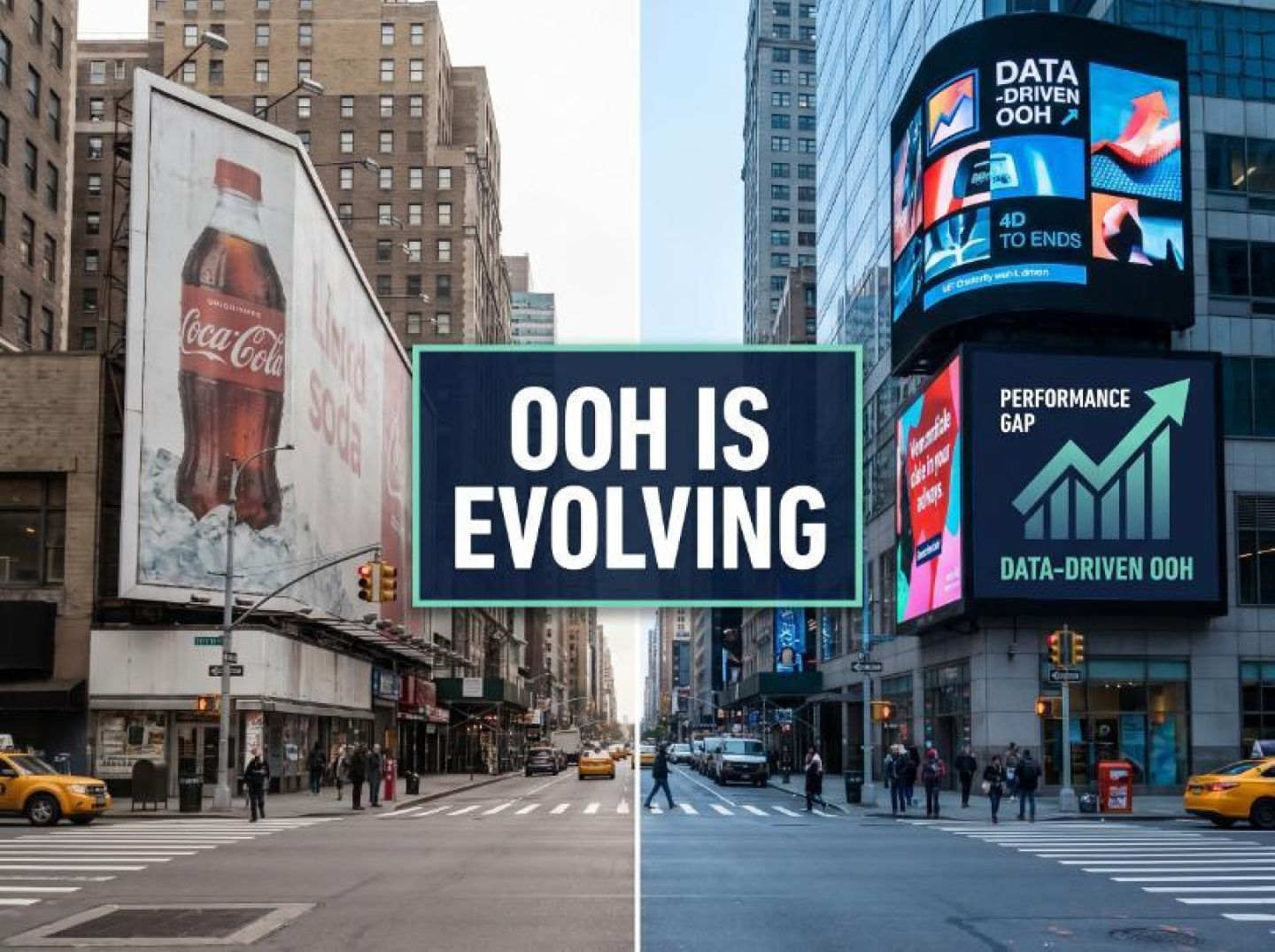
The irony is that modern OOH has quietly been moving much closer to that performance mindset. With the growth of digital formats, data integrations, and AI-driven planning, OOH is “evolving into a more dynamic and responsive channel, closer in capability to digital media than at any point in its history,” as Jawad Hassan notes in his discussion of OOH’s measurement evolution. But the systems around it—measurement standards, reporting frameworks, even job descriptions—haven’t caught up.
That lag shows up in résumés. A performance marketer lists A/B tests, incrementality studies, and LTV:CAC models. An OOH specialist talks about site audits, traffic patterns, and make-goods. Both are doing resource allocation under uncertainty, but only one maps cleanly to how digital-native organizations now make decisions.
Measurement fragmentation in OOH deepens the perception gap. Across markets and vendors, different methodologies estimate audience and exposure, creating inconsistent metrics that are hard to compare or plug into a unified marketing model. This patchwork, as Hassan’s piece on “single source of truth” measurement points out, doesn’t align neatly with the standardized KPIs used in performance channels. To a CMO reading dashboards built around ROAS and cost per acquisition, OOH often looks like an outlier rather than an integrated lever.
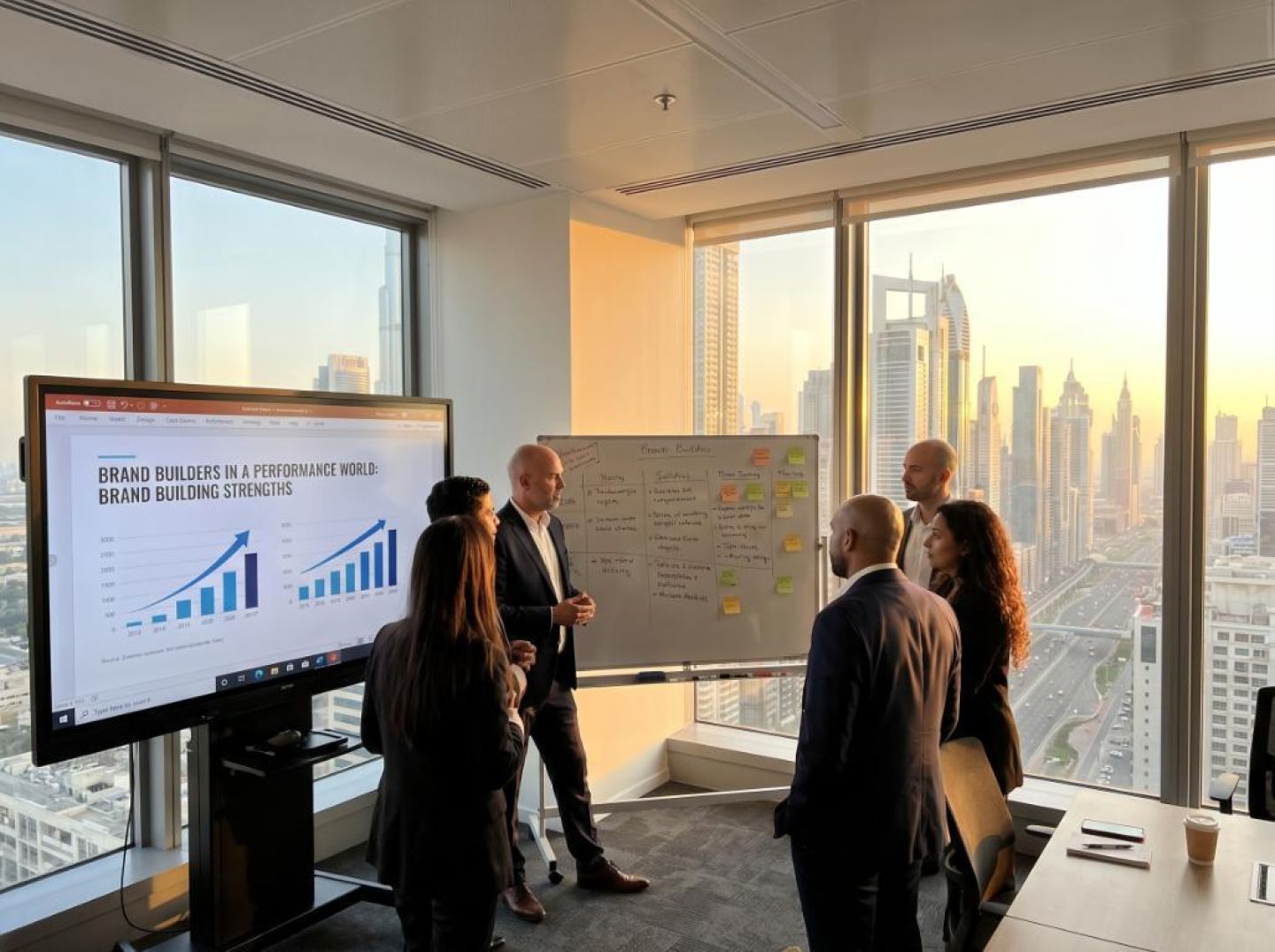
Meanwhile, the strategic value many OOH practitioners bring—an instinct for brand building and demand creation—can actually be misread as a liability. Digital-first companies that are over-indexed on performance are convinced they’re being “disciplined” by pouring 80% of their budget into bottom-of-funnel channels. Yet evidence from the effectiveness world shows that every performance-first brand eventually hits a ceiling: search and retargeting saturate, conversion rates plateau, and acquisition costs climb, precisely because the brand has underinvested in top-of-funnel demand for too long. As one examination of the 60/40 brand-to-activation rule argues, this is not a channel problem—it’s a mix problem.
In other words, OOH people are often experts in the exact thing performance teams are missing: the upstream work that keeps the pipeline from drying up. But because their experience is framed in terms of “brand” rather than “demand generation” and “incrementality,” their resumes scan as off-target for roles optimized around in-platform metrics.
This is where the emergence of OOH “universal adapters” changes the story—and, by extension, how OOH résumés can be interpreted. Platforms like AdQuick standardize OOH buying across thousands of media owners, pipe campaign data into multichannel analytics, and expose the same kind of attribution signals performance marketers live on—store visits, web lift, and the halo effect on digital campaigns. The existence and adoption of tools like this prove two things at once: OOH is now measurable in performance terms, and OOH practitioners who have used these platforms are far closer to “true” performance marketers than their résumés suggest.
Out-of-home has come a long way from “big boards and bigger hunches.” Today’s best OOH work is faster, more data-informed, and more measurable than anything most veterans grew up with. Platforms like AdQuick have dragged a historically analog channel into the digital age, but even in its most evolved form, OOH is still not performance marketing—and that distinction is exactly where many OOH résumés get lost.
Modern OOH can now borrow a lot of performance’s language. Instead of planning a citywide buy based purely on traffic counts and intuition, planners can use tools that aggregate inventory, audience data, and attribution into a single interface. As the team behind the “universal adapter” AdQuick platform explains, OOH planning has historically leaned on “gut feel,” but that’s no longer sufficient in a world where CMOs expect granular, cross-channel proof. AdQuick and similar platforms automate the entire OOH lifecycle—planning, buying, trafficking, and optimization—while feeding exposure data back into the same stack that powers search, social, and programmatic. For an OOH buyer, that feels like crossing the bridge into performance.
But here’s the nuance: enhanced measurability doesn’t magically change OOH’s primary job. At its core, OOH is still a reach and impact engine designed to build mental availability and demand over time—not a lever you pull for immediate, last-click conversions the way you would with paid search or retargeting. When advocates for the 60/40 brand-to-performance split talk about rebalancing the modern media mix, they point to channels like OOH as the ballast that keeps brands from over-optimizing themselves into stagnation. In a breakdown of why the 60/40 rule should reshape how marketers think about OOH, OOH Today underscores that performance-heavy brands eventually hit a wall: audiences saturate, CPAs rise, conversion rates flatten. OOH is what feeds the future pipeline by expanding the pool of people who even know you exist.
That’s the strategic fault line OOH veterans need to understand. Your channel increasingly behaves like a performance channel from a workflow perspective—faster launches, standardized buys, daily reporting, footfall and web-lift attribution. According to the same AdQuick overview, campaigns can now be stood up in as little as 48 hours, tied to verified store visits, and correlated with web analytics and digital “halo effects.” That’s a world away from waiting for quarterly brand tracking. Yet performance hiring managers aren’t just looking for people who can interpret reports; they want operators who can directly control conversion outcomes through continuous, fine-grained optimization and experimentation.
In performance, your job doesn’t stop at proving that exposure correlates with outcomes. You’re expected to engineer those outcomes day by day through bid strategies, budgets, audiences, creative variants, and landing-page tests. Even when a modern mobile OOH campaign is designed to drive measurable actions—like the LED truck programs described in the 60/40 rule analysis, which can track foot traffic lift, device IDs for retargeting, and sales impact—the levers are still comparatively coarse. You can choose markets, routes, flighting, and creative, then optimize weekly or monthly. You’re not changing bids and budgets hourly based on marginal CPA.
This is why “OOH is now measurable” can become a trap for job seekers. It’s true, but incomplete. Infrastructure advances have brought OOH into parity of accountability with performance channels, as AdQuick’s measurement suite makes clear: OOH can finally sit inside a multi-touch or media mix model rather than being the untracked line item with soft metrics. Yet parity of accountability is not the same as parity of function. OOH’s superpower is still creating new demand at scale and amplifying everything else in the mix, not wringing the last basis point of efficiency out of a finite remarketing pool.
For OOH veterans, the implication is stark: simply pointing to “data-driven OOH” won’t convince a performance leader you can own a P&L tied to CAC, ROAS, and LTV. You have to show you understand that OOH—even in its most advanced form—sits on the brand-building side of the ledger within that 60/40 framework, and that performance marketing lives on the other side, where the mandate is to capture and convert demand as fast and efficiently as possible. Once you see that divide clearly, you can start to position your OOH experience as a powerful complement to performance rather than a direct substitute—and set up spy tools as the connective tissue between the two worlds in the sections that follow.
If you’ve spent a decade in OOH, you’ve been told—implicitly or explicitly—that your value lives in “relationships” and “offline experience.” In a performance-driven world, those phrases can sound like code for “not technical enough” or “not measurable enough.”
That’s wrong. The problem isn’t that OOH veterans lack performance skills; it’s that they consistently undervalue and under-translate the strengths they already have.
1. You’re wired for long-term growth, not just short-term clicks
Performance marketers love clean attribution windows and ROAS dashboards. But every serious effectiveness study says the same thing: brands grow when they balance short-term activation with long-term brand building. The much-cited 60/40 rule—roughly 60% to brand, 40% to performance—is a reminder that you cannot optimize your way out of an empty funnel.
In practice, most digital-first brands invert that ratio and go 80/20 in favor of performance, then panic when CAC spikes and conversion curves flatten. As one analysis of the 60/40 mix points out, performance eventually “runs out of audience to convert.” That is exactly the problem OOH has been hired to solve for decades.
If you’ve planned fleets of bus wraps, station dominations, or LED truck tours, you already think in terms of reach, mental availability, and share of voice—not just last-click sales. You understand that when a brand’s share of voice outpaces its share of market, growth follows, and when it lags, the brand shrinks.
In a performance interview, that’s not “I’ve done a lot of awareness campaigns.” That’s: “I know how to keep you from hitting a CAC ceiling by feeding the top of your funnel and protecting your future demand.”
2. You know how to make channels work together, not in silos
Modern OOH isn’t just about big boards; it’s about how those boards amplify everything else. Mobile OOH, for example, has been shown to drive measurable lifts in store visits, branded search, and site traffic, with LED truck campaigns delivering both upper-funnel awareness and hard performance outcomes in the same flight. When practitioners track foot-traffic lift, device ID passback, and web traffic correlation, they’re already speaking the language of multi-touch attribution—just in a different channel.
If you’ve ever proven that a billboard campaign drove up branded search, reduced CPA in retargeting, or warmed cold email lists, you’ve done cross-channel performance strategy. You instinctively look at a city, an audience, and a budget and ask: “What’s the smartest combination of touchpoints, in what sequence, for this objective?” That is exactly what sophisticated growth teams struggle with once their isolated Facebook or search tactics plateau.
Translate it that way. Don’t just say, “We added OOH and everything lifted.” Say, “We used OOH to expand our effective audience, then re-engaged exposed devices with digital, which lowered blended CAC and lifted conversion rates across paid search and social.”
3. You’re used to complexity, constraints, and fast execution
OOH has historically been messy—fragmented inventory, local vendors, manual workflows. The best practitioners became systems thinkers out of necessity. They learned to standardize messy inputs, coordinate dozens of stakeholders, and hit immovable in-market dates with creative, legal, and ops all moving at once.
Platforms like AdQuick are formalizing this, automating planning and buying, and shrinking timelines from weeks to days. But long before a platform could compress launch cycles “by up to 10x,” seasoned OOH buyers were already orchestrating complex campaigns at speed, reconciling rate cards, traffic deadlines, landlord approvals, and creative swaps in real time.
That is a performance skill set. Growth teams live and die by their ability to launch tests fast, manage chaotic data, and keep lots of moving parts aligned. When you describe how you coordinated multi-city rollouts, juggled shifting avail, or re-optimized markets mid-flight, you’re not telling a war story—you’re demonstrating the same operational rigor that performance teams apply to budgets, bids, and creative iterations.
4. You’ve been thinking in “measurement” terms longer than you realize
OOH used to be dismissed as “hard to measure,” but the people who survived in the field were the ones who refused to accept that. Today, platforms stitch OOH into the broader stack, piping exposure data into attribution models and correlating OOH with web analytics and verified store visits. Yet the mentality behind that work—proving that physical world impressions drive real business outcomes—has been core to serious OOH planning for years.
If you’ve used promo codes per market, match-market tests, geo-lift analyses, or even crude before-and-after sales comparisons to justify boards, you’ve been doing performance thinking with blunt tools. Now that the tools are sharper, your instinct for what to measure, how to frame it, and how to tell that story is a major asset.
The bottom line: you already bring performance value. The shift isn’t about becoming a “numbers person” from scratch; it’s about recognizing that your brand-building instincts, cross-channel thinking, operational discipline, and scrappy measurement mindset are exactly what sophisticated performance organizations are missing—and learning to describe them in their language.
This is where the transition from OOH to performance truly gets painful: channel by channel, the rules change—and so do the required instincts.
OOH veterans are used to campaigns where you make big decisions up front and live with them. In native, push, pop, and TikTok, the money is made (or lost) in the dozens of micro-decisions you make every single day: which creatives to kill, which bids to raise, which audiences to exclude, which landers to test next. Performance channels don’t reward “set it and forget it”; they reward ruthless, continuous iteration.
On native platforms (Taboola, Outbrain, MGID, Revcontent), many OOH pros default to what they know: clean creative, logo forward, clear brand message.
That almost never works.
Native ads are designed to blend into editorial environments. Winning creatives look like headlines, not taglines: curiosity gaps, specific claims, sometimes even lightly contrarian hooks. An OOH vet who’s spent years defending brand guidelines understandably recoils at “odd” images and copy that feels too tabloidy.
The gap is threefold:
Spy tools compress this learning curve. By reverse‑engineering top‑spend publishers, headlines, and landers, you can see exactly what structure, angle, and layout are working in your niche before you ever upload a creative. It’s the same logic that made platforms like AdQuick valuable to OOH—standardizing fragmented data and turning “gut” into “evidence”—ported into the native ecosystem.
Push (browser and mobile notifications) and pop (full‑page redirects) are even further from traditional OOH instincts.
The appeals are obvious: massive reach, cheap clicks, fast traffic. That’s catnip for anyone used to fighting for every GRP. But the mechanics are brutally unforgiving if you don’t understand the math:
Again, spy tools function as the missing map. Instead of guessing how aggressive your angles can be, how short your funnels should run, or what pre‑landers are typical, you can watch the patterns of high‑spend affiliates and direct advertisers across networks. You’re effectively seeing the equivalent of a full‑funnel, multi‑DMA mobile OOH campaign—complete with audience, creative, and measurement—before you commit your first dollar, much like how mobile OOH planned with audience intelligence and passback data can serve both brand and performance goals simultaneously, as OOH Today has argued.
TikTok is where many OOH veterans hit the hardest wall.
On paper, it should be their playground: fast storytelling, bold visuals, huge reach. In reality, three unfamiliar demands trip people up:
Here, creative spy tools are essentially your “TikTok ethnography.” Instead of scrolling blindly, you can filter by objective, hook style, duration, and sector to see what’s actually scaling: how offers are framed, which opening three seconds repeat across winners, how often UGC and creator‑fronted content beat studio assets. For an OOH planner who’s great at decoding how a truck‑mounted LED campaign shapes perception and behavior across dozens of markets, this gives you the same pattern‑recognition advantage—just applied to thousands of micro‑videos instead of a handful of billboards.
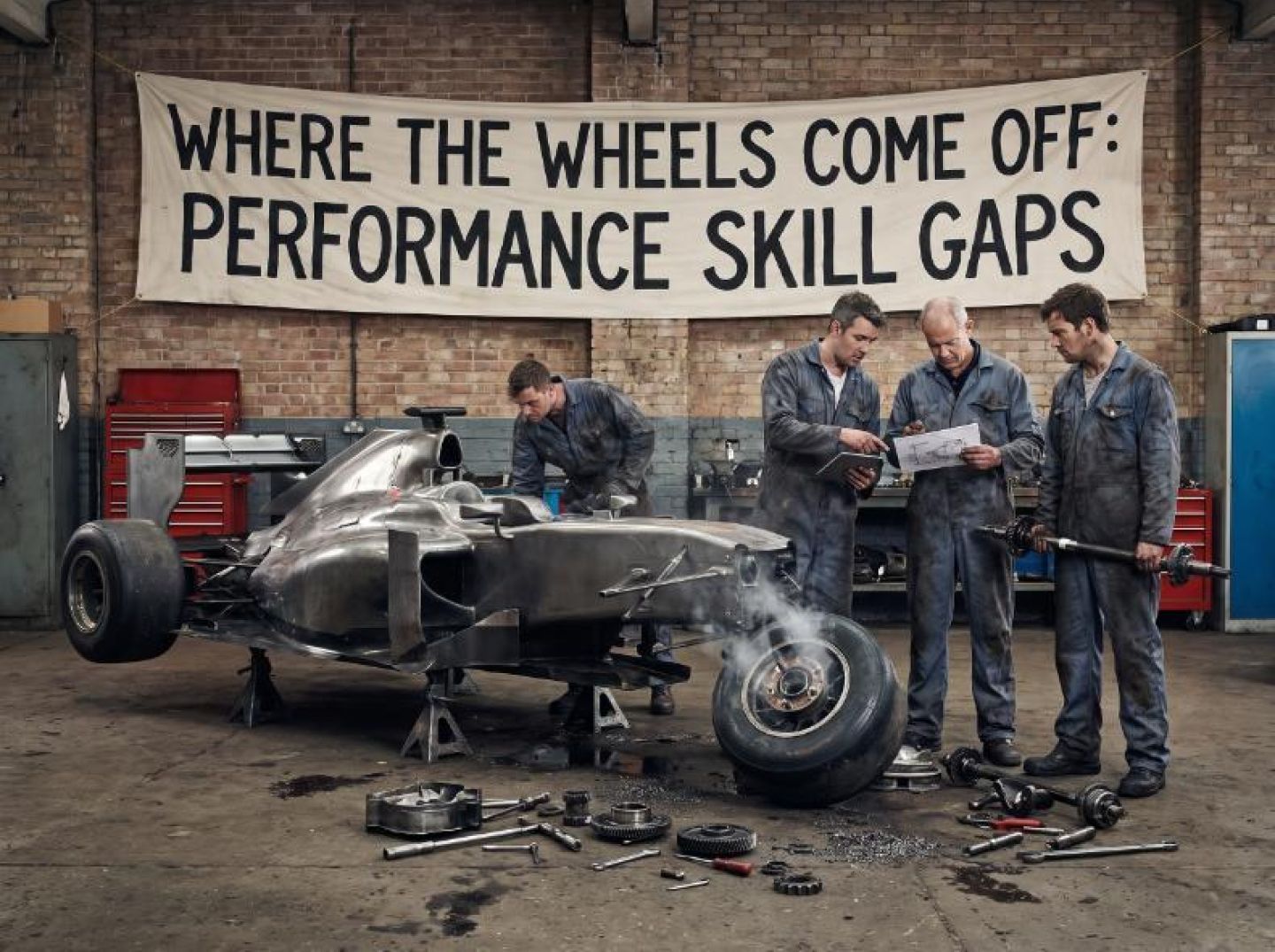
In all of these channels, the wheels come off not because OOH veterans “don’t get digital,” but because the unit of decision‑making is smaller, faster, and more measurable than anything they’ve been asked to manage before. Spy tools shrink that invisible skill gap by turning unknown rules into visible patterns—and turning intuition into testable hypotheses instead of expensive guesses.
Spy tools are the missing adapter between an OOH veteran’s instincts and the brutal clarity of performance marketing. They don’t magically make you “technical.” They make what you already know about markets, creative, and timing suddenly legible—and testable—in channels that move at the speed of a refresh button.
Think about how OOH itself is evolving. As Jawad Hassan explains, the medium has become more dynamic and data-rich, but measurement is still fragmented, backward-looking, and hard to compare across markets. Performance channels have the opposite “problem”: the data is all there, in excruciating detail—but there’s too much of it, moving too fast, with no obvious way to know what actually matters. Spy tools sit in that gap. They act as the “single source of truth” performance marketers wish OOH had years ago, but focused on competitor behavior instead of panel estimates.
For someone coming from OOH, this matters for one reason: you do not have time to learn every nuance of native, push, pop, and TikTok from first principles. If you try, you’ll bleed money while you “figure it out.” Spy tools let you skip the blind experimentation and move straight to pattern recognition—something OOH pros have done their entire careers.
Here’s what that looks like in practice:
In other words, spy tools build the “fast intelligence loop” that OOH has started to crave. When Trillboards talks about winning the next era of OOH through shorter demand-intelligence cycles—“What is happening, why, and what is likely to happen next?”—they’re describing the same mental model you need in performance. Competitive ad intelligence is that loop, already wired for you.
This is also why spy tools feel instantly familiar if you’ve seen modern OOH platforms. As AdQuick’s product team describes it, their platform exists because brands were sick of a “maze of RFPs,” slow execution, and opaque performance. So they built a universal adapter that centralizes fragmented inventory, normalizes data, and lets you plan and optimize from a single screen. Spy tools are the same universal adapter for performance creative and funnels: they pull scattered competitive signals into one interface so you can act like a native insider on day one.
Here’s the deeper shift: spy tools don’t just tell you “what ad is running.” They quietly close the exact gaps that trip OOH veterans:
The point isn’t to copy your competitors pixel for pixel. It’s to use them as a living library of what the algorithm is rewarding and what the market is buying. For an OOH veteran, that’s the shortest possible path from “I don’t speak this channel” to “I recognize the patterns and know how to play this game.”
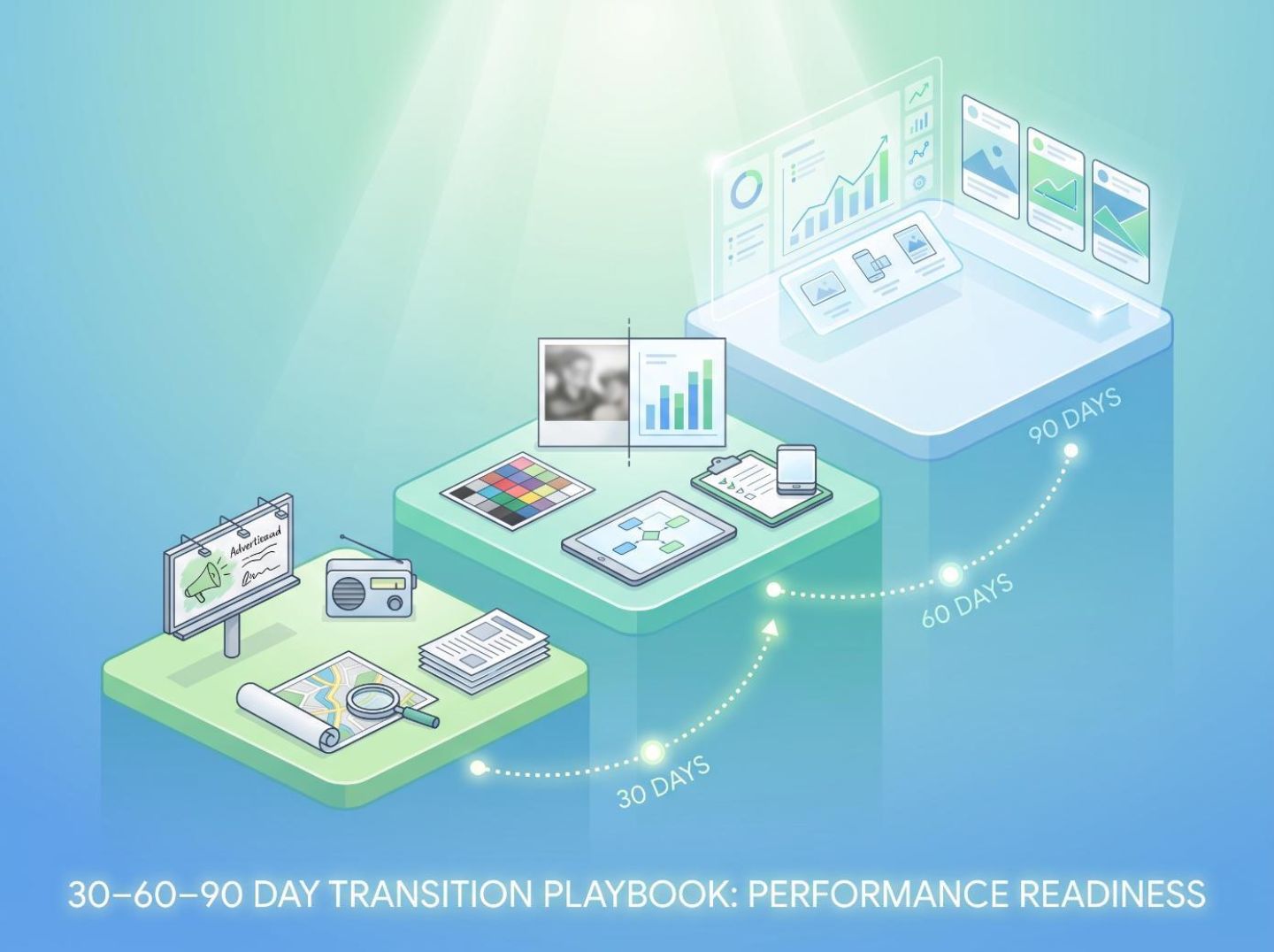
You don’t become “performance-ready” by reading a glossary or memorizing a dashboard. You get there by running a tight, time‑boxed transition plan where your OOH instincts are put to work in a new environment—with feedback loops and spy tools doing the heavy lifting.
Here’s a practical 30–60–90 day playbook to move from OOH comfort zone to performance-competent, without pretending you’re suddenly a full‑stack media buyer.
Your first month isn’t about scaling; it’s about reframing how you think.
This is the performance analogue of how AdQuick standardizes fragmented OOH supply and data. You’re standardizing what winning demand looks like in your new channel.
Your goal for 0–30 days: you can explain the performance battlefield in one vertical better than most “channel specialists,” even if you haven’t launched big budgets yet.
Now you move from observation to controlled action.
3. Create a non‑negotiable daily ritual (30–45 minutes).
Every day, at the same time:
This is where you rewire from “set and forget” to “observe, decide, adjust.” The discipline mirrors how AdQuick’s measurement layer feeds daily OOH performance back into broader marketing models—you’re building the same heartbeat, just at the campaign level.
4. Use spy tools as your “external control group.”
Once a week:
Your goal for 31–60 days: you can launch, prune, and iterate campaigns without help, and you’re making small, rational changes daily instead of occasional dramatic overhauls.
By now, you have scar tissue and instincts forming. The last 30 days are about professionalizing your process.
2. Expand one dimension at a time.
Over 61–90 days, you may:
The constraint keeps you in “controlled experiment” mode, not “chaos launch” mode.
3. Connect your OOH world to your new performance muscle.
Because platforms such as AdQuick now push OOH data into the same attribution and analytics stacks as digital, you’re in a unique position to:
4. Define what “performance‑ready” means for you.
By Day 90, you should be able to:
At that point, you’re not “an OOH person trying to figure out digital.” You’re a marketer who understands how to build demand, read a market, test creative, and connect investment to measurable outcomes. Your OOH background is still an advantage; you have simply added the tools and habits needed to apply it in faster, more granular environments.
Receive top converting landing pages in your inbox every week from us.
Guide
Discover why out-of-home (OOH) advertising veterans often struggle to transition into performance marketing and how competitive ad spy tools can help bridge the skill gap. Learn how to translate brand-building experience into digital marketing strengths, master native, push, pop, and TikTok advertising, and follow a practical 30–60–90-day roadmap to become performance-ready.
Dan Smith
7 minOct 10, 2026
Guide
Explore what today’s AI-powered competitive intelligence still misses, from real-time campaign visibility to opaque AI-first ad platforms. This guide outlines a digital-native CI playbook for turning fragmented signals into faster, more strategic decisions.
Marcus Chen
7 minOct 5, 2026
Guide
Discover how data-first strategists are reshaping the modern creative agency and redefining the Managing Director’s role around performance, media intelligence, and real-time decision-making. This guide explores the new MD toolstack, competitive intelligence, funnel diagnostics, and the feedback loop connecting creative intelligence with media execution.
Elena Morales
7 minSep 30, 2026






)