7 minJuly 20, 2026

Our spy tools monitor millions of native ads from over 60+ countries and thousands of publishers.
Get StartedThe promise of generative AI in advertising was simple: move faster, test more, win bigger. And on paper, it's delivering. Brands are using AI to create ad copy variations, resize images for different platforms, and deploy continuous creative optimization loops that automatically evolve messaging based on engagement signals. U.S. businesses alone are expected to pour $57 billion into AI-powered advertising this year, roughly 12% of total ad spend. But here's the uncomfortable truth that number obscures: when every competitor has access to the same generative engines, the same optimization logic, and the same platform APIs, all that spending isn't buying differentiation — it's buying parity.
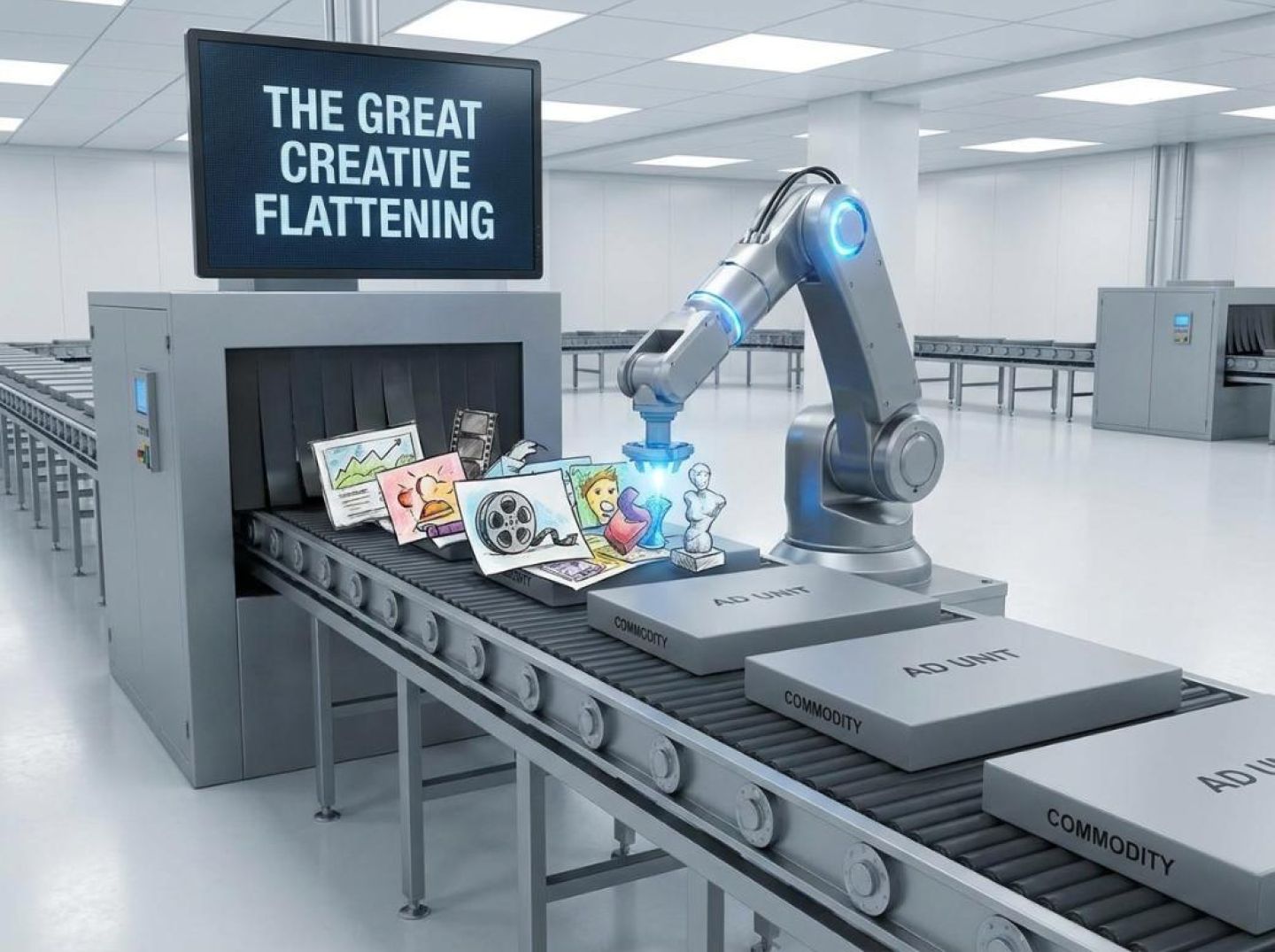
Welcome to the great creative flattening. The tools that were supposed to hand marketers an unassailable edge have instead created a landscape where native ads, push notifications, display banners, and social creatives across entire verticals are converging on identical aesthetics, copy structures, and hooks. Product images that once cost thousands of dollars to produce in a studio can now be generated for a couple of cents, which is genuinely democratizing — until you realize that your competitors' product images are being generated by the same models, trained on the same data, optimizing for the same platform-specific performance signals. The playing field isn't just level; it's flat in every direction.
Consumers have noticed. Seventy percent of respondents in Canva's 2026 research said they can usually spot an AI-generated ad because it feels like it is "missing its soul," and 69% worry the future of advertising will become a sea of "AI-generated slop." Perhaps most damning, 65% described AI ads as "so obvious it's laughable." These aren't fringe sentiments from technophobic holdouts. They represent a mainstream consumer base that has learned to pattern-match the telltale smoothness of AI copy, the uncanny sheen of generated imagery, and the formulaic cadence of algorithmically optimized hooks.
The scale problem compounds the sameness. When Unilever announced its pivot to a 300,000-influencer network, the real disruption wasn't the creator volume — it was that 71% of those creators are using AI tools to produce content at speed, distributing it across dozens of platforms in hundreds of markets simultaneously. Multiply that dynamic across every major advertiser running similar playbooks, and the evaluation infrastructure that once separated good creative decisions from bad ones simply stops working. Human review panels are too slow. A/B testing at that volume is logistically impossible. The sheer throughput of AI-generated creative has outpaced the industry's ability to meaningfully differentiate within it.
And yet, 74% of consumers say they're more likely to buy from an ad they believe was created entirely by humans, while 87% insist the best advertising still needs a human touch. The irony is sharp: the more brands lean on AI to flood the zone with creative variations, the more audiences gravitate toward the increasingly rare work that feels genuinely human. Speed and scale were supposed to be the moat. Instead, they became the commodity. When everyone can spin up hundreds of ad variations in minutes, the creative layer itself ceases to be the competitive battleground — which forces a critical question about where the real edge actually lives.
For years, competitive intelligence in advertising followed a reliable playbook: monitor what rivals were running, screenshot the creatives that appeared most frequently or looked most polished, reverse-engineer the strategy, and launch your own version. It was imperfect, but it worked — because creative volume was naturally constrained. Producing a high-quality ad required real budget, real talent, and real time. A competitor's willingness to invest in polished production was itself a signal of intent and conviction. If a brand kept running the same hero creative across channels for weeks, you could reasonably infer that it was performing.
That heuristic is dead.
When AI tools can generate studio-quality product images for pennies and produce genuinely different ad variations at a pace no human team could match, the link between production quality and strategic investment snaps completely. As one agency CEO noted, current AI models produce images nearly indistinguishable from professional photographs, and the volume they enable is no longer optional — it's what platform algorithms now demand. A polished-looking ad no longer means a brand spent six figures on a shoot. It might mean someone spent six minutes with a prompt. And a campaign running at scale doesn't mean it's converting; it might simply mean an automated system hasn't paused it yet.
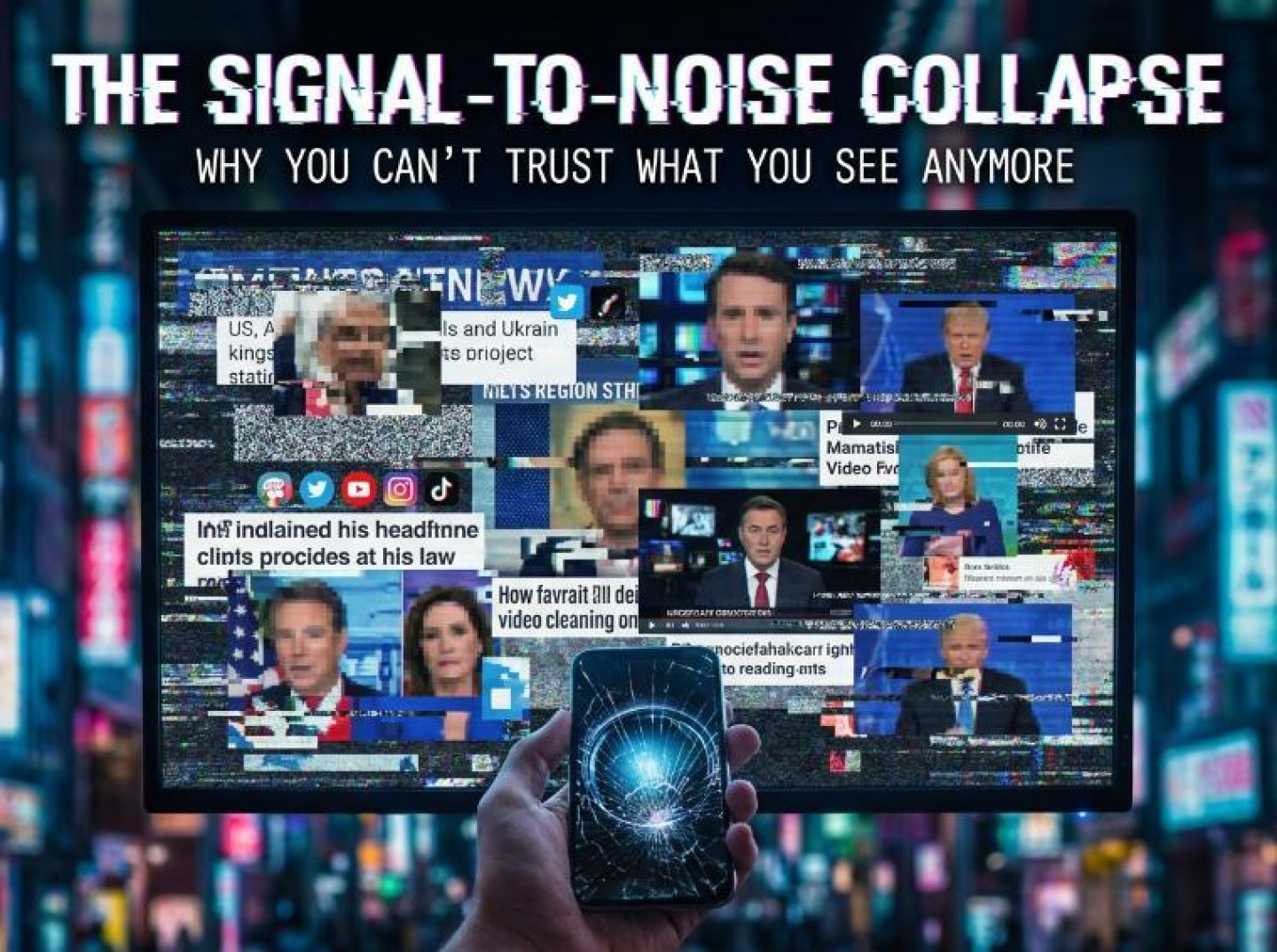
This creates what you might call a signal-to-noise collapse. The traditional competitive research workflow assumed that observable surface features — creative quality, media weight, messaging consistency — carried information about what was working. But when every brand can flood every channel with thousands of algorithmically generated variations simultaneously, those surface features become noise. You're collecting screenshots of a firehose and trying to taste-test the water.
The infrastructure that was supposed to help hasn't kept up either. As AdExchanger explored, most ad intelligence platforms are still built for a pre-AI world, where the challenge was gathering enough data rather than making sense of an overwhelming surplus. Partial or synthetic data, differing methodologies across channels, and fragmented coverage make cross-platform comparisons unreliable. Teams end up spending hours navigating dashboards and reports that were designed for a reality where a brand might run dozens of creatives per quarter, not thousands per week. The result is that marketers are still browsing spy tools the way they browsed them in 2022 — scrolling, sorting, screenshotting — while the competitive landscape has fundamentally changed beneath them.
The problem compounds when you factor in how the cult of performance reshapes creative decisions in ways that defy traditional pattern-matching. When AI-powered buying tools like Performance Max or Advantage+ Shopping Campaigns can dredge up images from deep within a product catalog or generate variations on the fly, the creative a brand actually runs may not reflect any deliberate strategic choice at all. It may be the algorithmic residue of an optimization loop no human reviewed. Trying to reverse-engineer strategy from that output is like trying to deduce an architect's vision by studying the rubble after an earthquake.
An ad running doesn't mean it's working. An ad that looks polished doesn't mean it's converting. And an ad that's everywhere doesn't mean someone chose to put it there. Until the evaluation infrastructure catches up — moving from reporting what happened to informing what should happen next — most advertisers are navigating a landscape they can see but no longer read.
If AI can generate a thousand ad variations overnight, the creative itself stops being the signal. What still matters — what AI genuinely cannot fabricate — are the economic behaviors behind a campaign. An ad that has been running for 45 days straight across PropellerAds, RichAds, and three push networks, expanding from Tier 3 to Tier 1 geos, is telling you something no screenshot ever could: someone is making money on this.
This is where competitive intelligence has to evolve. The old model was creative-focused — what does the ad look like, what copy is it using, what hook opens the video? That approach made sense when production constraints meant a competitor's best creative was also their most revealing strategic artifact. But in a landscape where generative AI lets any team deploy hundreds of near-identical variations in a single afternoon, trying to reverse-engineer strategy from the creative alone is like trying to judge a restaurant by its menu font. The real question isn't what the ad looks like. It's what the ad is doing over time.
Three performance signals cut through the noise with particular clarity.
Campaign duration is the simplest and most underrated. An ad that runs for a day or two might be a test. An ad that runs for six weeks is almost certainly profitable. No media buyer — no matter how flush the budget — keeps spending on a campaign that isn't returning. Longevity is a proxy for ROI, and it's one that no amount of generative wizardry can simulate. You can fake a polished creative in seconds. You can't fake sustained ad spend.
Geographic expansion offers a second layer of conviction. When a campaign starts in cheaper Tier 3 markets and then appears in Tier 1 countries like the United States, United Kingdom, or Germany, that trajectory maps directly onto a scaling playbook. The advertiser validated unit economics in low-cost traffic, then reinvested profits into higher-value audiences. Watching that geographic footprint spread is like watching a startup's revenue chart — except you're reading it through media buys instead of earnings calls.
Multi-network presence provides the third signal. A creative that appears on a single ad network might simply reflect a platform preference. The same creative running simultaneously across native, push, pop, and social networks suggests the advertiser has found a message-market fit strong enough to survive different audience contexts and bidding environments. That's validated performance, not creative experimentation.
The challenge is that reading these signals requires a unified view across markets, networks, and timeframes — exactly the kind of cross-market, cross-media data foundation that most intelligence tools still lack. Without it, AI-powered analysis simply accelerates incomplete pictures, surfacing more creatives faster without the behavioral context that makes any of them meaningful. The shift competitive intelligence must make, as AdExchanger has argued, is from reporting what happened to informing what should happen next — from cataloging ads to interpreting the economic logic encoded in their distribution patterns.
The real edge, then, isn't seeing every ad your competitors run. It's filtering the thousands of identical-looking creatives down to the handful whose behavioral footprint — duration, geography, network reach — proves they're converting. In a world drowning in AI-generated creative volume, the scarcest intelligence isn't visual. It's operational. And the advertisers who learn to read campaign behavior instead of campaign aesthetics will be the ones who consistently find signal in the noise.
Let's be honest about something the AI discourse often gets wrong: human creativity is not a relic, and pretending otherwise is as dangerous as ignoring competitive data entirely. The ideas that genuinely break through — the ones that make someone stop mid-scroll and actually feel something — still originate in human minds. That's not sentimentality. It's observable reality.
Lisa Marcyes, Global Head of Social Media at Cohesity, made this case with receipts. Her team created a drone show over Las Vegas so convincing people thought it actually happened. They dropped a fainting goat into a ransomware video because sometimes controlled chaos communicates a serious message better than yet another corporate explainer. AI didn't generate either concept. A creative team that deeply understood its audience did. As Marcyes put it, the content people actually remember "makes them feel something. It surprises them. Makes them laugh. Makes them uncomfortable. Makes them feel seen. We still need humans for that."
She's right. And the consumer data backs her up. Research consistently shows that audiences crave authenticity over polish — that as AI-generated content floods every channel, originality has become the scarcest and most valuable resource in marketing. People aren't just tolerating human-made creative; they're actively seeking it out as a signal of trustworthiness in a landscape saturated with synthetic sameness.
But here's where performance advertisers — especially those operating in native, push, and direct-response channels — need to resist a seductive logical error. Acknowledging that human creativity matters is not the same as saying human intuition should drive your competitive research. Those are two completely different cognitive tasks, and conflating them is where campaigns go to die.
Consider the problem at scale. You're running push traffic in finance verticals across six geos. Your competitors are collectively deploying thousands of AI-generated creatives every week, many of them near-identical in visual style, copy structure, and angle. Your gut tells you to emulate the ad that "looks right." But which one? The one with the urgent red banner? The testimonial-style lander? The countdown timer variant? Without performance signals — the longevity, geographic expansion, and network breadth discussed in the previous section — you're pattern-matching against noise. You're guessing which piece of AI slop to copy, then dressing it up with slightly better AI slop.
This is precisely why ad intelligence needs to move from reporting what happened to informing what should happen next, as AdExchanger's analysis of the competitive intelligence landscape argues. Without broad, consistent cross-media data, even sophisticated AI simply accelerates incomplete analysis. The same principle applies to human judgment: without data narrowing the field first, even brilliant creative instincts are operating on incomplete information.
The winning workflow isn't data or creativity. It's data then creativity, in that strict sequence. Competitive intelligence tools filter thousands of lookalike campaigns down to the handful demonstrating genuine economic commitment — the ones running long enough, across enough networks, in expanding geographies, to prove that real money is behind them. That filtered set becomes your creative brief. Then you deploy human imagination to build something that doesn't merely replicate what's working but leaps beyond it — the drone show, the fainting goat, the idea no algorithm would propose because it requires genuine audience empathy.
Skip the data step, and you're just a human guessing in a hurricane. Skip the human step, and you're just another AI-generated ad in a feed full of them. The edge lives in the sequence.
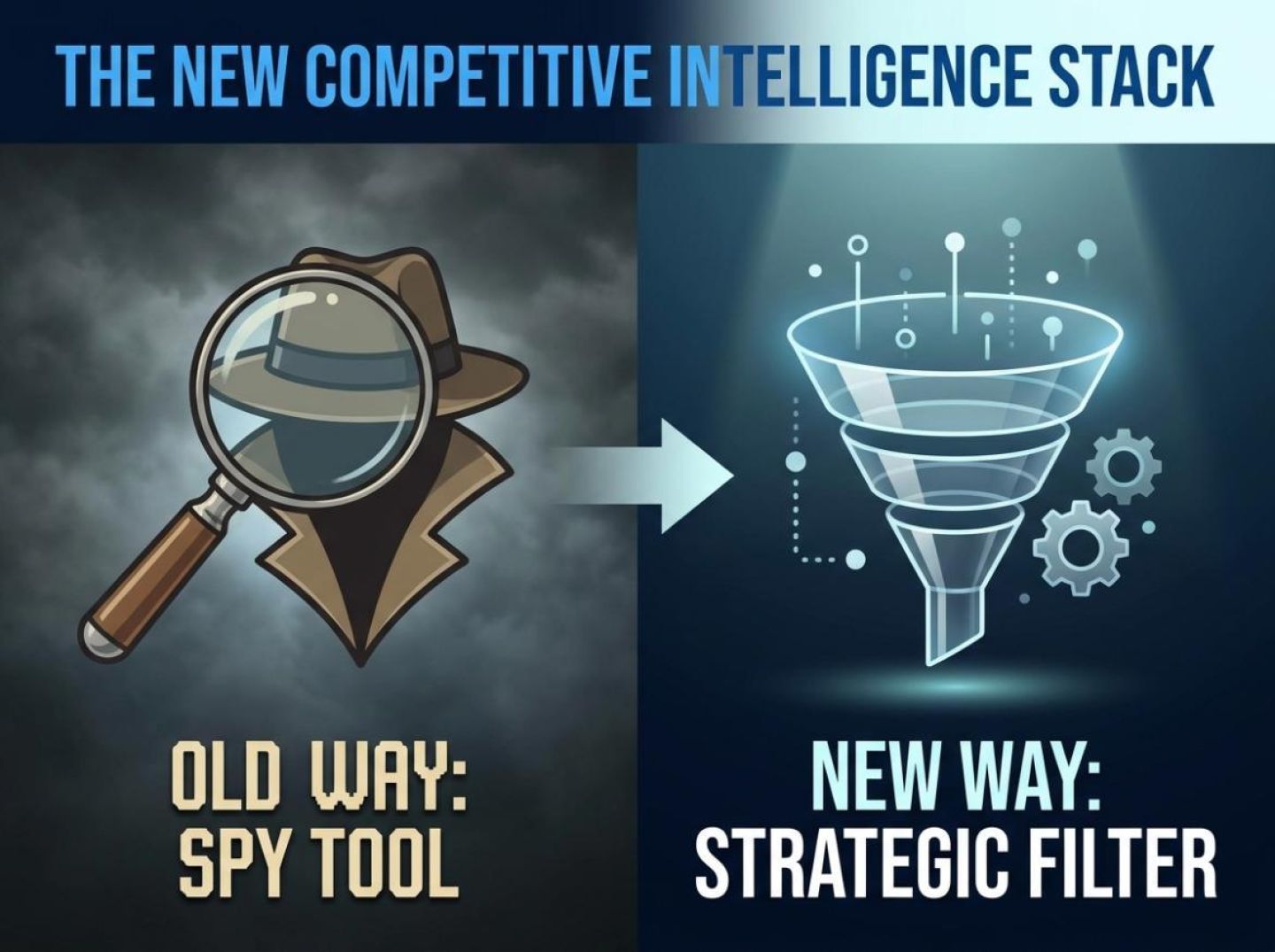
The competitive intelligence tools most marketers rely on were built for a different era — one where the primary question was "what creative is my competitor running?" That question has lost most of its value. When generative AI enables any brand to produce hundreds of ad variations for a few cents each, as Fraser Cottrell's workflow demonstrates, knowing what a competitor's ad looks like tells you almost nothing about whether it's actually working. The new competitive intelligence stack must function less like a spy tool and more like a strategic filter — one that separates economic signal from creative noise.
That shift demands a fundamental reorientation of what data you're actually collecting and how you're interpreting it. Traditional ad spy tools surface creatives, landing pages, and sometimes estimated spend. A modern CI stack needs to go deeper: tracking ad longevity across networks, monitoring geo-expansion patterns, flagging when a competitor shifts budget from one traffic source to another, and identifying which creative concepts persist even as the surface-level executions change daily. The creative itself is disposable. The strategy behind the creative is the intelligence worth capturing.
This reorientation matters even more because the advertising landscape is becoming conversational and autonomous. As MarTech has reported, U.S. businesses are expected to spend $57 billion on AI-powered advertising this year, with creative assets becoming increasingly dynamic — generated, tested, and evolved in continuous optimization loops without human intervention. When your competitors are deploying systems that automatically evolve messaging based on engagement signals, a static screenshot of their ad from last Tuesday is already archaeological. You need infrastructure that tracks the trajectory of their optimization, not a single frame from it.
The practical stack looks something like this. At the foundation, you need ad intelligence platforms that emphasize duration and distribution data over creative galleries. Layer on top of that a system for cataloging competitor positioning — not the words they use, which AI cycles through endlessly, but the claims they make, the audiences they target, and the offers they structure. Above that sits your own testing framework, informed by competitive gaps. The goal is not to copy what competitors are doing but to identify the white space they've left unoccupied and the economic bets they're making that you can either counter or exploit.
One critical component that most stacks still lack is sentiment and perception tracking. With 70% of consumers saying they can spot AI-generated ads because the work feels like it's "missing its soul," understanding which competitors are triggering that reaction — and which are somehow avoiding it — becomes a genuine intelligence advantage. The brands threading the needle between AI efficiency and human resonance are worth studying not for their creative assets but for their strategic choices: where they deploy AI-generated creative versus where they invest in human-produced work, and how those decisions map to funnel stage and audience segment.
The competitive intelligence stack of 2026 isn't a single tool. It's an integrated discipline that combines ad tracking, positioning analysis, sentiment monitoring, and economic pattern recognition into a decision-making framework. The teams that build this stack aren't drowning in competitor screenshots. They're reading the market like a living system — watching money flow, watching strategies evolve, and making bets based on behavioral evidence rather than visual mimicry. That's the difference between intelligence and surveillance, and in an era of infinite creative output, it's the only difference that pays.
Receive top converting landing pages in your inbox every week from us.
Recently Updated
Discover how TikTok, YouTube, and LinkedIn are turning creator content into performance marketing opportunities, and why brands should look beyond influencer fit and engagement metrics. Learn how to evaluate creator campaigns using earnings per click (EPC), marketing efficiency ratio (MER), and arbitrage margins to identify profitable creative, improve campaign decisions, and scale what works.
Dan Smith
7 minOct 16, 2026
Featured
Discover how performance marketers can turn the post-holiday advertising period, known as Q5, into an opportunity for lower-cost testing and smarter campaign optimization. Learn how to use Anstrex ad spy data to identify winning creatives, analyze competitor funnels, launch original landing pages, and turn Q5 insights into scalable Q1 campaigns.
Elena Morales
7 minOct 14, 2026
In-Depth
Explore what Pure Leaf’s “Break Conference” reveals about the gap between polished brand marketing and measurable performance. This guide breaks down how Native, Push, TikTok, and affiliate-style funnels use creative testing, clear offers, first-party data, and hard performance metrics to turn cultural moments into revenue.
Rachel Thompson
7 minOct 1, 2026