12 minMay 18, 2026

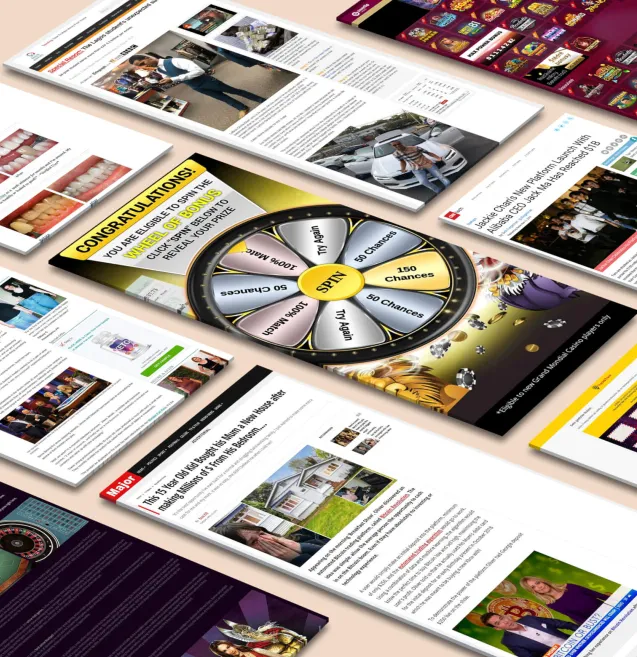
Our spy tools monitor millions of native ads from over 60+ countries and thousands of publishers.
Get StartedWalk into any media buying forum, Slack group, or affiliate marketing meetup, and you'll hear the same frustration dressed in different language: "My campaigns crushed it for two weeks, then CPMs spiked and conversions died." The culprit isn't a sudden change in consumer behavior or a mysterious algorithm update. It's a structural problem — one that enterprise B2B marketers and scrappy performance advertisers share, even if they rarely compare notes.
The B2B world is reckoning with this first, and the data is damning. According to DemandScience's 2026 findings reported by MarTech, 87% of organizations say their marketing investments produce unreliable or inflated intent signals, and only 26% of those signals convert into qualified opportunities. Two-thirds of marketing leaders admit their campaign metrics frequently look successful on dashboards but fail to drive actual revenue. The root cause isn't that intent data is inherently useless — it's that nearly everyone is drinking from the same well. Most third-party intent data traces back to a small number of publisher co-ops, software review sites, and bidstream collection points. When three or four competitors are all bidding on the same surging accounts at the same time, the only guaranteed outcome is that you're bidding up the price of a meeting.
Now translate that dynamic into the world of native, push, and display advertising, and the economics look eerily familiar. If you're running campaigns on Taboola, Outbrain, or MGID, you're selecting from the same GEOs, the same interest categories, and the same device-level segments as every other media buyer in your vertical. Lookalike audiences compound the problem — they're built on overlapping seed data, trained on the same conversion events, and served by the same underlying supply-side infrastructure. Push notification networks are even more concentrated, with a handful of traffic sources supplying inventory to dozens of competing advertisers simultaneously. The audience pool isn't just shared; it's identical.
This is the commoditization trap, and it doesn't discriminate by business model. Whether you're an enterprise demand-gen team chasing in-market accounts or a solo affiliate promoting a nutraceutical offer, the mechanic is the same: when everyone's targeting inputs converge, costs inflate and margins collapse.
The problem deepens when you consider how fragmented visibility has become across digital channels. As AdExchanger reported through Penske Media's analysis of its own properties, growing swaths of traffic arrive as "dark" — partially untracked, ad-blocked, or obscured by VPNs and corporate network configurations. Full attribution for these users remains, in the words of PMC's VP of data science, "an unsolved problem industrywide." So not only are marketers competing for the same visible audience segments, but they're also increasingly blind to the users who fall outside those segments entirely. The data you can buy is crowded; the data you can't see is growing.
Meanwhile, the reflex response — buy more data, layer more signals, add another intent vendor — only accelerates the cycle. Every additional buyer accessing the same packaged feed makes that feed less valuable to everyone. It's a negative-sum game disguised as sophisticated targeting.
The uncomfortable truth is that the targeting layer, the part of the stack that performance marketers have obsessed over for a decade, is reaching a ceiling. When the inputs are commoditized and the audiences are shared, the variable that remains under your control — and that your competitors cannot simply purchase from the same vendor — is the creative itself. That's where the asymmetry lives. That's where the margin hides.
The advice flooding marketing blogs and conference stages right now isn't wrong — it's just no longer differentiating. Open any playbook from a top-tier agency or platform partner and you'll find the same prescription: import your CRM data, set up server-side event tracking, let machine learning models find high-propensity lookalikes, and feed offline conversion signals back into the algorithm so it can optimize toward real business outcomes. As AdvertiseMint argues, skipping offline conversions means "your platforms can't learn what 'good' looks like," and the fix is to import pipeline outcomes weekly so AI can sharpen its modeling. That's excellent counsel. It's also counsel that every serious competitor in your category read six months ago and has already implemented.
The same convergence is happening on the retargeting side. For years, pixel-based retargeting was the workhorse of performance campaigns — install a snippet, wait for site visitors, and chase them across the web. But as illumin has detailed, signal loss, cookie deprecation, and evolving privacy expectations have made that approach increasingly ineffective. Their solution — and the solution the market is rapidly adopting — is to move beyond reactive retargeting toward proactive, signal-based audience building. By capturing programmatic exposure signals like impressions served and video completions, marketers can identify interested consumers earlier in the decision journey and transfer those audiences into paid social environments for stronger message continuity. It's a genuinely superior approach to the old pixel-and-pray model. And it's becoming standard operating procedure.
Here's the uncomfortable truth that neither playbook fully confronts: when every competitor in your vertical imports CRM data into Meta and LinkedIn, runs Conversion API integrations to deduplicate events, builds lookalike audiences off their best customers, and layers programmatic exposure signals on top, the targeting infrastructure converges. You all end up in the same auction, bidding on the same high-propensity users, armed with the same "sophisticated" signal stack. The technology becomes table stakes rather than a breakout advantage.
This isn't hypothetical. Think about what happens when five SaaS companies all feed their closed-won deal data back to LinkedIn's algorithm and let it optimize toward pipeline. The algorithm dutifully finds the same cluster of VP-level decision-makers at mid-market companies showing active buying intent. All five brands land in front of that audience — in the same feed, during the same scroll session, often within seconds of each other. The targeting layer did its job perfectly for everyone simultaneously, which means it gave no one a competitive edge.
The ceiling has shifted. Better signal hygiene, cleaner conversion tracking, and AI-powered audience modeling are necessary investments — skipping them puts you at a genuine disadvantage. But making them doesn't put you ahead. They've become the cost of entry to a game where the real differentiator is downstream of targeting entirely. Once you and your competitors are all reaching the right person at the right moment with the right frequency, the only variable left is what that person actually sees. The ad itself. The creative. And that's the layer where most performance marketers, trained to obsess over audience segments and bid strategies, have chronically underinvested.
If every competitor in your category is buying from the same intent-data pools and feeding the same conversion signals back into the same algorithmic black boxes, the question becomes: what's left that you actually own? The answer, uncomfortable as it may be for teams that have spent years building sophisticated audience-engineering stacks, is your creative. Not creative in the old-school "let's brainstorm a tagline" sense — but the full spectrum of ad images, headlines, copy angles, pre-landers, and landing page structures that determine whether a qualified impression becomes a customer.
The logic follows directly from the structural problem outlined above. As MarTech argues, you can't escape intent data commoditization by purchasing yet another packaged feed; you have to "build a richer signal layer from sources your competitors aren't using." For performance marketers, that proprietary signal layer isn't another firmographic overlay or a cleverer lookalike seed list — it's creative intelligence. It's the compounding knowledge of which emotional triggers, proof elements, and page architectures convert a shared audience that every other advertiser in your space is simultaneously targeting.
This is the variable no data vendor sells. You can license the same bid-stream signals, subscribe to the same review-platform intent, and plug into the same publisher co-ops as the three competitors sitting in adjacent booths at your next conference. But you cannot purchase, in any packaged form, the insight that a testimonial-led static image outperforms a product-demo video for mid-funnel retargeting in your specific vertical — or that swapping a benefit-driven headline for a fear-of-missing-out angle lifts click-through rate by forty percent on mobile placements. That knowledge is generated only through disciplined, high-velocity creative testing, and it compounds over time in a way that audience data never can, precisely because audience data is shared and creative data is not.
The industry's blind spot here is revealing. As AdvertiseMint's framework makes clear, "targeting removes low-propensity impressions, while creative turns qualified attention into customers" — yet the overwhelming share of budget, tooling, and strategic attention flows toward the first half of that equation. Teams will spend months refining suppression lists and signal hierarchies while running the same three ad variants for an entire quarter. The result is a finely tuned targeting engine delivering prospects to mediocre creative — like building a world-class irrigation system that empties into a cracked bucket.
The compounding advantage lives on the creative side because it is inherently harder to copy. A competitor can replicate your audience strategy the moment they subscribe to the same data source, but replicating the creative intelligence you've built — the institutional memory of hundreds of tests, the pattern recognition around which angles fatigue fastest, the understanding of how proof elements interact with page layout at different stages of awareness — requires time, discipline, and organizational commitment that can't be shortcut with a purchase order.
This is why creative testing velocity matters more than any single winning ad. Each test generates a proprietary signal: a data point about your market's psychology that lives inside your organization and nowhere else. String enough of those signals together and you develop something that looks a lot like what MarTech describes as custom signal capture — except instead of capturing signals about who to talk to, you're capturing signals about how to talk to them. In a landscape where the "who" is available to everyone with a credit card, the "how" is the last remaining asymmetric edge.
Every serious marketer knows that watching the competition matters, but surprisingly few apply the same diagnostic rigor to paid creative that they routinely bring to SEO, content strategy, or audience segmentation. That's a missed opportunity — because in a world where targeting inputs are converging, the ads your competitors run, how long they run them, and where they place them constitute some of the most honest market intelligence available.
Think of it this way: when a competitor's native ad has been live for sixty or more consecutive days, that longevity is a conversion signal more reliable than any intent-data surge you could buy from a third-party vendor. Nobody keeps spending on a losing creative. Extended flight time tells you the economics work — the click-through rates hold, the landing page converts, and the back-end ROI justifies continued spend. That single observation gives you a validated hypothesis about what messaging resonates, what offer structures sustain profitability, and what visual formats earn attention in a specific vertical, all without you spending a dollar on testing.
This kind of systematic creative espionage is the performance marketer's direct equivalent of the proprietary signal strategies that enterprise B2B teams are scrambling to build. As illumin has argued, the strongest marketers are shifting from reactive retargeting to proactive audience strategy — identifying interest earlier and reinforcing messaging across channels before a conversion event even occurs. The same principle applies here: instead of waiting for your own test results to trickle in over weeks of media spend, you can proactively study the creative landscape and enter the market with informed hypotheses rather than blind guesses.
Backlinko's Share of Voice framework offers a useful structural parallel. Their methodology instructs marketers to analyze what new content or tactics competitors launched and to identify whether rivals are capturing a format you're missing — video, tools, podcasts, or other content types that might be siphoning visibility. Apply that same thinking to paid media creative. Are competitors dominating a particular native network with long-form advertorial-style landing pages while you're running short direct-response pages? Have they shifted from static display to push notification campaigns, suggesting those channels are delivering better unit economics? Are they testing angles around fear, aspiration, or social proof that you haven't explored? Each of these observations is a data point, and when you catalog them systematically, you build an intelligence layer that is not available in any shared data pool, is directly actionable, and constitutes a genuine informational edge.
The challenge, of course, is doing this at scale. Manually checking ad networks, screenshotting creatives, and tracking flight dates across native, push, and display is tedious enough to make most marketers abandon the effort within a week. This is precisely where a tool like Anstrex transforms the practice from sporadic curiosity into a repeatable competitive intelligence workflow. Anstrex surfaces what competitors are running across native, push, and display networks in real time, complete with estimated run durations, landing page captures, and traffic source breakdowns. It lets you reverse-engineer what's converting — deconstructing headline patterns, image treatments, call-to-action structures, and funnel architectures — before you commit budget to your own tests.
The result is something most performance marketers claim to want but rarely build: a proprietary signal engine that exists entirely outside the walled gardens and shared data pools your competitors rely on. When you combine this intelligence with strong creative execution, you're not just competing — you're operating with an informational asymmetry that no amount of algorithmic optimization on the other side can close.
The framework that AdvertiseMint outlines for AI-powered creative testing — define a single north-star KPI, audit signal quality, then run controlled experiments before scaling winners — is exactly the kind of disciplined methodology most performance teams lack. It imposes rigor on a process that too often devolves into gut-feel debates between a creative director and a media buyer. But there's a critical gap at the top of that sequence: it tells you how to test, not what to test first. Without a structured input layer, you're generating creative hypotheses from intuition alone. With competitive intelligence feeding that input layer, you start every experiment from an informed position — and that distinction compounds dramatically over time.
Here's the playbook, restructured to close that gap.
Step one: Build a competitive creative library before you brainstorm. Before a single hypothesis lands on a whiteboard, catalog what your top five competitors are running, where they're running it, and how long each variant has been live. Longevity is your proxy for performance — an ad that survives four weeks of algorithmic pressure is almost certainly clearing its efficiency thresholds. Document hook structures, proof patterns, format choices, and calls to action. This library becomes the informed starting line for every creative sprint that follows.
Step two: Map category conventions, then deliberately break one. Your competitive library will reveal clustering — the same lifestyle imagery, the same benefit-first headline formula, the same muted color palette. Those clusters are your opportunity. Pick one dominant convention and violate it with intention. If every competitor leads with aspirational lifestyle shots, open with raw user-generated content. If the category defaults to polished motion graphics, try a static carousel with dense proof points. The goal isn't contrarianism for its own sake; it's creating pattern interrupts that earn attention in feeds where sameness is the norm.
Step three: Lock your north-star KPI and run controlled experiments. This is where AdvertiseMint's framework fires on all cylinders. Tie every creative variant to one economic metric — contribution margin per new customer, blended ROAS, or pipeline created — and structure tests so each variable is isolated. As their B2B modeling guide warns, optimizing only to cost-per-lead can starve audiences that create real pipeline, so make sure your KPI reflects downstream value, not just front-end efficiency.
Step four: Build a refresh cadence that treats fatigue as a constant, not a crisis. Winner fatigue is inevitable. The same AdvertiseMint guide flags that one-and-done creative fatigues quickly, especially on Meta, and that retargeting windows need regular refreshing at seven-, fourteen-, and thirty-day intervals. Plan for it. Maintain a rolling backlog of creative variants derived from your competitive library and test results, so when a winner decays, the next iteration is already queued — not stuck in a two-week design cycle.
Step five: Feed results back into your intelligence layer. Every winning and losing variant teaches you something about category dynamics. As Backlinko's share-of-voice methodology suggests, the smartest teams prioritize based on effort versus impact, investing first in high-impact, low-effort wins and then compounding into harder bets over time. Apply the same logic to creative: catalog what worked, update your competitive library with fresh competitor activity, and let each cycle sharpen the next round of hypotheses. Intelligence feeds experimentation, experimentation generates data, and data refines intelligence. That loop — not any single ad — is the actual unfair advantage.
Receive top converting landing pages in your inbox every week from us.
Recently Updated
Learn how Pure Leaf’s “Break Conference” transformed a celebrity sports moment into a scalable native advertising story. This guide shows performance marketers how to turn brand storytelling into measurable Native, Push, Pop, Affiliate, and TikTok campaigns using ad spy intelligence and narrative-driven creative.
Marcus Chen
7 minSep 29, 2026
Featured
Explore how creative operators and managing directors are shaping modern media buying by connecting creative strategy, AI, channel allocation, experimentation, and governance. This guide examines how leadership decisions influence Native, In-Stream, Creator, and Push campaigns, as well as the contracts and systems that determine how media teams operate.
Dan Smith
7 minSep 29, 2026
Most Read
Learn how OOH employers can move beyond selling billboard inventory and start monetizing the full funnel impact of every outdoor impression. This guide shows how to connect OOH with Native and TikTok-style funnels using competitive intelligence, creative research, tracking, retargeting, and performance-focused roles.
Rachel Thompson
7 minSep 28, 2026