Competitive intelligence is most valuable when it becomes a continuous system rather than a one-time report. This article explains how marketers can turn publicly observable competitor data—ads, landing pages, keywords, offers, placements, creative rotations, and campaign longevity—into an ongoing intelligence workflow. It covers the information asymmetry created by modern martech platforms, how competitor campaigns reveal actionable signals, how to establish monitoring cadences and feedback loops, and where to draw the ethical line between legitimate market research and accessing private data.

Our spy tools monitor millions of TikTok ads from over 55+ countries. Biggest TikTok Ad Library in E-commerce and Mobile Apps!
Competitors' TikTok and native ads are doing more than competing for attention—they are generating engagement and creative signals that increasingly influence the algorithms shaping category discovery. This article explains how creative velocity, TikTok's AI infrastructure, audience-selection systems, and authenticity signals can create compounding advantages for brands that move faster. It presents competitive ad intelligence as a form of AI brand defense, helping marketers monitor competitor creative, decode the category narratives being reinforced, counter-program with differentiated messaging, and maintain guardrails around their own AI-assisted creative systems.
Solo media buyers no longer need an agency-sized budget to access sophisticated competitive intelligence. This guide shows how to reverse-engineer viral travel and lifestyle campaigns by classifying traveler personas, identifying recurring campaign structures, building an annotated swipe file, and translating proven patterns into original creatives and media plans. The focus is on stealing the logic, not the execution—using competitor intelligence to uncover better timing, content adjacency, emotional hooks, creative formats, and targeting opportunities without copying competitors directly.
Great advertising does not automatically mean profitable advertising. This article examines the gap between award-winning creative and ads that actually survive in the market, arguing that sustained ad spend, creative longevity, media allocation, efficiency patterns, and auction behavior provide stronger profitability signals than awards or industry benchmarks alone. It then shows how marketers can use competitive intelligence to build a profitability map and create smarter briefs based on observed market evidence rather than inspiration alone.
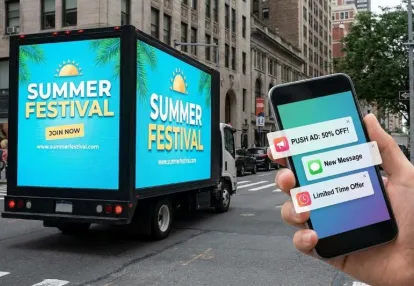
Mobile billboards and push notifications may look like completely different advertising formats, but both depend on reaching people in a specific context with a concise message at the right moment. This article explores how OOH principles such as three-second creative, contextual timing, event targeting, and proof-of-performance measurement can improve push campaigns. It also introduces a cross-channel competitive intelligence strategy: study persistent OOH and push creatives, identify messaging patterns that survive across environments, and use those insights to create a closed-loop testing system between physical and digital advertising.
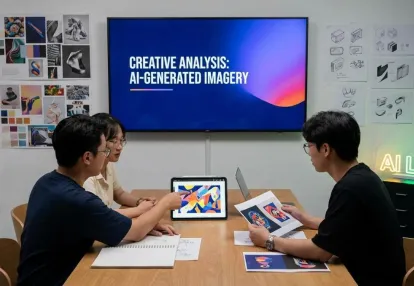
Award-winning advertising can provide powerful strategic inspiration for performance marketers, but its cultural impact does not automatically translate into algorithmic performance. This article explains how to deconstruct celebrated campaigns into functional creative signals—such as qualifying language, emotional triggers, visual cues, and CTA structures—then turn those signals into controlled, testable hypotheses. It also explores why creative has become a targeting signal, the dangers of testing too many variables at once, and why brand and performance teams need a continuous feedback loop between strategic storytelling and measurable results.
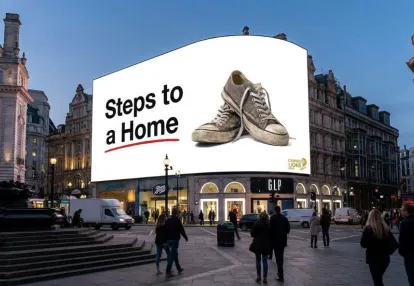
OOH advertisers are investing heavily in competitive intelligence, but native ad spy tools already offer many of the capabilities the OOH industry is trying to build—from creative libraries and campaign longevity tracking to geographic signals and predictive pattern recognition. This article explains how OOH strategists can use native ad intelligence to understand competitor messaging, identify validated creative patterns, sharpen market selection, and build a recurring intelligence workflow before committing to expensive physical placements.
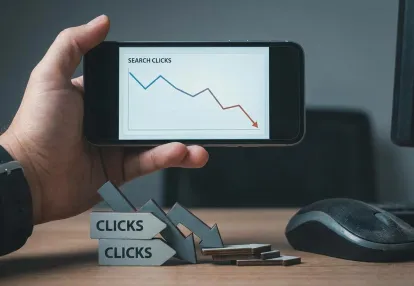
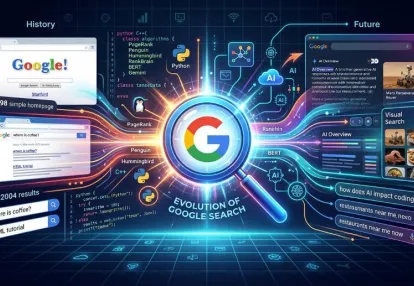
Google’s AI Overviews are reducing the clicks publishers and marketers receive from organic search, weakening the economics of SEO-dependent acquisition. The article argues that this shift creates a stronger case for native advertising, where marketers can buy distribution directly, control creative and landing pages, and reduce dependence on Google’s changing ecosystem. It also presents a five-step playbook for measuring SEO exposure, researching proven native campaigns, testing native content, and building a more diversified distribution strategy.
Google and other AI platforms increasingly extract, synthesize, and monetize information created by publishers and advertisers, while many marketers still conduct competitor research manually and infrequently. The article argues that advertisers should adopt AI-assisted competitive intelligence to continuously analyze public competitor campaigns, identify strategic patterns, and use those insights to create more original, differentiated ad creative. The goal is not copying—it is turning market signals into informed originality and creative authority.
Google and other AI platforms increasingly extract, synthesize, and monetize information created by publishers and advertisers, while many marketers still conduct competitor research manually and infrequently. The article argues that advertisers should adopt AI-assisted competitive intelligence to continuously analyze public competitor campaigns, identify strategic patterns, and use those insights to create more original, differentiated ad creative. The goal is not copying—it is turning market signals into informed originality and creative authority.
Samsung’s Spider-Man campaign shows that small advertisers do not need blockbuster budgets to benefit from big cultural moments. By reverse-engineering the emotional triggers, monitoring competitor campaigns, and quickly testing lightweight creative across native, push, and programmatic channels, performance marketers can ride existing attention instead of paying to create it. The advantage comes from speed, data, and competitive intelligence—not licensed IP.
Google’s removal of rich results and the growth of AI-powered search are making organic visibility increasingly dependent on platform decisions marketers cannot control. At the same time, unreliable conversion tracking can distort paid optimization. The article argues for a rebalanced marketing stack centered on competitive ad intelligence, using live competitor campaigns as a source of market-validated conversion signals while keeping SEO, structured data, product feeds, and owned channels as complementary long-term assets.
TikTok viral products rarely emerge completely at random. By examining product attributes, creative volume, UGC adoption, engagement velocity, format innovation, and early audience response, performance marketers can identify signals that appear before a product reaches mainstream trend lists. The article presents a practical five-step workflow for monitoring these pre-viral indicators, scoring potential breakout products, and testing opportunities before competition and costs increase.