7 minJune 16, 2026

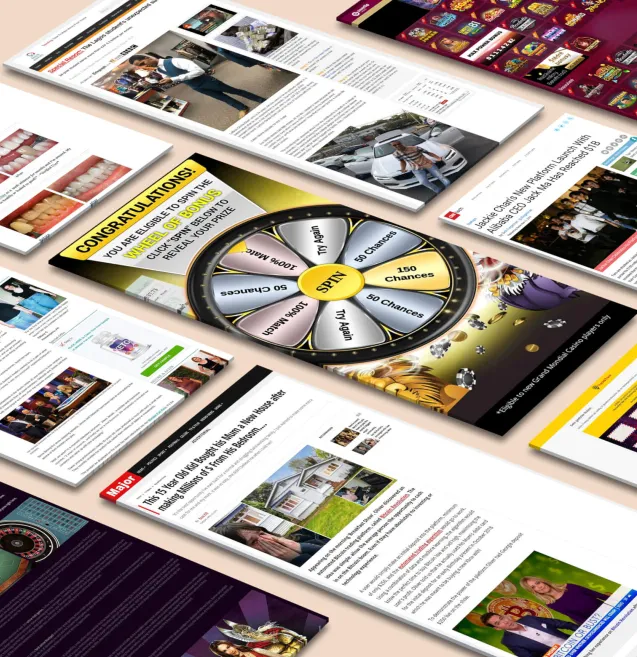
Our spy tools monitor millions of native ads from over 60+ countries and thousands of publishers.
Get StartedEvery marketing team I've worked with has the same ritual: open Google Analytics, check yesterday's traffic, scan the conversion rate, note the bounce rate, and move on. It feels productive. It feels like staying informed. But here's the uncomfortable truth — staring at your own dashboard is like studying your reflection in a mirror and calling it market research. You know what your face looks like. What you don't know is what the person standing behind you is about to do.
Google Analytics can tell you that your landing page converted at 3.2% last Tuesday. It can show you that mobile sessions dropped 8% week over week, or that visitors from paid search spent an average of forty-seven seconds on your page before leaving. What it absolutely cannot tell you is that your top competitor just launched a native-ad-driven advertorial funnel that's intercepting your best prospects three clicks before they ever reach your site. It can't tell you that a rival's new value proposition is resonating so deeply with your shared audience that people aren't even considering you anymore. Your own data, analyzed in isolation, is an echo chamber — and most marketers are trapped inside it.
The measurement crisis facing modern marketing isn't about lacking data. If anything, the opposite is true. As MarTech has reported, marketers are "not suffering from a lack of data" but rather "a lack of connection between the data they already have." Landing pages sit close to conversion and often serve as the source of truth for campaign performance, yet they "rarely explain what influenced visitors before they arrived." Without that upstream context, you know what happened on your page but never why — and certainly not what alternative your prospect was weighing when they decided to bounce.
This blind spot is only getting wider. AI-generated answers, zero-click search behavior, private sharing through dark social channels, and an explosion of dark-funnel activity are creating entire categories of interactions that traditional analytics platforms simply cannot see. Consider the scale of what's now invisible to most dashboards: Google AI Overviews appear in roughly 25% of searches, ChatGPT has surpassed 800 million weekly active users, and 73% of B2B buyers now use AI tools during their purchase research. Yet only 22% of marketers currently track their visibility in AI-powered search results. That means the vast majority of marketing teams are blind not just to competitor activity, but to an entirely new layer of the buyer's journey where decisions are being shaped before a single click is registered in any analytics tool.
And here's where competitive intelligence enters the picture — not as a nice-to-have supplement, but as a necessary corrective. Most teams treat competitor analysis like a homework assignment: collect the data, organize it, present it, file it away. As MarTech noted in a recent analysis of AI-driven competitive intelligence, this approach produces reports that "tell you what happened last week, but not what's shifting, what's coming, or what any of it means for your brand." That's the rearview-mirror version of marketing intelligence — reactive, disconnected, and ultimately insufficient.
The problem, then, isn't that your analytics are broken. It's that they're incomplete by design. Google Analytics was built to measure your property, not your market. And in a landscape where your prospect's journey increasingly unfolds across AI summaries, competitor landing pages, dark social threads, and native ad experiences you'll never see in your own referral data, the most dangerous assumption you can make is that your dashboard is telling you the whole story. It isn't. Your competitors' landing pages are telling the rest of it.
Most marketers treat competitor analysis as a keyword-and-budget exercise. They check which terms a rival is bidding on, estimate monthly spend, maybe glance at an ad headline, and call it a day. But as Semrush's own framework makes clear, the inputs worth monitoring include keywords, ad copy, landing pages, spend, and new competitors — and landing pages sit right there in the middle of that list, routinely overlooked. The irony is that the landing page is where every other input converges into a single, readable document. It's your competitor's hypothesis about the market, laid bare for anyone willing to study it.
Start with the messaging angle. The headline a competitor chooses is a bet — a bet on which pain point resonates most with the audience right now. Are they leading with cost savings or convenience? Fear of missing out or fear of wasting money? That opening line tells you what customer objection they believe is loudest, and by extension, what their research or testing has surfaced. When you reverse-engineer what's working on those pages, you're essentially reading the conclusions of someone else's A/B tests without having to burn your own ad budget running them.
Then look at the offer structure. Is the competitor using a free trial, a discounted first month, a money-back guarantee, or a limited-time bundle? Each of those structures signals a different assumption about where their audience sits on the trust spectrum. A money-back guarantee suggests they're targeting skeptics. A time-limited discount suggests they're fighting inertia. For performance marketers running native and push campaigns, these signals are especially valuable because — unlike search ads — there's no brand-intent cushion softening the visitor's arrival. Every person who lands on your page from a push notification or a native ad widget is cold traffic, which means the offer structure isn't a nice-to-have; it's the entire persuasion architecture.
The CTA placement and structure reveal funnel thinking. A single, aggressive above-the-fold button says the competitor is optimizing for impulse. A longer page with multiple proof sections, testimonials, and a CTA that doesn't appear until the second scroll suggests they're nurturing within the page itself — building a micro-funnel right there on the landing page because they know the traffic source doesn't do that work for them. As MarTech has noted, the real competitive intelligence question isn't simply "what are they doing?" but rather "where are we exposed, and where's the opening?" A competitor's CTA architecture answers both.
Creative positioning is the final layer most analysts miss entirely. The imagery, the color psychology, the social proof placement, the tone of voice — clinical versus conversational, authoritative versus empathetic — all of these encode assumptions about who the target audience is and what emotional register moves them. When a competitor shifts from stock photography to UGC-style visuals, that's not a design preference; it's a targeting pivot. They're chasing a different demographic or psychographic, and that pivot tells you something about where the market is heading before any analytics dashboard could.
This is why reviewing competitor landing pages for messaging and offer changes deserves a recurring spot on every marketer's calendar — not as a casual browse, but as a structured intelligence exercise. Your own metrics tell you what happened on your turf. Your competitor's landing page tells you what the entire battlefield looks like.
Most marketers spy on their competitors the way most people go to the dentist — once in a while, usually when something hurts. They'll pull up a rival's landing page after losing a few auctions, screenshot some headlines, maybe reverse-engineer an offer, and then file it all away in a folder they'll never reopen. It feels like intelligence gathering. It's actually just tourism.
The difference between a one-off competitive check and a genuine intelligence system is the same difference between glancing at a thermometer and studying climate data. As Semrush's competitive analysis framework makes explicit, most advertisers run a Google Ads competitor analysis once, act on it, and move on. That single snapshot tells you what a competitor was doing on one particular Tuesday. It tells you nothing about trajectory — whether they're scaling a new funnel, A/B testing a radically different value proposition, or quietly shifting budget from one traffic source to another. The marketers who consistently outperform their market, Semrush argues, are the ones who treat competitive research as a repeating, ongoing system rather than an occasional curiosity.
This principle becomes even more critical once you move beyond search ads into native and push ecosystems, where creative fatigue cycles are shorter, compliance landscapes shift faster, and funnel architectures can change week to week. A competitor running push traffic might swap from a direct-to-offer lander to a multi-step quiz funnel overnight. If you're only checking in quarterly, you'll mistake their current strategy for their permanent one — and by the time you reverse-engineer it, they've already moved on.
Here's a modified competitive intelligence cadence designed specifically for performance marketers working across ad spy tools, native networks, and push platforms:
Weekly creative monitoring. Every week, scan your primary spy tools for new ads and landing pages from your top five to ten competitors. What fresh creatives appeared? What angles are they testing? Are they rotating headlines, swapping images, or testing entirely new hooks? This weekly rhythm catches creative trends before they saturate the market and gives you time to develop your own variations while an angle still has momentum.
Monthly funnel architecture reviews. Once a month, click through your competitors' complete funnels from ad impression to final conversion action. Did they restructure the flow — moving from a direct landing page to an advertorial-first sequence, or adding a bridge page between the ad and the checkout? Funnel architecture changes are strategic signals, not cosmetic ones. They suggest a competitor has identified a conversion bottleneck and is actively engineering around it.
Quarterly strategic pattern analysis. Zoom out every quarter and look for macro shifts. Are competitors migrating budget from push to native? Testing new verticals? Changing offer types or payout structures? This is where the accumulated weekly and monthly data becomes genuinely predictive — you start seeing the shape of a strategy rather than isolated tactics.
The key insight, as MarTech has argued, is that watching competitors and understanding what their moves mean are two fundamentally different jobs. Most teams excel at the first and neglect the second entirely. They count mentions, score sentiment, and surface activity after the fact — the rearview mirror version of competitive intelligence.
Building a system means deciding in advance what you'll monitor, how often you'll check it, and — most importantly — how findings feed back into your own campaign decisions. Without that feedback loop, intelligence is just trivia. With it, every competitor landing page you study becomes a data point in a living model of your market, one that compounds in value every single week you maintain the cadence.
Google Ads has a transparency center. Native and push ad networks don't. That's not a limitation — it's an advantage for anyone willing to do the work, because the competitors running profitable campaigns in those ecosystems are operating with far less scrutiny, which means their funnels are richer with unguarded intelligence.
The analytical framework that Semrush outlines for reviewing ad creative and landing pages in paid search translates directly to native and push environments — and arguably matters more there, because these channels reward aggressive direct-response tactics that competitors rarely bother to disguise. The entire funnel, from the ad unit through every intermediate page to the final offer, is a readable document if you know what to look for.
Start with longevity. In any ad spy tool — whether you're scanning native placements on Taboola and Outbrain or push notification campaigns — the single most reliable signal is how long a specific creative has been running. Ads that survive weeks or months are profitable ads. If a competitor has kept the same advertorial headline live for sixty days, that's not laziness; that's a campaign clearing its ROI threshold every single day. Flag those first. Everything else is noise.
Next, deconstruct the creative's hook. What emotional trigger is the ad pulling? Is it curiosity ("Doctors stunned by…"), fear of missing out, social proof, or a direct benefit claim? The hook tells you what's working with the audience right now — not what a brand wishes worked, but what the algorithm's feedback loop has validated through spend.
Then click through and document the full funnel architecture. This is where native and push campaigns diverge wildly from search. You'll encounter at least three common structures: a direct link straight to a landing page, an advertorial pre-lander that warms traffic before the pitch, or a quiz funnel that segments and commits the visitor before revealing the offer. Each structure implies a different level of buyer awareness. A competitor using a long-form advertorial is telling you their audience needs education before conversion. A direct link says the audience already knows what it wants.
On the landing page itself, study the messaging hierarchy with the same lens that Semrush's SEO analysis framework recommends: ask whether the competitor is taking a strong position or producing a neutral overview, writing for a specific audience segment or keeping it generic. A landing page addressing "CFOs tired of bloated SaaS contracts" is making a fundamentally different bet than one speaking to "small business owners exploring their first CRM." The headline promise, the proof elements — testimonials, case studies, data points, trust badges — and the CTA language all reveal who the competitor believes their best customer is and what objection stands between that customer and a conversion.
Finally, note the offer structure. Is it a free trial, a discounted first month, a money-back guarantee, a bundle? Pricing psychology is positioning in disguise. A competitor offering a $1 trial is optimizing for volume and betting on backend retention. A competitor leading with an annual plan is filtering for committed buyers.
As MarTech has argued, the real competitive intelligence question is never just "what are they doing?" but "where are we exposed, and where's the opening?" Every element of a competitor's funnel — from the thumbnail image on a native ad to the pricing table on their checkout page — is an answer to that question, sitting in plain sight, waiting for someone disciplined enough to read it end to end.
Every metric in your Google Analytics dashboard assumes a click happened. That assumption is becoming increasingly dangerous. As AI-generated answers, zero-click searches, and private sharing channels expand, a growing share of the buyer journey is simply invisible to your own first-party analytics — and the gap is accelerating, not stabilizing.
Consider the scale of what's already unmeasurable. Google AI Overviews now appear in roughly 25% of searches, up from 13% just a year earlier. ChatGPT has surpassed 800 million weekly active users. And 73% of B2B buyers now use AI tools during purchase research. These interactions often resolve the user's question without generating a single trackable click to your site. Your analytics platform registers nothing — no session, no source, no referral path — while a potential customer forms an opinion about your brand, your competitor's brand, or both.
The problem extends well beyond AI search. As MarTech has argued, AI-generated answers, zero-click behavior, private sharing, and dark-funnel activity are creating interactions that marketers simply cannot track, even as AI simultaneously accelerates the volume of campaign activity teams need to understand. The result is a compounding paradox: you're producing more marketing output than ever while understanding less and less about what's actually driving outcomes. Marketers aren't suffering from a lack of data — they're suffering from a lack of connection between the data they already have.
This is precisely where competitive intelligence shifts from "nice to have" to existential. When your own analytics can't tell you why conversions dropped last Tuesday, your competitor's landing page might. When your attribution model can't explain where pipeline is leaking, the messaging shift a rival deployed two weeks ago might. The external signal becomes the explanatory variable your internal data can no longer provide.
And yet the monitoring gap remains staggering. Despite the surge in AI-driven search behavior, only 22% of marketers currently track AI visibility, meaning the vast majority have no idea whether their brand appears in AI-generated recommendations — or whether a competitor has quietly claimed that space instead. This isn't just a measurement gap. It's a competitive intelligence gap, and it's widening with every new AI feature that absorbs a click you used to own.
The irony is sharp: the same AI tools making your analytics less reliable are also making competitor analysis more accessible. AI-assisted workflows can now pull competitor keyword data, monitor ad creative shifts, and surface positioning changes at a cadence that would have required a dedicated analyst team just two years ago. The teams that recognize this asymmetry — investing less faith in their own increasingly hollow dashboards and more energy in reading the external landscape — will operate with a fundamentally different quality of insight.
Landing pages sit close to conversion and often serve as a campaign's source of truth, but as MarTech's analysis of a recent measurement report notes, they rarely explain what influenced visitors before they arrived. Without that upstream context, you know what happened but not why. Your competitor's funnel, studied systematically, fills in exactly that context — revealing the messaging, the offer architecture, and the positioning that shaped demand before it ever reached your own site. In a world where your analytics are going blind, your competitor's visible choices become your most reliable source of market truth.
Receive top converting landing pages in your inbox every week from us.
Most Read
Demand generation is shifting from marketing automation alone toward real-time market intelligence and proven creative signals. This guide shows how to use native, push, pop, and TikTok ad intelligence to uncover winning hooks, turn them into demand gen IP, and connect those insights across ads, email, landing pages, and the full customer journey.
Elena Morales
7 minSep 13, 2026
Most Read
Discover how to connect ad spy data with on-site behavior, CRM insights, and revenue outcomes to uncover the real drivers of ROI. Learn how to turn Anstrex from a creative swipe tool into a closed-loop system for testing winning ad angles, funnels, and customer journeys.
Dan Smith
7 minSep 9, 2026
Must Read
Agentic AI is moving product research and comparison upstream, often before buyers ever click a native or push ad. This article explains how marketers can adapt to the shift by making product feeds, offers, creative angles, proof points, and landing experiences easier for AI systems to understand and recommend. It also explores how high-intent clicks are changing, why AI-generated recommendations are reshaping creative angles, and how advertisers can optimize for both AI-mediated decisions and human action.
Samantha Reed
7 minAug 30, 2026