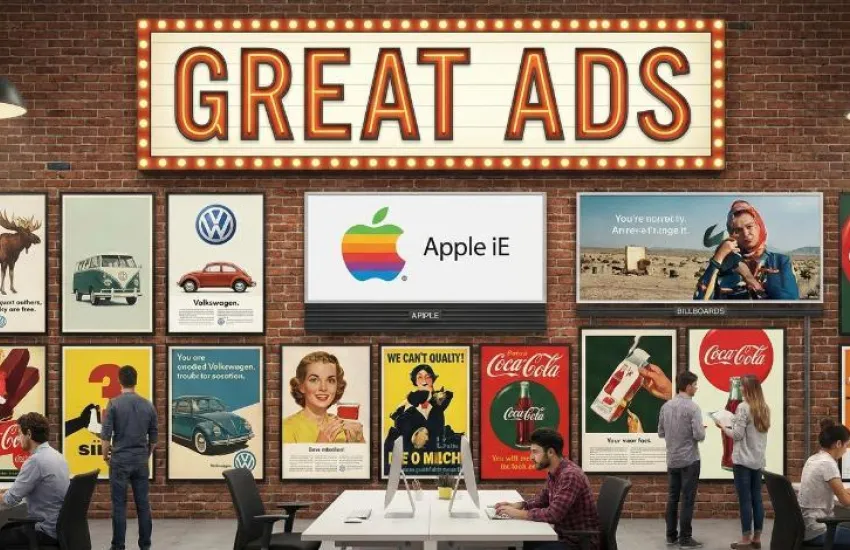
Not every “great” ad is built to scale. This article presents a data-driven framework for predicting which creative ideas can become profitable workhorses by turning creative decisions into structured attributes, mining Anstrex for survivorship signals, translating patterns across channels, and building a lightweight predictive scoring system with continuous calibration.

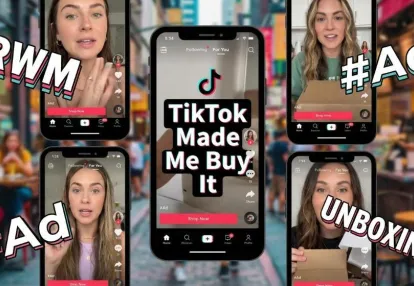
Our spy tools monitor millions of TikTok ads from over 55+ countries. Biggest TikTok Ad Library in E-commerce and Mobile Apps!
As AI-generated content floods the organic web, traditional signals like search rankings, keyword volume, and organic engagement are becoming less reliable indicators of genuine audience demand. This article argues that native and push ads can become the new keyword research by revealing which messages, emotional angles, and offers competitors are willing to keep funding with real money. It shows how advertisers can use ad intelligence to identify validated creative patterns and build a faster, more reliable market-research system.
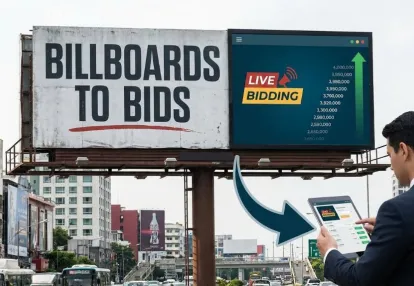
OOH professionals already have many of the skills needed for performance marketing—they just use a different vocabulary. This article shows how sales, operations, real estate, and installation experience can translate into performance media buying, ad operations, data-driven targeting, and ad spy tools, giving OOH talent a practical path from billboards to bids.
Award-winning creative and high-ROI performance campaigns are often treated as separate disciplines, but they don’t have to be. This article explains how marketers can use ad intelligence to reverse-engineer proven creative, hooks, formats, funnels, and post-click experiences, then rebuild those insights into original, testable systems designed to deliver both creative impact and measurable profit.
OOH has become a data-rich, digitally enabled media channel, but its hiring practices still largely focus on execution, measurement, and inventory rather than competitive intelligence. This article examines the hidden intelligence gap in OOH and shows how a dedicated, data-first role could turn competitor activity, market signals, pricing, placements, and campaign behavior into faster planning and revenue decisions.
The viral spectacle trap is making performance marketing confuse attention with results. This article explains why “wow” and awards recognition are not enough, how creative has become a targeting signal in AI-driven ad platforms, and how performance marketers can use testing, spy tools, creative audits, and modular production to identify the workhorse ideas that actually drive conversions.
OOH is evolving from an intuition-led billboard business into a measurable performance media channel. This article explains how OOH sales teams can bridge the offline–online gap by adopting performance infrastructure, integrating OOH with digital campaigns, building faster intelligence loops, and using proven native advertising angles to create measurable OOH campaigns. It also outlines practical workflows for turning competitive ad intelligence into concise, high-impact billboard creative.
TikTok's speed and volatility create both major opportunities and major risks for advertisers. This article explains why marketers should distinguish between short-lived viral spikes, longer-lasting cultural waves, and paid commerce signals, rather than treating every trending topic as an advertising opportunity. It argues that paid ad longevity is a stronger performance signal than organic trend volume, while competitive intelligence can also reveal creative authenticity, emerging AI-content risks, and brand-safety patterns.
Performance marketers often waste creative budget before a campaign even launches by choosing hooks, angles, and visual directions based on instinct rather than validated signals. This article applies AMC-style storytelling principles to ad creative, using a Tension → Stakes → Resolution framework to create more intentional and differentiated concepts. It also shows how competitor ad research and creative longevity can reveal proven narrative patterns before production, helping marketers turn competitive intelligence into stronger creative hypotheses instead of simply producing more variations.
AI can generate advertising creative at unprecedented speed, but speed without market intelligence can produce an endless stream of generic, undifferentiated ads. This article argues for an intelligence-first workflow: study live competitor campaigns before generating anything, identify durable creative and landing-page patterns, structure those findings into a competitive signal base, and then feed that intelligence into AI alongside brand context. The result is AI-assisted creative grounded in real market behavior rather than generic prompts and assumptions.
CTV advertising is becoming more attractive as consumers grow more comfortable with ad-supported streaming and AI improves creative optimization, targeting, and measurement. This article argues that native advertisers should treat CTV's growing operational maturity as a competitive warning rather than simply celebrating native's current advantages. It outlines how native can defend its position through competitive intelligence, stronger intent-driven attribution, CTV partnerships, and faster creative testing before streaming platforms absorb more of native's traditional performance advantages.
Affiliate fraud can distort attribution, inflate apparent campaign performance, and cause media buyers to make expensive decisions based on contaminated data. This article argues that ad spy tools should be used not only to find winning campaigns, but also as an early-warning system for suspicious activity. It identifies key signals including implausible campaign scale, sudden advertiser disappearances, unusually fast creative recycling, mobile-only activity, and cloned landing pages—and shows how monitoring these patterns can help advertisers avoid modeling their budgets on fraudulent or unsustainable campaigns.
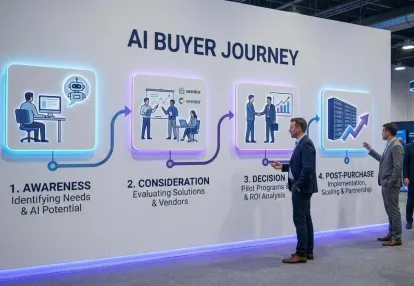
AI search is collapsing the discovery stage of the affiliate buyer journey, leaving affiliates with less opportunity to capture broad, curiosity-driven traffic. This article argues that the middle of the journey—validation and decision confirmation—is now the territory affiliates should own. By building landing pages around rapid authority transfer, third-party proof, transparent comparisons, and strong editorial signals, affiliates can convert higher-intent visitors while also improving their chances of being cited by AI answer engines.