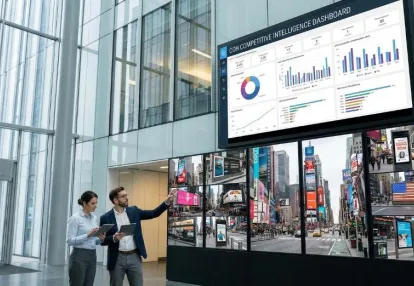
Agentic AI is moving beyond automation into market intelligence, giving marketers a way to continuously monitor competitors, compare creative and offers, identify emerging opportunities, and surface actionable recommendations. This article explains why agents should watch and recommend before they spend, and provides a human-in-the-loop framework for using AI to monitor campaigns without surrendering budget control or governance.

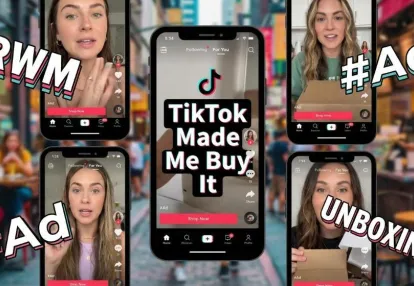
Our spy tools monitor millions of TikTok ads from over 55+ countries. Biggest TikTok Ad Library in E-commerce and Mobile Apps!
As AI search reduces the number of users clicking through to websites, the traditional SEO-to-paid-media funnel is breaking down. This article explains how advertisers can study competitor ads, landing pages, and media strategies to understand how leading brands are adapting to a world where the ad may need to educate, establish credibility, and convert—all at once.
Supply-path optimization can make programmatic buying more efficient, but it cannot fix weak creative or broken customer journeys. This article introduces Creative Path Optimization (CPO)—a framework for using competitor ad intelligence to benchmark the full path from ad to conversion, identify leaks, test stronger creative and landing experiences, and feed proven insights back into AI-driven buying systems. It also provides a practical workflow for using Anstrex to uncover and analyze durable competitor flows.
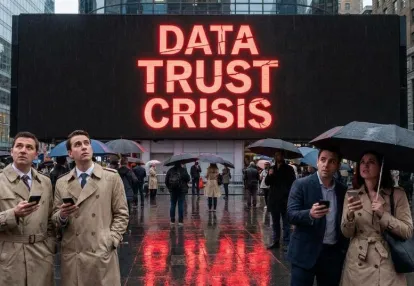
Performance marketing is becoming increasingly dependent on AI systems that learn from imperfect data. This article explains how bad conversion signals, algorithmic drift, and platform bias can quietly distort optimization—and how competitive intelligence can act as an external “truth layer.” By comparing internal performance data with competitor spend, creative, offers, placements, and market behavior, marketers can build a higher-trust optimization loop based on detection, testing, cross-validation, and continuous learning.
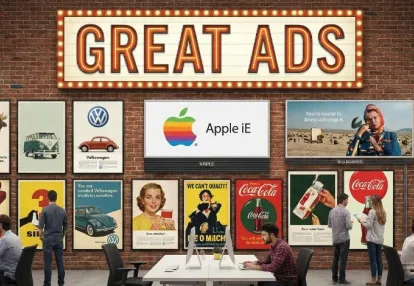
Not every “great” ad is built to scale. This article presents a data-driven framework for predicting which creative ideas can become profitable workhorses by turning creative decisions into structured attributes, mining Anstrex for survivorship signals, translating patterns across channels, and building a lightweight predictive scoring system with continuous calibration.
As AI-generated content floods the organic web, traditional signals like search rankings, keyword volume, and organic engagement are becoming less reliable indicators of genuine audience demand. This article argues that native and push ads can become the new keyword research by revealing which messages, emotional angles, and offers competitors are willing to keep funding with real money. It shows how advertisers can use ad intelligence to identify validated creative patterns and build a faster, more reliable market-research system.
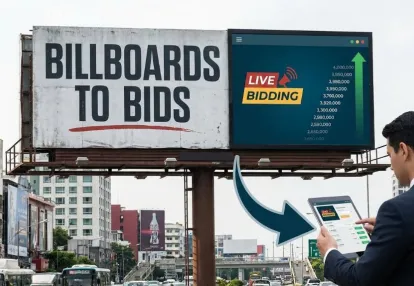
OOH professionals already have many of the skills needed for performance marketing—they just use a different vocabulary. This article shows how sales, operations, real estate, and installation experience can translate into performance media buying, ad operations, data-driven targeting, and ad spy tools, giving OOH talent a practical path from billboards to bids.
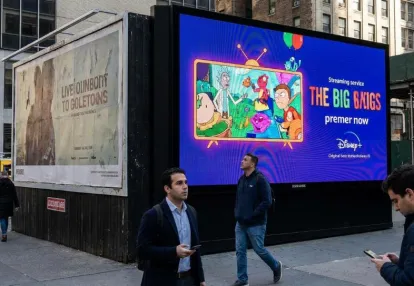
OOH advertisers are investing heavily in competitive intelligence, but native ad spy tools already offer many of the capabilities the OOH industry is trying to build—from creative libraries and campaign longevity tracking to geographic signals and predictive pattern recognition. This article explains how OOH strategists can use native ad intelligence to understand competitor messaging, identify validated creative patterns, sharpen market selection, and build a recurring intelligence workflow before committing to expensive physical placements.
OOH advertising professionals are well positioned to move into native advertising because they already understand contextual placement, audience attention, concise storytelling, and creative resonance. The bigger challenge is adapting to digital's faster pace and data-driven environment. This article explains how competitor ad intelligence, real-time performance analytics, and rapid creative iteration can bridge that gap—turning OOH marketers' contextual instincts into a competitive advantage in native, push, and pop advertising.
AI crawlers are becoming a new layer of web discovery, but many performance landing pages are effectively invisible to them because of JavaScript rendering, redirect chains, cloaking, deep URLs, and short campaign lifespans. This article explains why push, pop, and native advertisers should rethink disposable landing pages, fix their technical crawlability, and build persistent “anchor” pages that AI systems can understand and cite. It also addresses the infrastructure and analytics costs of unwanted bot traffic and provides a two-tier playbook for making performance landing pages more AI-discoverable without sacrificing conversion performance.
AI has made ad production faster and cheaper, but it has not made strategic creative decisions easier. This article argues that the real competitive advantage for native advertisers is pattern intelligence: systematically studying long-running competitor creatives, identifying recurring hooks, emotional triggers, visual structures, and landing-page patterns, then using those proven signals to guide AI-generated variations. The result is a shift from “generate → test → learn” to “learn → generate → validate,” creating a compounding intelligence loop that improves with every campaign.
TikTok's speed and volatility create both major opportunities and major risks for advertisers. This article explains why marketers should distinguish between short-lived viral spikes, longer-lasting cultural waves, and paid commerce signals, rather than treating every trending topic as an advertising opportunity. It argues that paid ad longevity is a stronger performance signal than organic trend volume, while competitive intelligence can also reveal creative authenticity, emerging AI-content risks, and brand-safety patterns.
Performance marketers often waste creative budget before a campaign even launches by choosing hooks, angles, and visual directions based on instinct rather than validated signals. This article applies AMC-style storytelling principles to ad creative, using a Tension → Stakes → Resolution framework to create more intentional and differentiated concepts. It also shows how competitor ad research and creative longevity can reveal proven narrative patterns before production, helping marketers turn competitive intelligence into stronger creative hypotheses instead of simply producing more variations.